Marine Batteries
Discover cutting-edge solutions from 6 leading global suppliersTulip Tech worked with Lobster Robotics to increase the endurance of its autonomous underwater drones without requiring a larger vehicle. The battery system had to fit within the existing sealed hull, deliver substantially longer battery life, and remain practical to service during offshore operations.
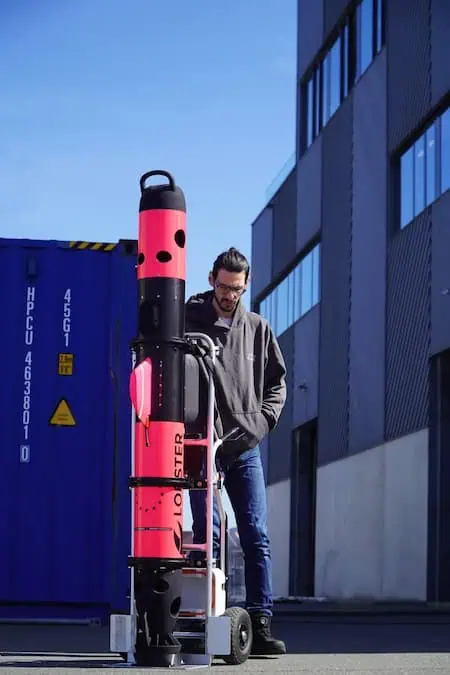
Image credit: Tulip Tech / Lobster Robotics
Lobster Robotics uses its underwater vehicles to produce high-resolution photographic maps of the seabed. For these missions, battery life directly affects how long the vehicle can remain submerged and how much seabed can be covered during each deployment. Increasing runtime through a larger battery, however, would have conflicted with the requirement to keep the drone at essentially the same size.
To address these constraints, Tulip Tech developed a high-density battery pack around the existing installation envelope. Built using self-fused cells, the pack was designed to increase available battery life while remaining serviceable offshore.
The resulting system provides approximately 60% more battery life than Lobster Robotics’ previous solution, while retaining the same battery size and requiring no meaningful increase in drone size.
Increasing Underwater Endurance Within Existing Dimensions
Lobster Robotics develops autonomous underwater drones that travel above the seabed and capture imagery for detailed photographic mapping.
The underwater operating environment places strict requirements on the vehicle’s power system. The battery must remain dry inside the sealed hull, while available battery life determines how much seabed can be covered during a dive.
Lobster Robotics therefore needed a power system that could provide greater endurance without increasing the physical space allocated to the battery. The pack also had to remain suitable for offshore servicing.
Developing a High-Density Battery Pack
Tulip Tech worked with Lobster Robotics’ engineers from the early stages of the project, proposing cell options, reviewing design details, and providing feedback as the battery was developed around the existing underwater platform.
The pack was engineered to fit within the available installation envelope and uses self-fused cells. Its design combines high energy density with a configuration intended to remain serviceable during offshore operations.
Working with a Netherlands-based supplier also gave Lobster Robotics access to a battery partner operating in the same time zone and familiar with the challenges of developing a high-energy-density power system for a marine application.
Extending Battery Life by Approximately 60%
The completed battery provides approximately 60% more battery life than Lobster Robotics’ previous solution, with the battery itself remaining the same size and no meaningful increase in overall drone dimensions.
The additional runtime enables longer missions and allows the vehicles to cover more seabed during each launch. At the same time, the battery remains designed for servicing in offshore conditions.
Arthur AdmiraalLead Electrical Engineer & Co-Founder, Lobster Robotics, commented, “It’s always great to have a local supplier that understands the challenges of creating a high energy dense sea system.”
Read the case study, 60% more battery life for underwater survey missions – without a bigger drone, on the Tulip Tech website.