
Maritime AI Software
Discover cutting-edge solutions from 4 leading global suppliers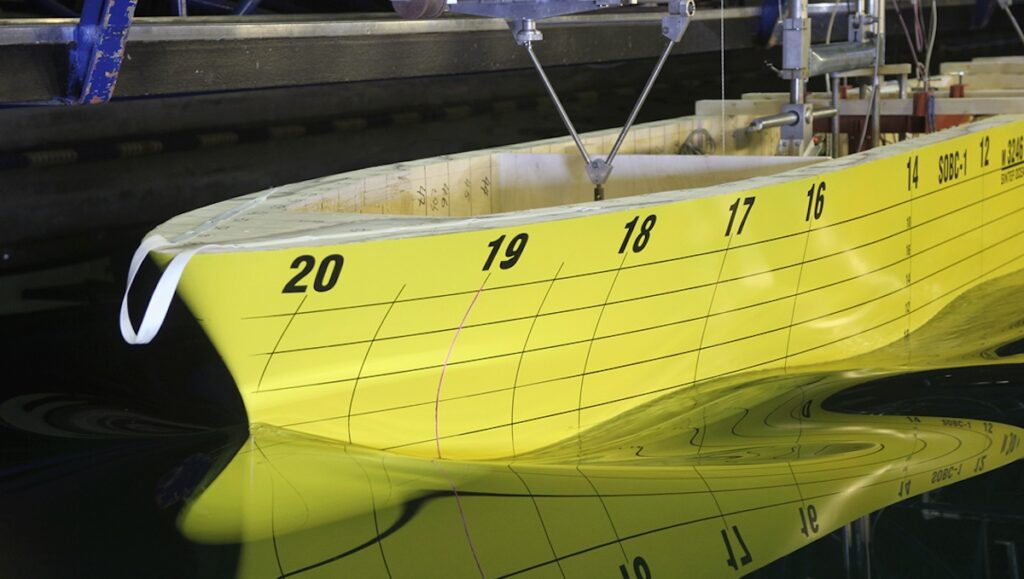
SINTEF Ocean is using Artificial Intelligence (AI) to enable faster and more accurate methods for calculating ship resistance.
Platform Supply Vessels (PSVs), which transport supplies and equipment to offshore oil and gas platforms, rely heavily on hull efficiency. The fewer waves a hull generates as it moves through water, the lower the fuel consumption, emissions, and operating costs for ship owners.
Sirius Design & Integration works extensively with next‑generation PSV vessels and will use the new tool in their future projects.
Through the ZeroLog project, researchers at SINTEF Ocean in Trondheim are combining data from numerous towing tank experiments with advanced data analysis and AI methods. This approach makes it possible to estimate hull resistance for PSVs more quickly and with greater precision.
While Computational Fluid Dynamics (CFD) tools can accurately model water flow around a hull, these methods remain time-consuming. As a result, there is a need for simpler approaches that can be used in the early stages of design or integrated into optimisation routines.
To support this, SINTEF Ocean has compiled results from many years of basin testing into a database for use in new models. Initial work has focused on calm water resistance, with plans to expand to manoeuvring and wave-added resistance data.
Existing calculation models are largely developed for traditional merchant vessels and are less accurate when applied to specialised ships such as PSVs. The newly developed method is expected to provide more accurate estimates of calm water resistance for offshore vessels, particularly in early design phases.
One advantage of data-driven models is that they can be continuously improved as more test data becomes available.
Endre Sandvik, commented, “The method will continue to improve as we collect more data. So far, it has only been used to estimate resistance for PSVs, but the plan is to expand it with other tools as well.”
“The new method makes it possible for us and designers in the industry to test many different hull shapes while simultaneously assessing how changes affect resistance and energy efficiency,” added Thor Albrektsen.
Industry partner Sirius Design & Integration, which works extensively with next-generation PSVs, plans to use the tool in future projects. CTO Henning Borgen highlights its value for industrial applications.
“This type of tool is closely tied to our core business and enables us to perform faster and more accurate calculations. For us, the development of such useful tools for industrial use is the main motivation for participating in research projects,” says Borgen.
Researchers Thor Albrektsen, Øyvind Rabliås, and Endre Sandvik believe that combining experimental data with AI has significant potential and could lead to new methods across the maritime sector.
Rabliås commented, “We have started with data from calm water resistance tests, but we also want to expand with data from maneuvering and wave added resistance tests . That is why we believe the newly developed method will be a valuable contribution for achieving more accurate estimates of calm water resistance for offshore vessels in the early stages of a project.”
The resulting models, which support the development of more energy-efficient ship designs, will be made available to the maritime industry through the ShipX software.