Acoustic Doppler Current Profiler (ADCP) sensors measure water velocity profiles throughout the water column, supporting ocean observation, coastal engineering, offshore energy, and autonomous platform operations. By resolving 3D flow vectors using multi-beam Doppler techniques, an ADCP provides continuous, high-quality data for circulation studies, sediment transport assessment, site characterization, subsea construction, and environmental compliance.
This guide outlines suppliers of ADCP current meters including vessel-mounted, bottom-mounted, buoy and mooring integrations, and compact units for AUVs, USVs, and gliders.
If you design, build or supply Acoustic Doppler Current Profilers (ADCP), create a profile to showcase your capabilities and connect with visitors who have an active requirement for your solutions.
Acoustic Doppler Current Profilers (ADCPs) are foundational instruments in modern ocean observation, coastal engineering, and offshore energy development. Designed to quantify precise water velocity profiles throughout the water column, ADCPs provide continuous, reliable, and high-resolution measurements across environments ranging from shallow estuaries to abyssal research sites. Their robustness, autonomy, data richness, and ability to serve as a core component of both fixed observatories and mobile platforms have solidified the ADCP’s place as one of the most deployed sensors in the global ocean observing system.
Marine Applications of ADCP Current Meters
Physical Oceanography and Deep-Sea Studies
Acoustic Doppler Current Profilers are the workhorse for capturing comprehensive velocity profiles across the entire water column. They are indispensable for resolving mesoscale circulation patterns, studying stratified shear layers, tracking energetic internal wave packets, and quantifying turbulent mixing rates. These measurements are essential for advancing our understanding of fundamental processes like energy transfer, heat transport, and the transport of biogeochemical tracers in dynamic marine environments.
Coastal Engineering, Sediment Transport, and Bathymetry
Engineers apply ADCPs to quantify the often-destructive interaction between waves and currents, map complex sediment transport pathways, and determine critical bed shear stress. High-frequency instruments are particularly valuable for precision mapping of suspended sediment dynamics near river outflows, major dredging sites, and critical coastal defense structures. Furthermore, the robust bottom-track capability allows for precise, real-time bathymetry collection during mobile surveys.
Offshore Energy Site Characterization
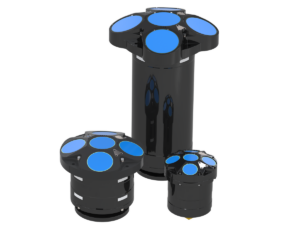
Workhorse Proteus ADCP by Teledyne Marine
Flow characterization is paramount for the safety and economic viability of offshore energy infrastructure. ADCPs provide the long-duration datasets required for detailed turbine yield analysis, essential fatigue estimation, and the complex design of both fixed and floating platform supports. The data gathered provides statistics on turbulence intensity, veering profiles, shear profiles, and extreme event statistics, all of which are prerequisites for building safe and efficient offshore energy infrastructure.
Subsea Construction and ROV Navigation
In the highly regulated subsea construction sector, ADCPs enable real-time current mapping to mitigate risks and support precision crane operations, efficient pipe-laying, and critical diver safety. When integrated onto Remotely Operated Vehicles (ROVs), the systems enhance vital functions such as station-keeping, precise subsea navigation, and vehicle control, especially in challenging, low-visibility environments.
Environmental Monitoring and Regulatory Compliance
Hydrodynamic data is a mandatory requirement for environmental regulators assessing and monitoring the impacts of major projects. ADCPs provide repeatable, quantifiable datasets that support compliance monitoring for dredging operations, the dispersion of industrial and wastewater discharges, cooling-water outflows, and aquaculture operations, ensuring adherence to coastal and offshore environmental frameworks.
Autonomous Systems: AUVs, USVs, and Gliders
Autonomous Underwater Vehicles (AUVs), Unmanned Surface Vehicles (USVs), and underwater gliders rely heavily on lightweight, low-power ADCPs for fundamental operational capabilities. These sensors provide vital navigation data through bottom-track and water-track functionality, enable precise altitude control, and inform adaptive mission planning. In wave gliders and AUVs, the current profiler provides the ranging, bottom-track velocity, and profiling capabilities that are critical for autonomous decision-making.
Types of ADCP Configurations
The choice of Acoustic Doppler Current Profiler configuration is driven by the application, depth, and duration requirements.
Vessel-Mounted ADCPs (VM-ADCP)
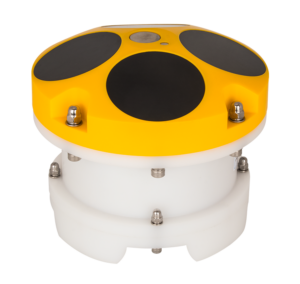
HydroFlow High-Accuracy ACDP Sensor by SatLab Geosolutions
Mounted through the hull or on over-the-side frames, VM-ADCPs provide underway profiles of currents while the vessel is in motion. This configuration is ideal for transect-based mapping of coastal currents, accurate river discharge estimation, and basin-scale research cruises.
Bottom-Mounted Frames and Tripods
These stable, seabed platforms host upward-looking ADCPs for long-term monitoring. This configuration is the gold standard for tidal resource surveys, high-resolution storm event analysis, and foundational sediment dynamics work, offering stable, high-quality profiles across long time windows.
Buoy-, Mooring-, and Glider-Integrated ADCPs
Typically employed for full-depth velocity structure studies, deep-ocean moorings utilize ADCPs to capture internal wave signatures and wave parameters. Buoys and profiling floats often employ these profilers for near-surface current measurement, while gliders use compact, downward-looking units for navigation and vertical mixing studies.
Shallow-water deployments require meticulous control of side-lobe interference and acoustic boundary effects, which can corrupt data quality. In contrast, deep-sea deployments, where pressure is the primary factor, prioritize energy efficiency, corrosion resistance, and robust pressure housings to ensure longevity. Frequency selection is a central engineering decision that must match the instrument’s range and resolution to the specific mission depth.
How Acoustic Doppler Current Profilers Work
An Acoustic Doppler Current Profiler operates on the principle of the Doppler shift. It transmits a focused acoustic pulse (the “ping”) into the water and analyzes the frequency shift in the echoes scattered back from suspended particulates (plankton, sediment, air bubbles) within the water column. This frequency shift is directly proportional to the radial velocity of the scattering particles along the path of the acoustic beam.
By steering multiple acoustic beams at known, defined angles (typically four or five beams in a standard Janus configuration), the instrument resolves three-dimensional velocity vectors (U, V, and W) across multiple depth “bins.” The standard four-beam system is not only the most common but also critical for a specific engineering function: it provides robust redundancy by allowing the instrument to calculate all three velocity components and a crucial error velocity simultaneously. This fourth calculation provides a real-time check on the assumption of uniform flow across the beams, significantly enhancing data quality and instrument reliability.
In addition to velocity, the profiler records key supporting parameters. These include backscatter intensity (the strength of the returned signal), correlation, and echo amplitude, which offer valuable insights into suspended sediment concentration, acoustic scattering properties, and overall data quality.
Modern ADCPs integrate sophisticated internal sensors to support accurate data transformation and referencing. These instruments house high-precision tilt, compass, pressure, and temperature sensors, allowing the system to autonomously compensate for platform attitude, accurately reference depth, and maintain high-quality data integrity during long-duration, independent deployments.
ADCP Design Considerations
Core Components and Housings
ADCP transducers are typically engineered using highly stable piezoelectric ceramics arranged in multi-beam arrays. Housings are selected based on the depth rating and environmental corrosion factors, ranging from anodized aluminum for coastal use to specialized titanium and glass-filled composites for deep-sea deployment, where resistance to sustained hydrostatic loads is critical.
Engineers must rigorously balance factors like wall thickness, material selection, O-ring redundancy, and connector sealing strategies to guarantee the pressure housing’s survivability at extreme depths, often exceeding 6,000 meters.
Data Processing and Tracking Algorithms
Radial Velocity and 3-Axis Resolution: The instrument calculates velocity by measuring the frequency shift in the acoustic return. The radial velocities from the individual beams are then combined using a robust coordinate transformation (e.g., the Janus transformation) to reconstruct the 3-axis flow vectors (U, V,W).
Water-Track vs. Bottom-Track: This distinction is fundamental. Water-track processing estimates current velocities relative to the profiler’s frame (or relative to the moving vessel). Bottom-track processing measures the absolute velocity of the instrument relative to the seabed by reflecting acoustic pulses off the seafloor. For precise navigation, discharge gauging, and mobile platform operations, the bottom-track velocity is subtracted from the water-track velocity to yield the absolute water current velocity relative to the static seabed.
Operating Modes: Various modes exist to optimize range and resolution. Coherent modes deliver extremely high precision for short-range turbulence studies. Broadband and sophisticated coded-pulse techniques extend the effective range while preserving resolution, significantly enhancing performance in deep or turbid environments.
Calibration, Validation, and Maintenance
Rigorous calibration and maintenance are essential to the ADCP’s accuracy:
System Calibration: Initial factory calibration and subsequent tank testing verify beam alignment and transducer sensitivity. Field validation is then performed by comparing the profiler’s data against independent measurements, such as those from CTD-derived shear profiles, drifters, or established reference current meters.
Orientation Compensation: Accurate compass and tilt sensor calibration is critical for correct velocity vector rotation. Pre-deployment calibrations and post-processing corrections are necessary to mitigate hard-iron and soft-iron distortions caused by the deployment platform.
Biofouling Mitigation: Biofouling (the growth of marine organisms on the instrument face) reduces acoustic transmission and rapidly degrades data quality. Strategies like advanced anti-fouling coatings, copper components, mechanical wipers, and UV emitters are implemented to extend deployment life and maintain measurement accuracy over multi-year missions.
Emerging & Advanced ADCP Technologies
The sector continues to advance through sensor integration and digital innovation:
Doppler-Enhanced Turbulence Sensors: New designs are integrating fine-scale velocity gradient measurement capabilities to directly study turbulence dissipation rates (ε), providing essential data for bottom boundary layer dynamics and detailed wake characterization for offshore wind farms.
Machine Learning Integration: AI models are increasingly utilized with ADCP time series data to forecast currents, accurately identify sensor drift, and refine gap-filling techniques for long-term ocean observatories, enhancing the authority and completeness of the datasets.
Hybrid ADCP–Imaging Acoustic Systems: Multi-modal platforms combine Doppler profiling with high-frequency acoustic cameras. This fusion allows for simultaneous flow and morphological mapping, an especially valuable capability in dynamic applications like dredging, habitat monitoring, and complex marine construction.
Ultra-Low-Power Architectures: Next-generation models designed specifically for power-constrained platforms like gliders and AUVs focus heavily on ultra-low-power microelectronics, adaptive ping sequencing, and compact transducers to maximize mission endurance.
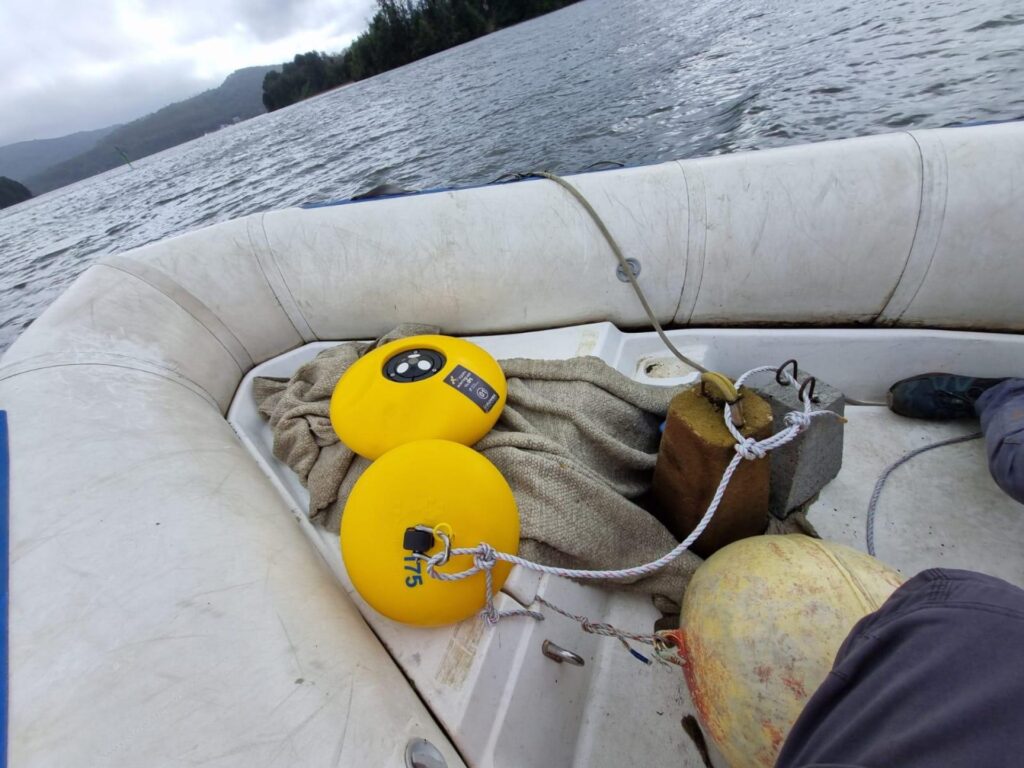
A rapid-response scientific team successfully deployed a Nortek Eco ADCP in the Valdivia River to record the rare interaction between tsunami waves, tidal processes, and fluvial currents for improved predictive modeling
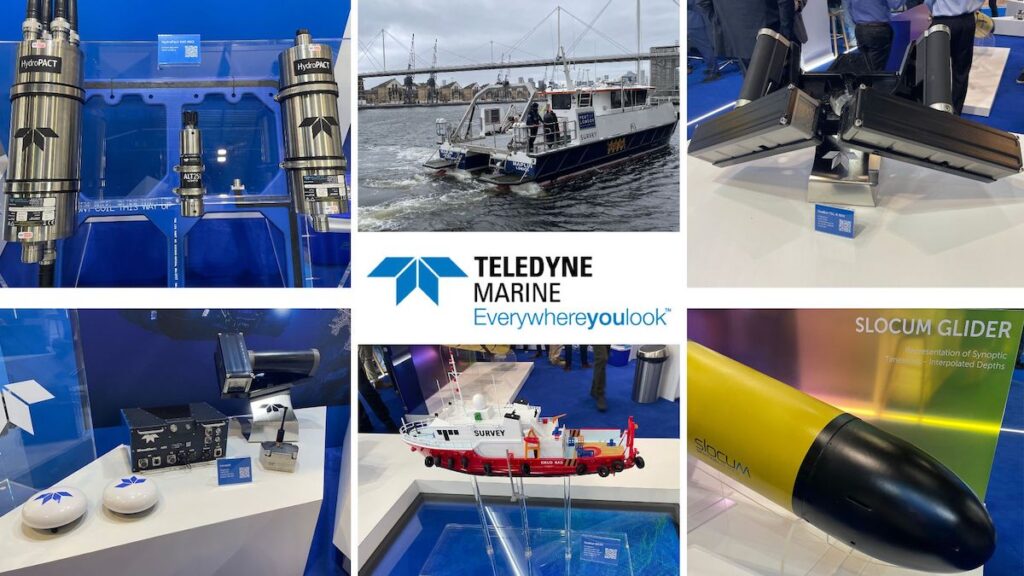
OST visited Teledyne Marine at Oceanology International 2026 in London, where the company showcased sonar, navigation, oceanographic, and autonomous survey technologies
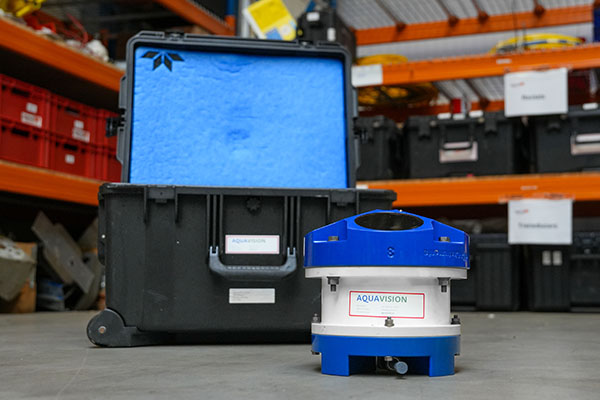
A subsidiary of Teledyne Marine, Teledyne RD Instruments will supply 20 depth-rated Workhorse ADCPs for a deep-sea environmental impact assessment supporting critical mineral exploration within Japan’s Exclusive Economic Zone
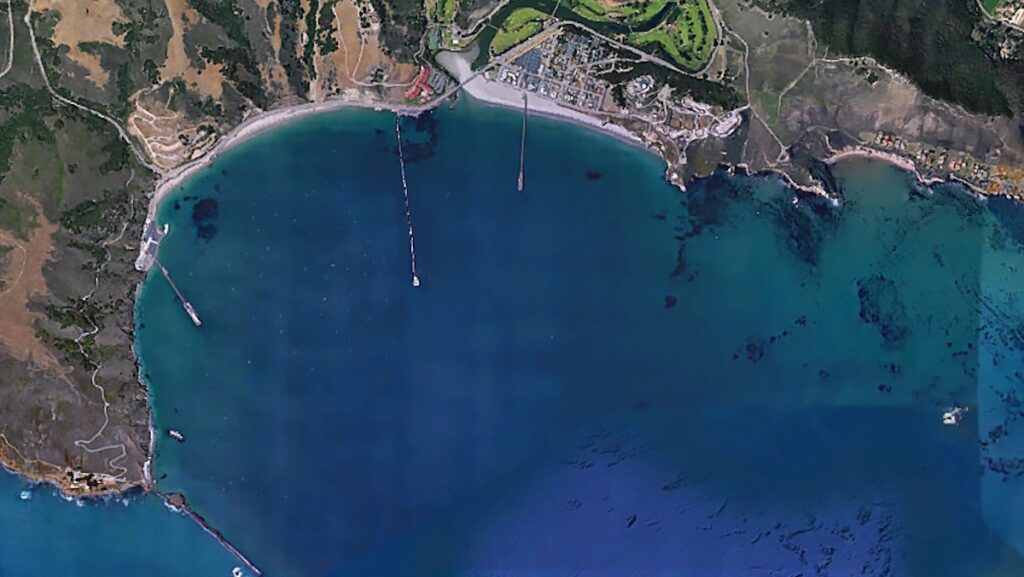
Teledyne Marine’s Acoustic Doppler Current Profiler provided high-resolution current measurements that advanced understanding of submesoscale circulation, coastal exchange, and nutrient dynamics within an upwelling-influenced bay off California’s central coast
CHC Navigation introduces the RiverStar 3600D acoustic Doppler current profiler, combining dual-frequency operation, a 9-beam configuration, and compact design to support precise hydrological and inland waterway surveying applications
Demcon unmanned systems delivers a compact autonomous USV to Rijkswaterstaat, enabling advanced hydrographic surveying and monitoring in locations unsuitable for conventional survey vessels
Teledyne Marine outlines how Acoustic Doppler Current Profilers (ADCPs) and complementary ocean monitoring technologies deliver real-time data on surface and subsurface currents, helping to optimize offshore seismic survey operations and improve operational safety
Teledyne RD Instruments' new agreement will see more than 80 WorkHorse II units supplied to Rijkswaterstaat for water monitoring programs across the Netherlands