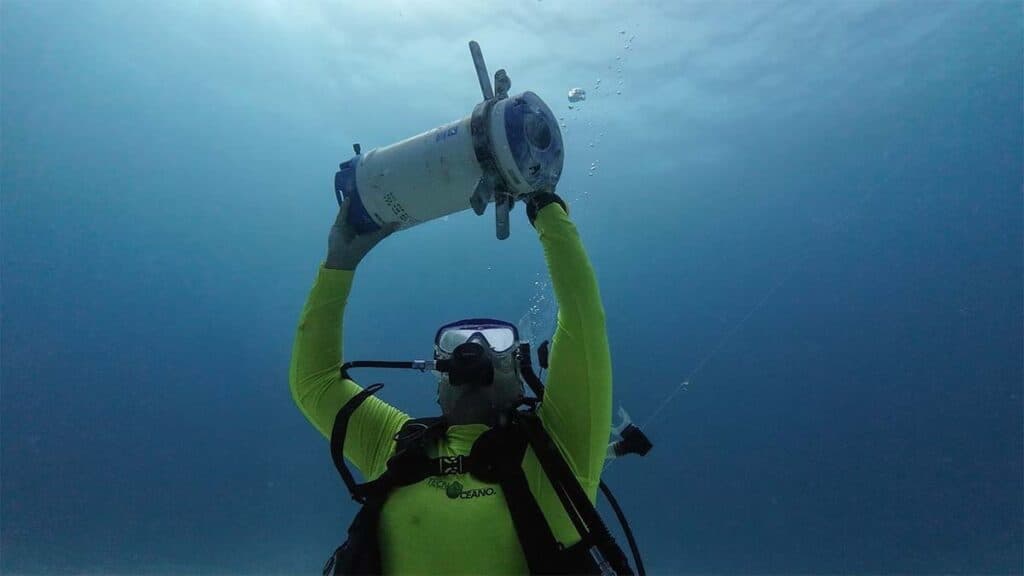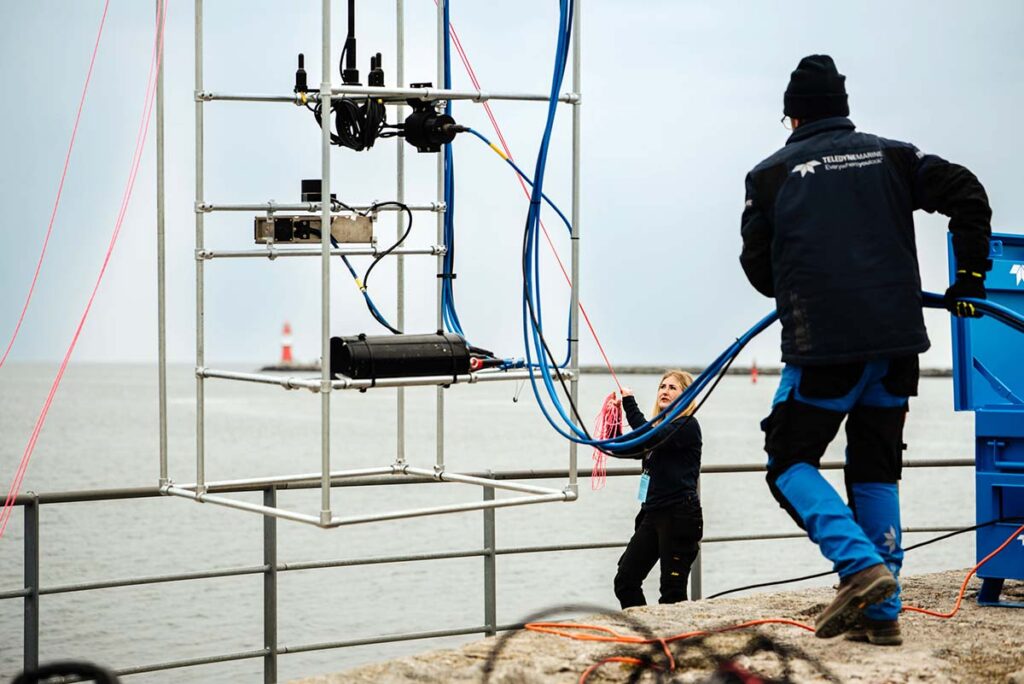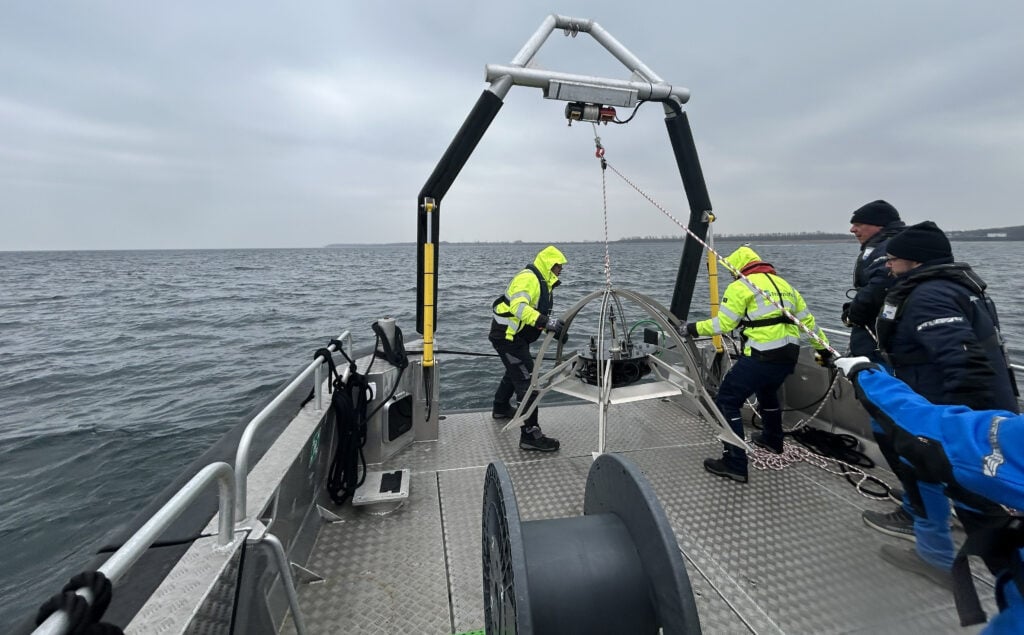



Teledyne Marine’s Acoustic Doppler Current Profiler (ADCP) delivered precise current velocity measurements during a pilot research campaign examining submesoscale circulation processes off the California coast.
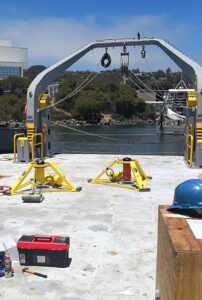
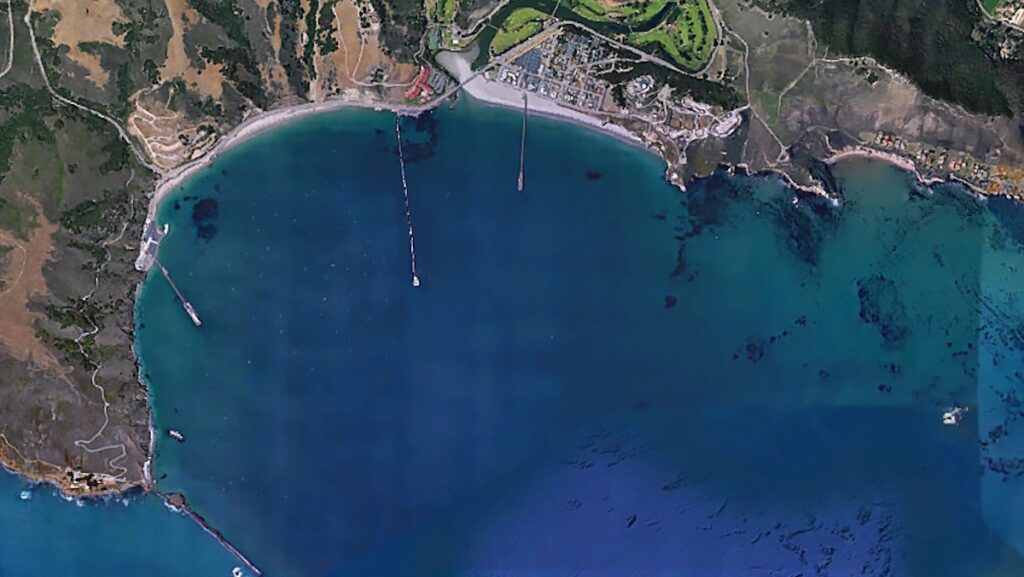
The study focused on the upwelling-driven California Current System near San Luis Obispo Bay, where complex physical dynamics play a central role in coastal exchange and ecosystem behavior.
The work was carried out as part of a multi-institution, National Science Foundation funded project led by the Virginia Institute of Marine Science, with participation from Moss Landing Marine Laboratories, California Polytechnic State University San Luis Obispo, and the University of California Santa Cruz. Researchers deployed an ADCP manufactured by Teledyne RDI to capture high-resolution velocity profiles needed to investigate the structure and movement of a submesoscale thermal front within a coastal upwelling environment.
Current velocity data were collected alongside measurements of temperature, salinity, dissolved oxygen, chlorophyll, surface nitrate, and turbulence. Together, these observations provided a baseline depiction of circulation and frontal structure across the study area. ADCP-derived measurements revealed how internal circulation and coastal exchange processes operate in regions where upwelling strongly influences nutrient transport, hypoxia, and harmful algal bloom development.
San Luis Obispo Bay lies within an eastern boundary upwelling system where seasonal thermal fronts form along much of the bay entrance. Local bathymetry drives small-scale exchanges between the bay and the open ocean, yet these submesoscale interactions are often underrepresented in conventional circulation models. By resolving fine-scale frontal features, the ADCP data supported improved understanding of how water masses, nutrients, and particulate matter are retained, dispersed, or exported.
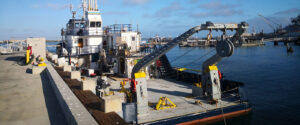
Piero Mazzini, Coastal Physical Oceanographer at VIMS, said, “Using Teledyne RDI’s ADCP technology has been transformative in our study of submesoscale fronts in SLO Bay. The high-resolution velocity measurements allow us to capture detailed circulation patterns critical for understanding nutrient dynamics and ecosystem health in this coastal upwelling system. With the ADCP, we can map currents and fronts with unprecedented precision, providing insights crucial for future coastal management and ecosystem preservation.”
Preliminary analysis is expected to quantify seasonal circulation and exchange within and beyond the bay. The results from this pilot study will inform future field campaigns and contribute to improved understanding of climate impacts, hypoxia, and harmful algal bloom formation in upwelling-influenced coastal embayments.
For more information, visit Teledyne Marine’s website.