
Unmanned Surface Vehicles (USVs)
Discover cutting-edge solutions from 4 leading global suppliers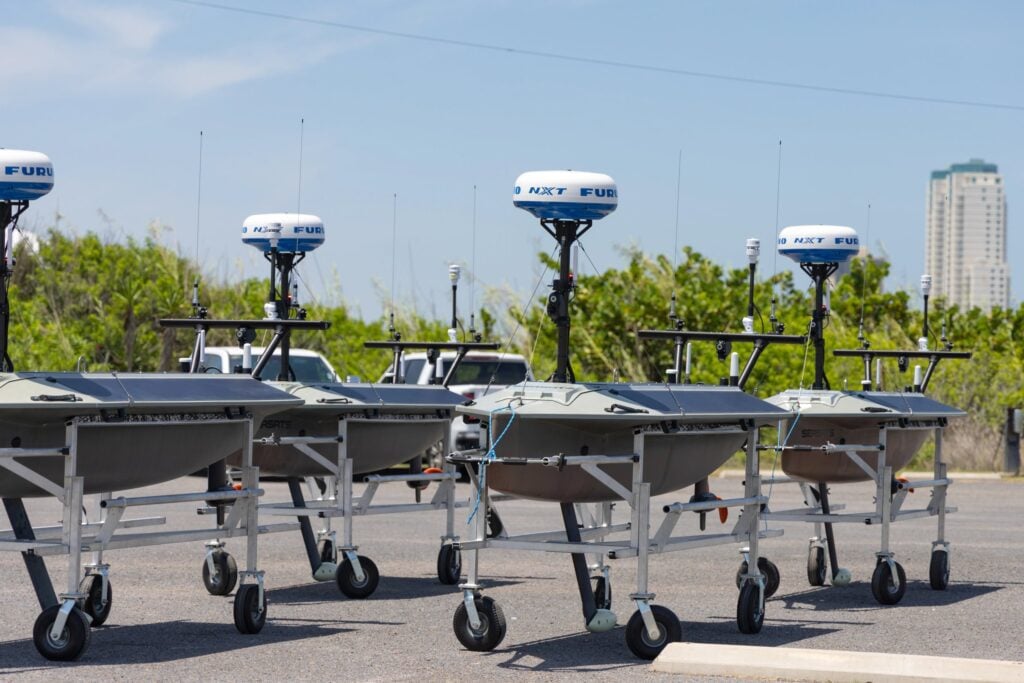
Seasats has deployed a fleet of autonomous Lightfish Unmanned Surface Vessels (USVs) into the Gulf of America from the Texas coast to provide persistent maritime border surveillance under a federal program managed by the Office of the Assistant Secretary of War for Homeland Defense & Americas Security Affairs.
The deployment builds directly upon Seasats’ earlier support for Operation River Wall along the U.S. southern border. Since January 2026, Lightfish vessels have been operating along the Rio Grande alongside crewed patrol assets, establishing sustained unmanned surface vessel operations in a riverine environment that had previously lacked them. This latest expansion transitions that early warning and surveillance capability into open-water operations aimed at detecting unauthorized vessel ingress and drug trafficking.
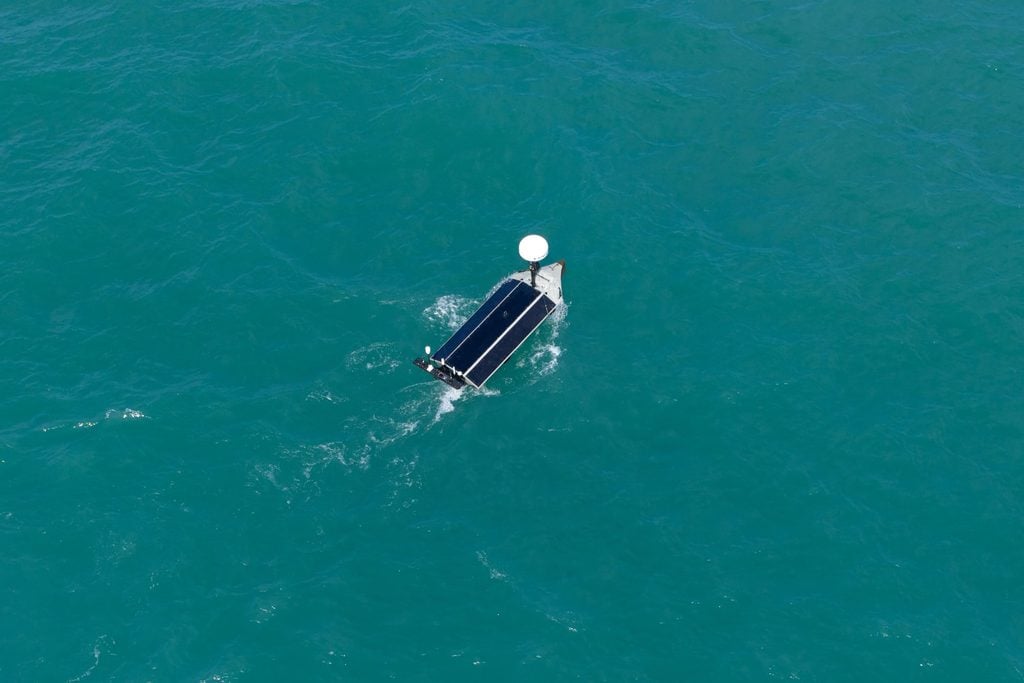
Offshore maritime domain awareness has long depended on manned aircraft and boat patrols, which face operational limitations due to crew fatigue, elevated operating costs, and restricted coverage areas. Federal reviews have consistently highlighted aging cutter fleets and limited aircraft availability as key constraints on maritime interdiction capacity. Operating fully autonomously without a crew on board, the Lightfish fleet functions as a continuous surveillance fence on the water to eliminate spatial and temporal gaps while complementing regional crewed assets.
Engineered for field flexibility, each Lightfish vessel measures approximately 11 feet in length and weighs 340 pounds. The platforms are solar powered, capable of multi-month endurance on station, and can be launched or recovered by just two personnel from a standard boat ramp or pickup truck bed. To accommodate varying sensing tasks, a modular payload bay allows the single hull design to be fitted with electro-optical and infrared cameras, signals intelligence equipment, or sonar.
Mike Flanigan, CEO of Seasats, said, “The Gulf is too vast to monitor with crewed hulls alone. Traditional patrols burn fuel, have high hourly costs, and can only stay out as long as the people on board. A Lightfish is solar powered and has no one aboard, so it can hold station for months in conditions where you wouldn’t want to put a crew. With a fleet of them working together, we get continuous coverage of an area that has only previously been seen in snapshots.”
The operational milestone reflects an increasing reliance on commercial uncrewed systems to address critical homeland security requirements along maritime borders.
ASW Mark R Ditlevson, Assistant Secretary of War, Homeland Defense and Americas Security Affairs, said, “The rapid pace of commercial innovation presents a tremendous opportunity for our Homeland Defense mission. By partnering with industry to rapidly prototype and field mature, scalable technologies, we can close critical capability gaps and deliver relevant solutions into the hands of our warfighters. Seasats is one of many industry partners that help secure our nation’s complex maritime domain. We have progressively prototyped and piloted solutions using their Lightfish USV in the challenging riverine environment of the Rio Grande and the vast expanse of the Gulf of America. This is all part of our efforts to gain 100% operational control of our borders.”