Autonomous Control Systems
Discover cutting-edge solutions from 4 leading global suppliers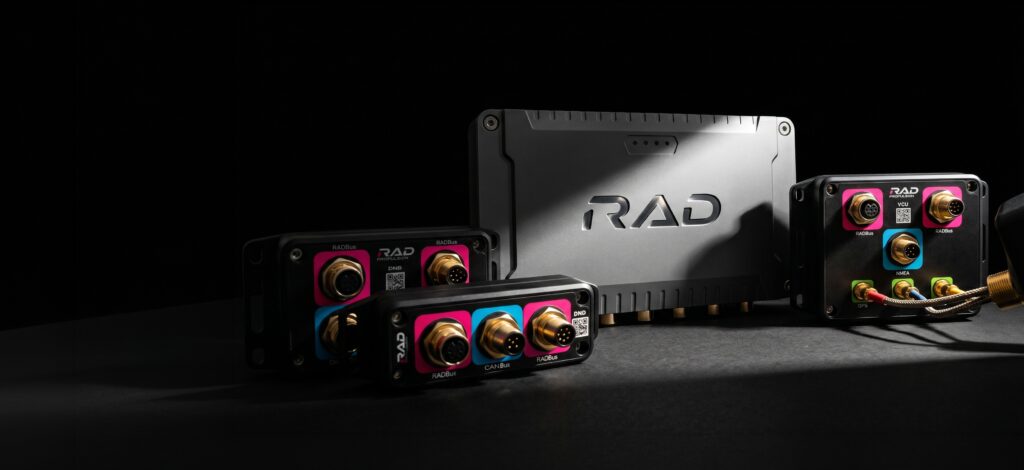
RAD has launched the Autonomy Core to provide a simple, practical and flexible pathway to advanced marine autonomy without compromising on safety or control.
Unveiled at the Combined Naval Event in Farnborough, the Autonomy Core, a new product within the RAD Autonomy System, acts as an interface layer between vessel engines and onboard systems. It enables vessels to communicate over an IP network, which can connect to the internet via satellite, Wi-Fi, or cellular solutions using either RAD hardware or existing customer infrastructure.
Dan Hook, CEO of RAD, stated, “Autonomy in marine has been overcomplicated for too long. With the Autonomy Core, we’ve focused on what operators actually need: a system that is easy to install, works with what they already have, and guarantees control. This is about making remote operation accessible today, while keeping the door open for more advanced autonomy tomorrow.”
The platform is designed for rapid deployment and enables Degree 3 autonomy out of the box, enabling fully remote vessel control without an onboard crew. To facilitate this, the hardware provides two RAD Bus interfaces, one DroneCAN interface for compass and GPS integration, three Ethernet ports, and one external autonomy system interface via an embedded Autonomy Gateway.
Interoperability serves as a core feature of the solution. The embedded Autonomy Gateway allows the platform to communicate directly with third-party autonomy systems, meaning operators can layer advanced situational awareness and decision-making tools from external partners onto the vessel. While RAD positions its core technology as the fundamental enabler of remote control, it remains fully compatible with partner-enabled Degree 4 solutions, where vessels are capable of independent navigational decision-making.
Safety and reliability features are built directly into the dual-control design. When integrated with an external autonomy system, the Autonomy Core provides a built-in fallback mechanism. If an external autonomy system fails, operators retain the ability to remotely control the vessel and initiate a “get me home” function, ensuring that a loss of higher-level autonomy does not result in a loss of vessel control.
The platform is entirely propulsion agnostic. Any propulsion setup capable of interfacing with network connectivity, ranging from modern digital engines to legacy systems utilizing appropriate gateways, can be integrated. While RAD’s proprietary drive systems offer the most streamlined experience, the architecture is engineered to support a broad array of third-party configurations.
Looking ahead, RAD is developing further hardware and software to support even easier integration of vessel systems, including IP networking, switching, and situational presentation. The Autonomy Core is available now in multiple deployment packages tailored to different operational needs, ranging from basic remote control to fully integrated, autonomy-ready configurations.