Showcase your capabilities
If you design, build or supply Work-Class ROVs, create a profile to showcase your capabilities and connect with visitors who have an active requirement for your solutions.


Work-class remotely operated vehicles (ROVs) are essential tools in the offshore and subsea industries, supporting various tasks from inspection and maintenance to construction and salvage. Engineered to operate in deep and hazardous underwater environments, work-class ROVs are equipped with advanced manipulator arms, powerful thrusters, and integrated sensor suites that allow precise and efficient subsea intervention.
Read the Technology Overview
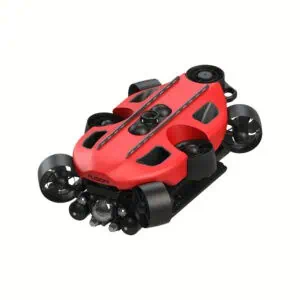
Hybrid Underwater Robotic Vehicle Systems for Multi-Mission Subsea Operations Across Civilian, Security & Defense Sectors

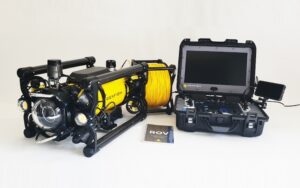
Cutting-Edge Autonomous Underwater Vehicles (AUVs), Underwater Resident Vehicles and Remotely Operated Vehicles (ROVs)

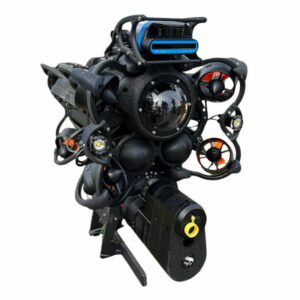
Cutting-Edge Remotely Operated Vehicles (ROVs) for Marine & Underwater Professionals

If you design, build or supply Work-Class ROVs, create a profile to showcase your capabilities and connect with visitors who have an active requirement for your solutions.

Work-class ROVs differ significantly from observation or light work-class units due to their enhanced power, tooling capabilities, and mission versatility. Designed to meet stringent industry requirements across energy, defense, and scientific domains, these ROVs are pivotal in underwater infrastructure management and complex operational tasks.
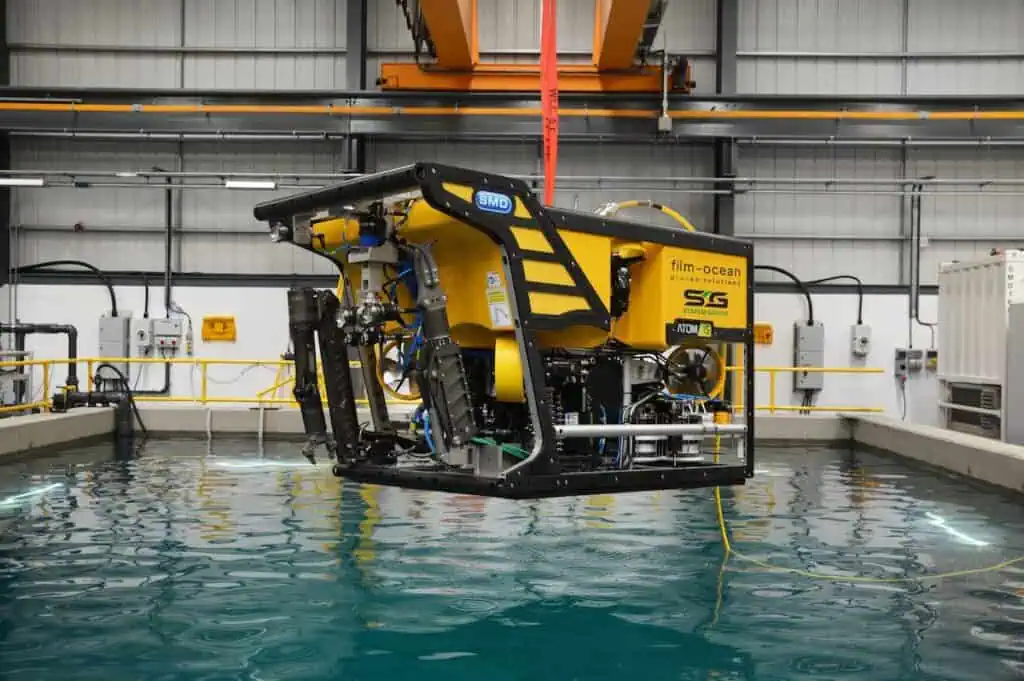
A work-class ROV is a heavy-duty underwater robotic vehicle designed for complex subsea tasks that exceed the capabilities of lighter ROV classes. Controlled from a surface vessel via an umbilical cable, these ROVs are outfitted with high-powered hydraulic systems, robotic arms, and sensor arrays. Work-class ROVs are capable of operating at extreme depths and often support tasks such as pipeline inspection, construction verification, underwater welding, and seabed mapping.
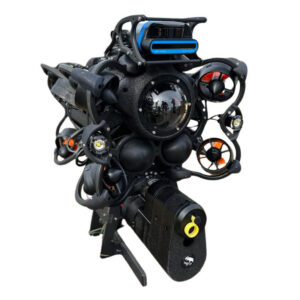
SRV-8 MDV by Oceanbotics.
These vehicles are typically launched using a Launch and Recovery System (LARS), and their onboard systems include sonar systems, depth sensors, video overlays, and onboard computers for real-time data processing. Integrating inertial navigation systems (INS), Doppler Velocity Logs (DVLs), and acoustic tracking systems allows precise maneuvering and navigation in challenging subsea environments.
ROVs are broadly classified into several types based on size, capability, and function:
Small, lightweight units used for visual inspections and basic monitoring tasks. Observation-class ROVs generally lack manipulators and heavy tooling.
These provide limited tooling capabilities and can conduct light intervention tasks. They are a bridge between observation-class and full work-class units.
The most versatile and powerful type, these ROVs are equipped for intensive tasks such as subsea construction, structural inspection, and salvage operations.
Work-class ROVs themselves vary in size, power, and tooling configurations. Utility ROVs may be optimized for specific missions, such as cable laying support or cathodic protection surveys. High-end models often support scientific sampling, riser inspection, or offshore wind farm maintenance.
Work-class ROVs are deployed in various industries for various subsea operations. Their ability to remain submerged for extended periods and perform intricate tasks makes them ideal for roles that demand precision, endurance, and adaptability.
ROVs inspect ship hulls and underwater structures for damage, biofouling, or signs of corrosion. Equipped with high-resolution cameras and sonar, they assess the integrity of hull surfaces and identify maintenance needs without drydocking the vessel.
Using high-resolution video and sonar, ROVs trace the length of underwater pipelines to detect leaks, misalignments, or sediment buildup. They often integrate data acquisition systems and non-destructive testing (NDT) instruments for comprehensive diagnostics.
In deepwater oil and gas fields, ROVs assist in aligning and connecting subsea manifolds. They use manipulator arms and torque tools to secure bolts and hydraulic couplings, ensuring proper installation and sealing.
ROVs are deployed post-installation to confirm that subsea structures, such as platforms or connectors, have been accurately placed. They record visual and dimensional data to validate construction against design specifications.
Work-class ROVs can support remote welding and cutting operations, particularly for repair and salvage tasks. Specialized manipulators and payload bays accommodate underwater welding gear or thermal cutters.
ROVs guide and monitor cable placement on the seabed. They perform trenching assistance, ensure optimal cable positioning, and conduct post-lay inspections to confirm installation quality.
By measuring voltage differences along subsea structures, ROVs assess the effectiveness of cathodic protection systems, helping prevent corrosion of pipelines, platforms, and risers.
Deployed around floating production systems, ROVs scan risers for fatigue cracks, displacement, or marine growth. High-resolution imaging and 3D mapping tools aid in tracking structural changes over time.
ROVs generate detailed topographical maps of the ocean floor using multibeam sonar and altimeters. These maps support site selection for infrastructure or ecological studies.
Work-class ROVs collect biological, chemical, and geological samples from extreme depths. Precision manipulators retrieve sediment cores or biological specimens without contamination.
Equipped with sensors and data acquisition tools, ROVs gather metrics such as temperature, salinity, turbidity, and current profiles to assess environmental conditions.
Routine inspection of subsea installations, including templates, moorings, and wellheads, is a core ROV function. Integrated lighting and video systems ensure visibility even in low-light conditions.
ROVs inspect and maintain subsea components of wind turbines, including monopiles, cabling, and scour protection. They also support environmental monitoring around installation sites.
In recovery missions, ROVs locate and examine wrecks or lost equipment, often using sonar and video overlays. Manipulator arms can assist in recovering items or placing lifting aids.
Tasks such as valve operation, connector mating, or hydraulic fluid injection are carried out by ROVs using specialized end-effectors. These interventions support real-time operational needs or emergency repairs.
The performance and reliability of a work-class ROV depend on a robust set of core systems:
Typically featuring multiple degrees of freedom, manipulator arms handle tools, operate valves, and interact with subsea assets.
Arrays of vertical and lateral thrusters ensure accurate movement and station-keeping in current-heavy environments.
Supplies hydraulic energy to arms, cutters, and torque tools. Compact HPUs improve efficiency in confined payload spaces.
Tools like INS, DVLs, sonar systems, altimeters, and MRUs deliver real-time positioning, orientation, and seabed tracking.
High-performance onboard computers process sensor data, control actuators, and interface with topside control consoles.
Configurable skids with multiple bays enable integration of mission-specific instruments, such as NDT probes, scientific samplers, or utility tools.
High-intensity lighting systems paired with multiple cameras provide clear imaging for operators and data recording.
Redundant power distribution modules and subsea battery packs ensure operational resilience and extend mission duration.
Work-class ROV manufacturers develop platforms tailored for mission requirements, environmental conditions, and operational scales. Leading suppliers often provide modular ROVs with customizable payload bays, onboard diagnostics, and AI-enhanced control systems for improved autonomy and efficiency. Factors to consider when evaluating work-class ROV specifications include:
As subsea industries expand into deeper, more complex environments, the role of work-class ROVs becomes increasingly vital. These machines provide a safe, efficient, and highly capable alternative to human divers for tasks ranging from infrastructure inspection and construction to scientific sampling and environmental monitoring. With advancements in ROV technology, including smarter sensors, AI-driven controls, and enhanced power systems, work-class ROVs are evolving into ever more adaptable platforms, tailored for emerging demands in offshore wind, deep-sea mining, and subsea robotics research.
Integrating powerful manipulators, precise navigation systems, and mission-specific payloads ensures that work-class ROVs remain the backbone of subsea intervention and observation. Whether deployed by defense agencies, energy producers, or marine scientists, these remotely operated vehicles offer unmatched versatility and reliability in underwater operations.
 Searching Companies & Products

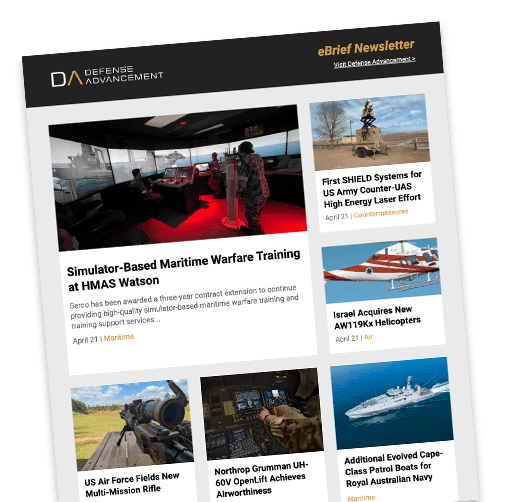 Subscribe to the Weekly eBrief
The latest engineering and technical developments straight to your inbox - join thousands of engineers who receive it.
Subscribe to the Weekly eBrief
The latest engineering and technical developments straight to your inbox - join thousands of engineers who receive it.