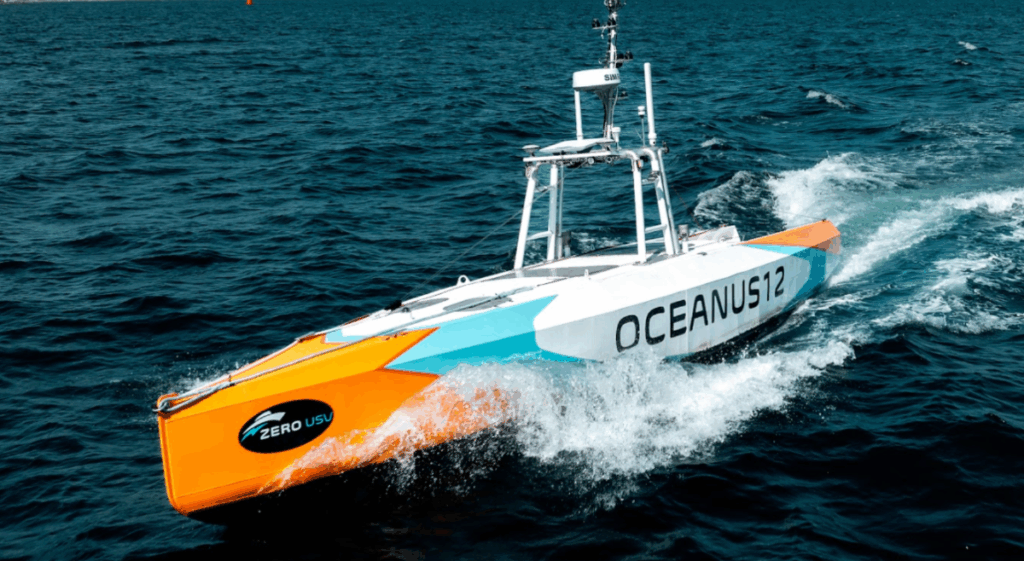
Showcase your capabilities
If you design, build or supply Maritime Security USVs, create a profile to showcase your capabilities and connect with visitors who have an active requirement for your solutions.


Select maritime security USVs from qualified manufacturers and suppliers that support coastal monitoring, port protection, and offshore defense missions where persistent presence and reduced crew risk are critical.
Read the Technology Overview
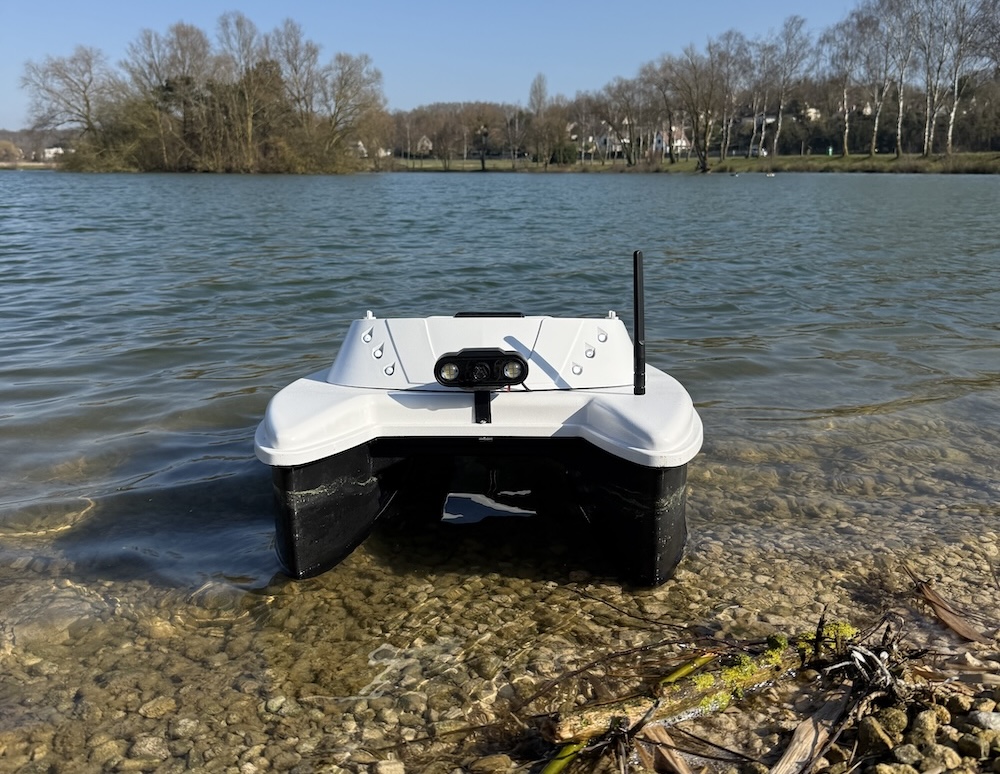
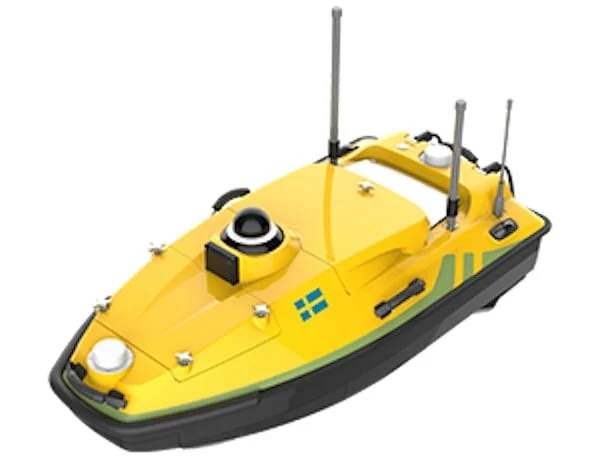
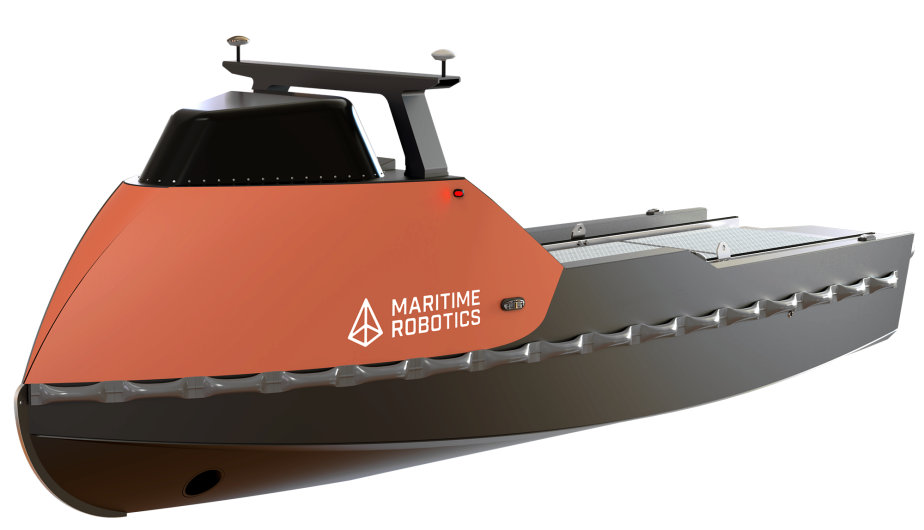


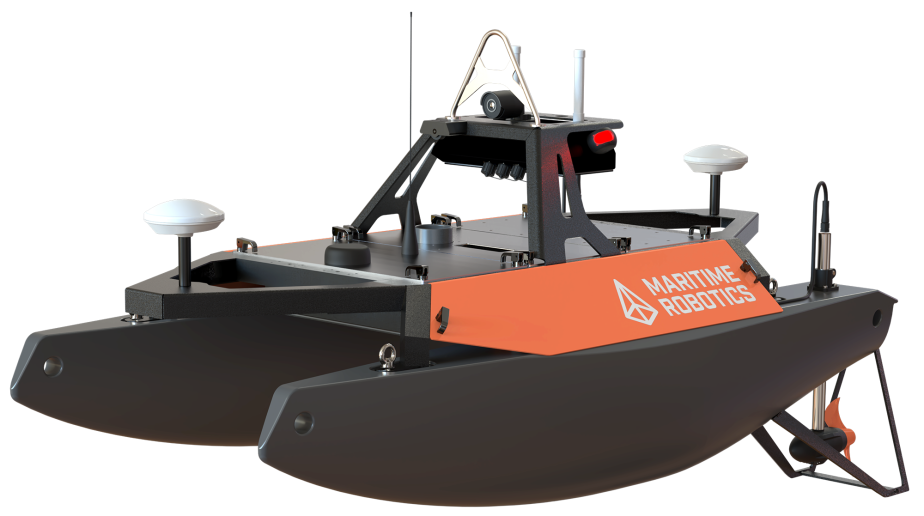

Innovative Uncrewed & Autonomous Surface Vessel Technologies for Maritime Operations

Cutting-Edge Surveying, Positioning & Sensing Solutions for Hydrographic & Oceanographic Applications

Reliable Solar-Powered USVs for Real-Time Oceanographic & Maritime Data Acquisition

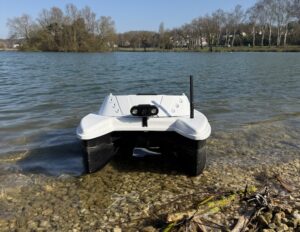
Robotic & Remote-Controlled Solutions for Waste Collection, Rescue Operations, & Aquatic Data Collection

If you design, build or supply Maritime Security USVs, create a profile to showcase your capabilities and connect with visitors who have an active requirement for your solutions.

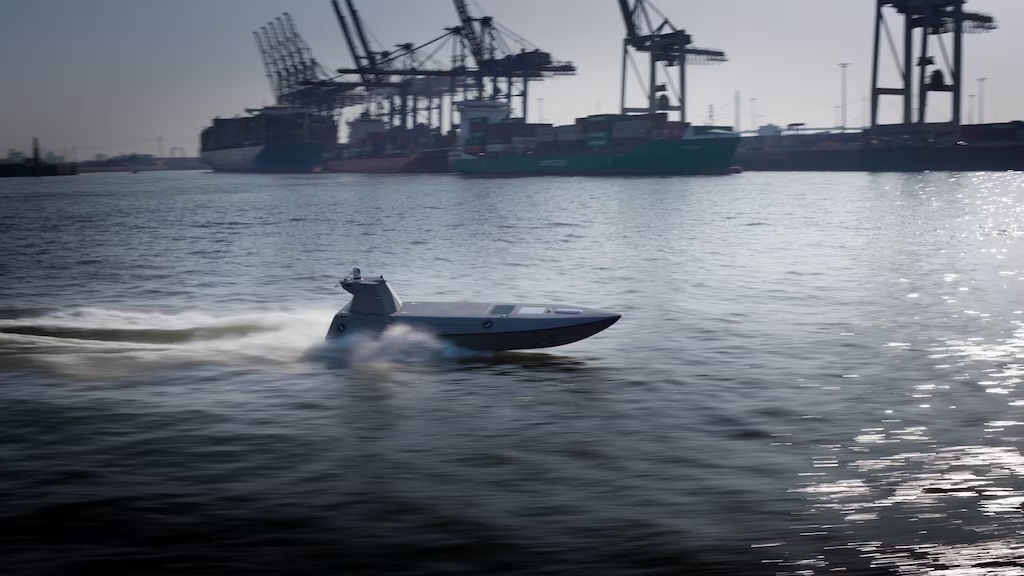
Maritime security USVs are unmanned or autonomous surface vessels built for coastal, port, harbor, and offshore security operations. They integrate navigation, sensing, communications, and mission payloads within rugged hulls suited to persistent use in complex maritime environments.
Used across ocean science, defense, and law enforcement missions, these platforms extend surveillance, ISR, and patrol capability while reducing risk to personnel. Configurations range from compact electric patrol craft to larger autonomous surface vessels with hybrid propulsion, modular payloads, and optional weapon integration.
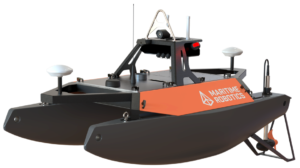
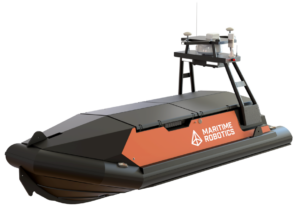
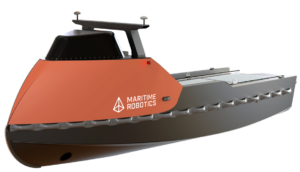
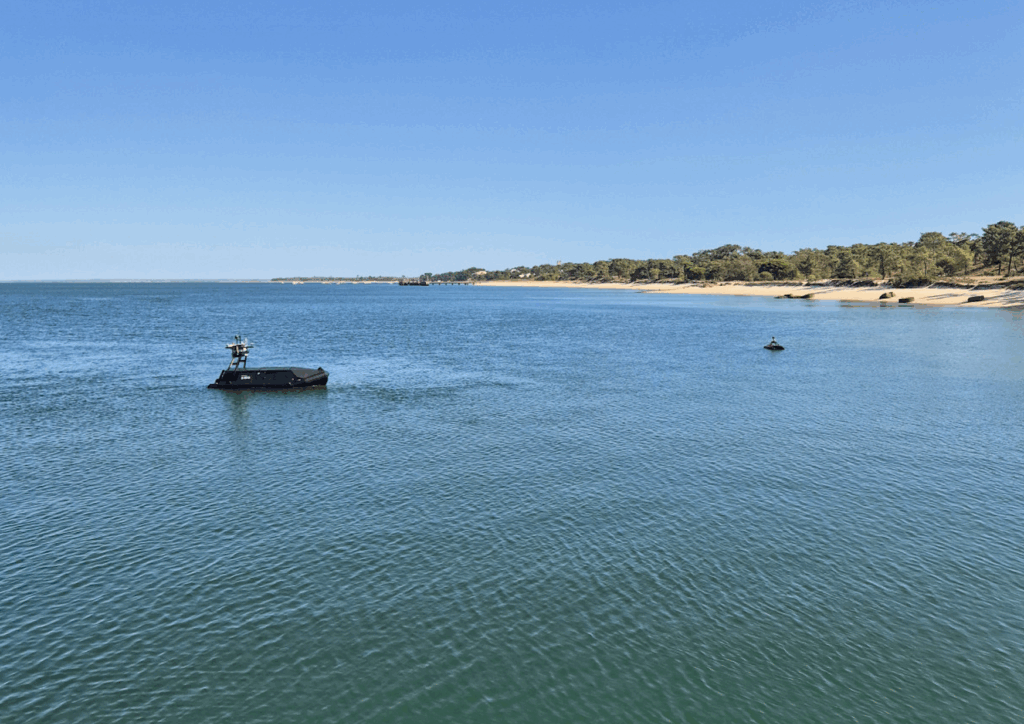
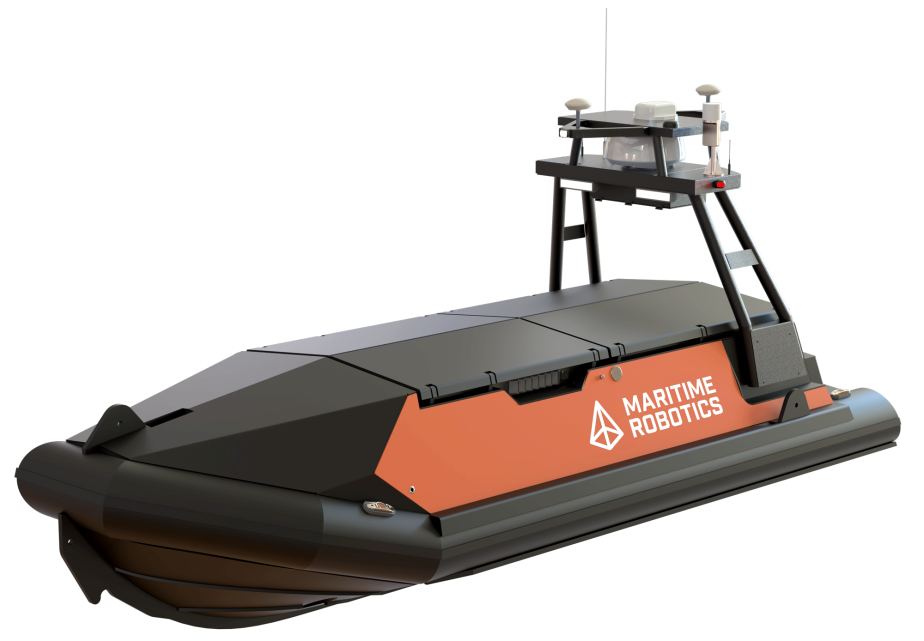
Otter Uncrewed Surface Vessel from Maritime Robotics
USVs conduct continuous coastal patrols to detect unauthorized vessels, smuggling activity, and maritime border incursions. Autonomous operation enables wide-area coverage with reduced operational cost.
In port security and harbor defense roles, USVs monitor vessel traffic, inspect restricted zones, and support the protection of critical infrastructure around terminals, bridges, and energy facilities.
Equipped with surveillance radar, EO sensors, and day night cameras, USVs support intelligence surveillance and reconnaissance tasks in littoral and offshore environments.
USVs are deployed to protect pipelines, undersea cables, offshore platforms, and oil and gas assets, providing early warning and response capabilities.
Autonomous surface vessels assist maritime patrol forces with interdiction support, tracking of suspect vessels, and evidence collection in law enforcement operations.
For naval security and fleet protection, military USVs operate as forward sensors, escort platforms, or force protection systems in high-risk zones.
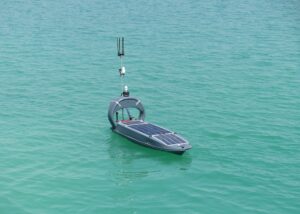
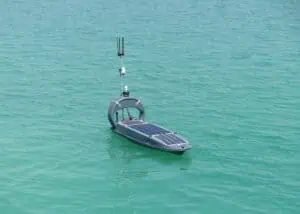
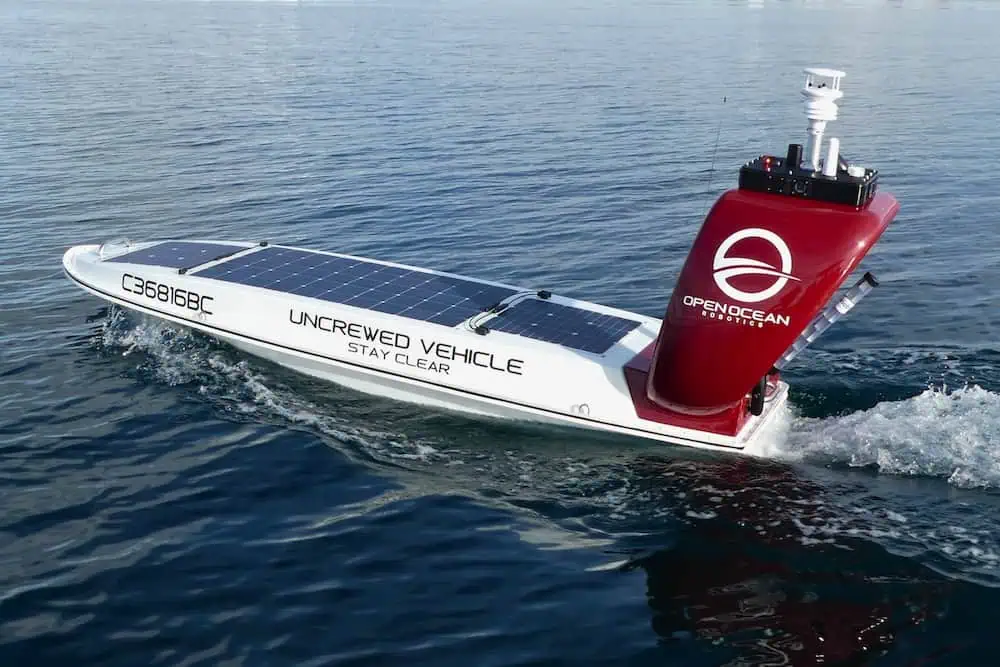
DataXplorer™ Protect USV from Open Ocean Robotics
These Small USVs are optimized for harbor security and short-range coastal missions, often using electric propulsion and lightweight hulls.
Autonomous surface vessels balance endurance and payload capacity, supporting maritime surveillance, ISR missions, and offshore patrol with hybrid propulsion systems.
Armed USVs integrate remote weapon stations or weapon mounts for deterrence and force protection in naval and maritime defense scenarios.
Designed with modular payload bays, many USVs allow rapid reconfiguration among surveillance, sonar, communication-relay, and security payloads.
High-speed autonomous vessels support rapid response, interception, and escort missions in port security and coastal patrol operations.
Maritime security USVs rely on robust autonomous control systems, mission computers, and onboard computers to manage navigation, sensing, and communications. Power management systems support electric and hybrid propulsion architectures, while aluminum hulls and composite hulls are selected based on durability, payload integration, and operating environment.
Collision-avoidance and sense-and-avoid systems are critical for safe operation near commercial traffic. Secure command-and-control systems and encrypted data links ensure resilience against interference in contested environments. Integration with existing maritime surveillance systems and C2 systems is a key requirement for defense and coast guard users.
Compared with crewed naval patrol vessels, maritime security USVs offer lower lifecycle cost, extended persistence, and reduced personnel risk. While payload capacity and on-board decision-making remain more limited than crewed platforms, advances in autonomous control, sensor fusion, and communications continue to close this gap.
USVs complement rather than replace crewed assets, operating as force multipliers that expand surveillance coverage, provide early warning, and handle routine patrol tasks. In high-threat or remote environments, unmanned surface vessels enable sustained operations that would otherwise be impractical.
Maritime security USVs are commonly designed in accordance with naval and maritime standards governing structural integrity, communications, and interoperability. Relevant frameworks may include military environmental standards, NATO interoperability guidelines, and maritime collision regulations. Compliance with port authority, coast guard, and defense procurement requirements is essential for operational deployment.
 Searching Companies & Products
 Subscribe to the Weekly eBrief
The latest engineering and technical developments straight to your inbox - join thousands of engineers who receive it.
Subscribe to the Weekly eBrief
The latest engineering and technical developments straight to your inbox - join thousands of engineers who receive it.