

The Global Sourcing Hub for Marine, Subsea & Offshore Technology
Discover cutting-edge solutions from leading global suppliers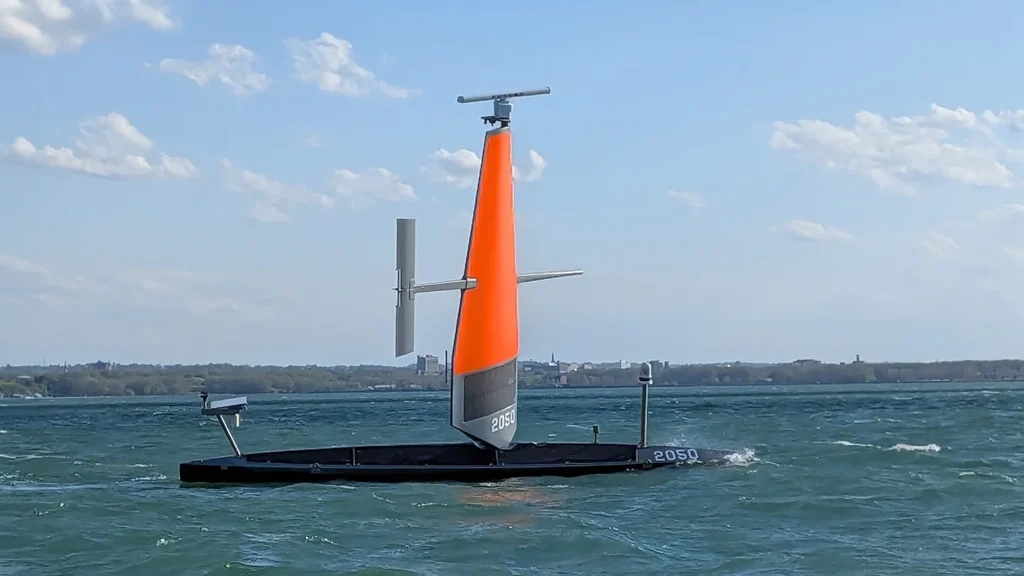
Saildrone is deploying a fleet of 16 Unmanned Surface Vehicles (USVs) across the Great Lakes and Northeast coast to enhance northern border security and maritime domain awareness under a $15.5 million contract signed with the United States Coast Guard in March.
The northern maritime approaches span thousands of miles of coastline, high-traffic waterways, productive fishing grounds, and vast operating areas where visibility is critical but difficult to maintain. From the Great Lakes to the North Atlantic, the US Coast Guard is responsible for detecting suspicious vessel activity, securing the U.S border and its maritime approaches, facilitating the flow of commerce vital to economic prosperity, and safeguarding domestic fisheries. Unpredictable weather, seasonal conditions, and the scale of the region make persistent monitoring a challenge for traditional patrols, along with crew endurance, maintenance requirements, and distance constraints.
Maintaining a clear picture of what is happening on the water is critical for protecting the maritime economy and ensuring the integrity of sovereign borders. From safeguarding domestic fishing grounds against encroaching illegal incursions to providing early warning for cross-border activity, Maritime Domain Awareness (MDA) is the cornerstone of coastal security. The Saildrone Voyager Unmanned Surface Vehicle (USV) delivers solutions that support the Coast Guard’s efforts to integrate autonomous maritime technology, extend its reach, and close visibility gaps.
John Mustin, Saildrone President and retired US Navy Vice Adm., commented, “The expansion of our partnership with the Coast Guard into the Great Lakes and Northeast regions reflects the value Saildrone has delivered in prior missions. This Voyager fleet will help the Coast Guard maintain persistent, scalable maritime domain awareness across these expansive waters, identifying threats in real time and enabling focused, high-impact interdiction.”
This deployment builds on Saildrone’s prior operations alongside the US Coast Guard since 2023, supporting counter-drug and migrant interdictions, safety of life at sea (SOLAS) missions, and efforts to combat illegal, unreported, and unregulated (IUU) fishing in the Southwest and Southeast districts.
In the Great Lakes, maintaining a clear picture of maritime activity is critical for tracking cross-border vessel movement and providing early warning of illicit operations, including drug smuggling. The region’s size, busy waterways, long stretches of maritime border, and variable seasonal operating conditions make persistent monitoring difficult across much of the year. Voyager USVs provide a persistent, on-station presence that assists the Coast Guard with monitoring wide areas, identifying suspicious activity, and maintaining awareness across the maritime border without relying solely on crewed patrols.
Meanwhile, in the Northeast, safeguarding America’s domestic fishing grounds against IUU fishing is a key objective. The North Atlantic is vast, remote, and operationally demanding, making it difficult to maintain continuous visibility with crewed patrol assets alone. By deploying Voyager USVs to monitor fishing vessel activity, the Coast Guard establishes a continuous maritime intelligence layer without overly burdening personnel. This persistent presence helps detect potential violations, support enforcement decisions, and deter illegal activity while reserving crewed assets for interdiction and enforcement at the moment of need.
The Saildrone Voyager is a 10-meter (33-foot) USV designed for persistent surface and subsurface surveillance to enhance MDA. Each vehicle is equipped with high-resolution cameras, advanced radar, and automatic identification system (AIS) receivers to provide a complete picture of surface activity.
The USVs identify and track vessel activity and deliver near-real-time data to Coast Guard command centers, allowing human operators to monitor vast stretches of water from shore and deploy manned interdiction assets only when a verified threat is detected.
In addition to intelligence, surveillance, and reconnaissance, the Voyager platform can conduct near-shore mapping missions and seafloor characterization. The fleet acts as a force multiplier, ensuring that even in the most remote or weather-beaten corners of northern borders, the US maintains a clear, actionable view of its coastal waters.