
Showcase your capabilities
If you design, build or supply Subsea Batteries, create a profile to showcase your capabilities and connect with visitors who have an active requirement for your solutions.


Subsea batteries are self-contained electrical energy storage systems engineered for reliable operation while fully submerged, often at significant depth and for long durations without intervention. Unlike surface-adapted solutions, subsea and underwater battery systems are designed to withstand hydrostatic pressure, seawater exposure, and restricted maintenance access.
This page showcases subsea battery suppliers and providers of underwater battery packs for AUVs, ROVs, seabed infrastructure, and fixed monitoring installations.
Read the Technology Overview

Industry-Leading Underwater Imaging and Power Solutions for Demanding Professional Survey Applications

Marine Monitoring Systems for Surface & Underwater Vessels | Advanced Power Solutions for Subsea Vehicles

If you design, build or supply Subsea Batteries, create a profile to showcase your capabilities and connect with visitors who have an active requirement for your solutions.

Subsea batteries are self-contained electrical energy storage systems specifically engineered to operate reliably while fully submerged, often at significant depth and for extended periods without human intervention. Unlike batteries adapted from surface or near-surface marine use, subsea and underwater batteries are designed from the outset to tolerate hydrostatic pressure, long-term seawater exposure, and limited access for maintenance or replacement. They provide primary or auxiliary power for underwater vehicles, seabed infrastructure, and autonomous subsea systems.
In ROV systems, subsea batteries are commonly used as backup or supplementary power sources. Tethered ROVs may rely on onboard batteries to enable safe recovery if umbilical power is lost or to power critical systems during launch and recovery. Hybrid and lightly tethered ROVs may use batteries to support peak loads, reduce tether size, or enable short-duration untethered operation.
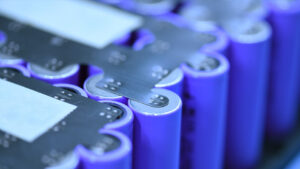
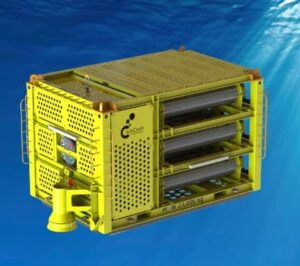
Custom Subsea Battery Solutions by Denchi
AUVs place some of the most demanding requirements on underwater battery systems. Batteries directly determine mission duration, operating range, payload capacity, and achievable depth. Survey, mapping, and inspection AUVs require stable power delivery over long missions, while deepwater and long-endurance platforms prioritize energy density, reliability, and controlled degradation across multiple deployment cycles.
Fixed and semi-fixed subsea instruments rely heavily on battery power for long-term unattended operation. Environmental monitoring systems, oceanographic sensor arrays, and seismic or acoustic nodes may remain deployed for months or years. In these cases, ultra-low self-discharge, long calendar life, and absolute reliability are often more important than rechargeability or high peak power output.
Subsea batteries are widely used in seabed installations to power control modules, valve actuators, and monitoring electronics. They may function as primary power sources or as emergency reserves that ensure safe operation during topside power loss. These applications are typically safety critical, placing strong emphasis on reliability and predictable failure behavior.
Moorings, landers, and fixed observatories frequently depend entirely on onboard battery systems. These platforms prioritize long-duration energy delivery with minimal or no maintenance, often in deep or remote locations. Emergency and redundant power systems also fall into this category, where failure is not an acceptable outcome.
Pressure-tolerant batteries are designed to operate at ambient seawater pressure. Cells and electronics are typically immersed in dielectric oil and pressure-compensated to equalise internal and external pressure. This approach removes the need for heavy pressure vessels and enables extreme depth ratings, but it places constraints on component selection, sealing methods, and long-term reliability.
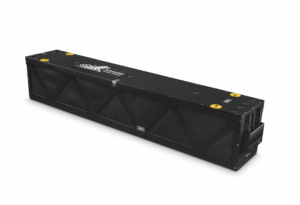
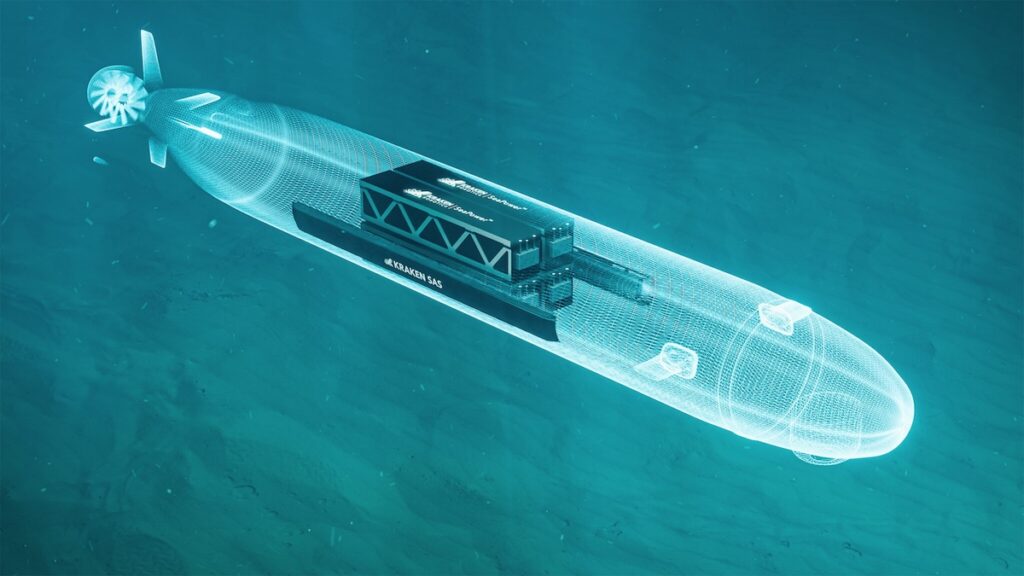
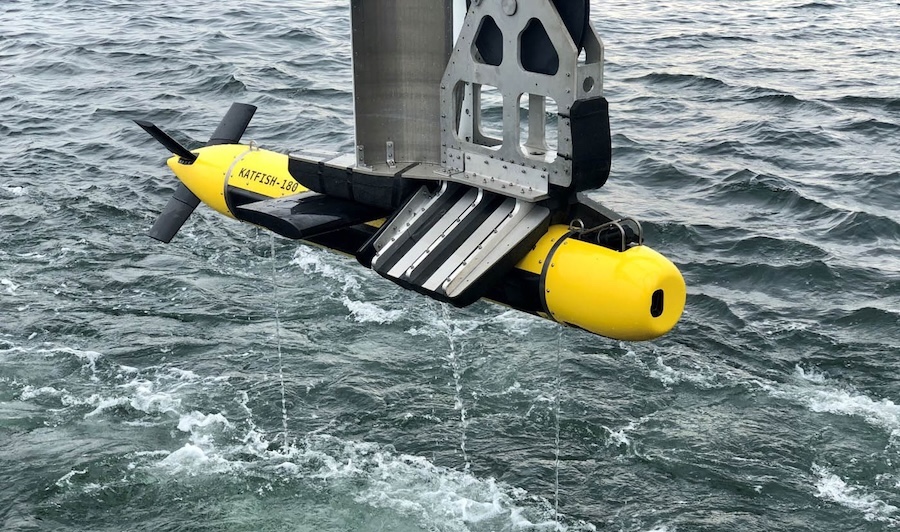
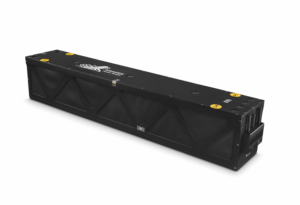
SeaPower Subsea Batteries by Kraken Robotics
Pressure-housed batteries enclose cells and electronics within rigid pressure vessels that maintain a near-atmospheric internal environment. These housings are commonly manufactured from titanium, stainless steel, or high-strength aluminum alloys and rely on precision sealing strategies. While this approach simplifies battery management and chemistry selection, it increases size, mass, and cost.
Hybrid designs combine aspects of pressure-tolerant and pressure-housed approaches. For example, sensitive electronics may be housed in pressure vessels while subsea battery cells operate in pressure-tolerant configurations. These architectures aim to balance depth capability, maintainability, and overall system complexity.
| Chemistry | Type | Key Characteristics | Primary Application |
| Lithium Iron Phosphate (LFP) | Secondary | High thermal stability, long cycle life, moderate energy density. | Seabed energy storage, resident AUVs. |
| Lithium NMC | Secondary | High energy density, mature supply chain, higher thermal risk. | High-performance AUVs and ROVs. |
| Lithium Polymer (LiPo) | Secondary | High discharge rates, customizable thin form factors. | Specialized vehicle hulls and small AUVs. |
| Lithium Thionyl Chloride | Primary | Highest energy density, ultra-low self-discharge, non-rechargeable. | Long-term oceanographic sensors and moorings. |
| Alkaline | Primary | Low cost, easily sourced, lower energy density. | Low-cost sensors, short-term deployments. |
| Sodium-Ion | Emerging | Lower cost, sustainable materials, heavier than lithium. | Large-scale seabed power buffers. |
Depth rating is a fundamental specification for any underwater battery system. Hydrostatic pressure increases by roughly one bar every ten metres of depth, imposing continuous mechanical loads on enclosures, seals, and internal components. Design margins must account for operational depth as well as safety factors and fatigue over the deployment lifetime.
Subsea environments are generally cold and thermally stable, but submersible battery systems must still manage internally generated heat. Low temperatures affect cell chemistry, internal resistance, and usable capacity, making thermal modeling and validation critical during design.
Seawater is highly corrosive, particularly when dissimilar metals are present. Subsea battery packs require careful material selection, galvanic isolation, and robust sealing strategies to prevent long-term degradation or catastrophic water ingress.
Batteries must withstand transportation, deployment, recovery, and operational vibration from vehicles or machinery. Mechanical design must consider fatigue and cumulative damage, not just static strength.
For long-duration deployments, biofouling can affect thermal performance, buoyancy, and external interfaces. While batteries are often less exposed than sensors, fouling still influences system-level performance and integration.
Subsea battery technology relies on carefully engineered charging and energy transfer strategies that balance reliability, efficiency, and operational availability. The choice of method is closely linked to deployment duration, accessibility, and whether recovery between missions is feasible.
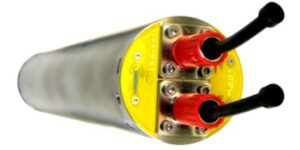
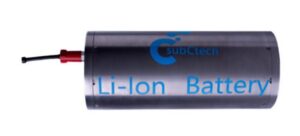
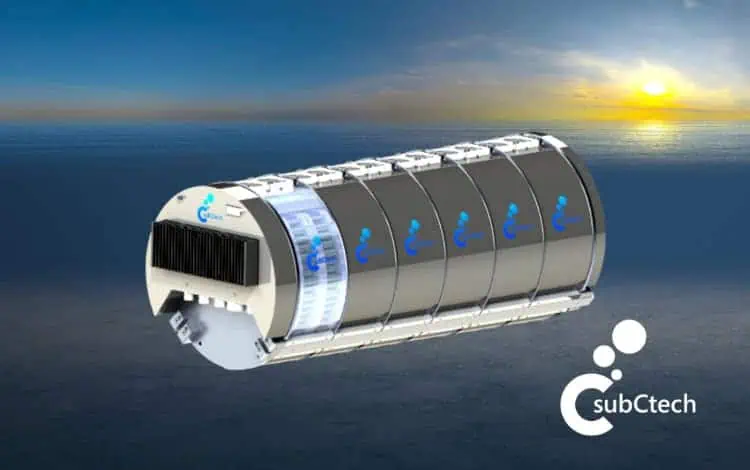
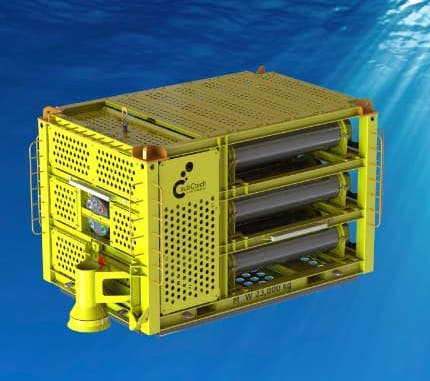
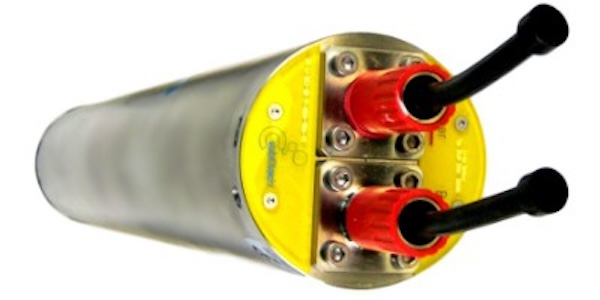
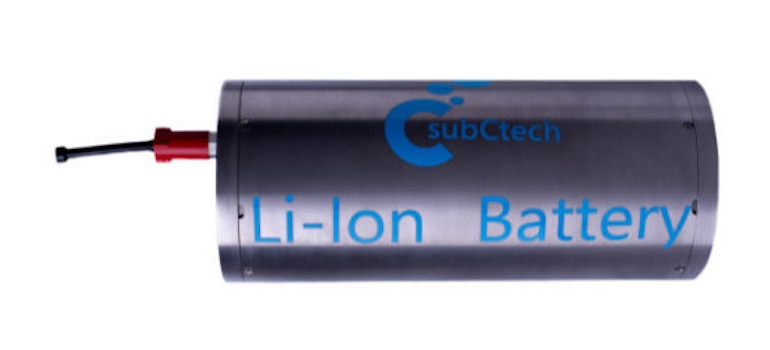
Rechargeable Li-ion Underwater Batteries by SubCtech
Selecting an appropriate charging and energy transfer approach is critical to achieving the desired balance between endurance, reliability, and operational cost across the system lifecycle.
Safety is a central design driver for deep-sea battery systems, particularly given their unattended operation, limited accessibility, and potential integration into safety-critical infrastructure. Risk management focuses on preventing failures and ensuring predictable behavior when faults occur.
A well-designed subsea battery does not aim to eliminate all failure modes, but to ensure that failures are detectable, contained, and managed without compromising the wider system.
The logistics of deploying and managing subsea battery systems significantly influence design decisions, particularly for deepwater or long-duration applications where intervention is costly or impractical.
Effective deployment and maintenance planning ensures that underwater battery packs deliver predictable performance while minimizing operational risk and lifecycle cost.
The rapid growth of autonomous and long-endurance underwater systems is driving demand for higher energy density, improved safety, and smarter Battery Management Systems (BMS). Increasing use of digital health monitoring and predictive maintenance is enabling better lifetime management and reduced operational risk. Advances in chemistry, materials, and system integration are expected to extend mission duration, increase achievable depth, and support more capable subsea platforms across scientific, industrial, and offshore applications.
 Searching Companies & Products
 Subscribe to the Weekly eBrief
The latest engineering and technical developments straight to your inbox - join thousands of engineers who receive it.
Subscribe to the Weekly eBrief
The latest engineering and technical developments straight to your inbox - join thousands of engineers who receive it.