Vertical Reference Units (VRUs) are inertial sensing systems that measure a vessel’s roll and pitch relative to the local gravity vector, providing the stable attitude data required for marine navigation, hydrographic surveying, and autonomous operations. By combining gyroscopes, accelerometers, and advanced sensor fusion algorithms, VRUs deliver accurate real-time motion compensation in dynamic offshore environments.
This page features vertical reference unit manufacturers offering systems with low-latency performance, robust environmental protection, and compatibility with industry-standard marine interfaces and protocols.
If you design, build or supply Vertical Reference Units (VRU), create a profile to showcase your capabilities and connect with visitors who have an active requirement for your solutions.
The Complete Guide to Vertical Reference Units (VRUs)
Overview by
William Mackenzie
Updated:
Introduction to Vertical Reference Units
A Vertical Reference Unit (VRU) is a specialized inertial sensing device that determines a platform’s roll and pitch relative to the local gravity vector. By establishing a continuous, low-latency estimate of attitude, these units provide the stable vertical baseline required by marine navigation, hydrographic survey, positioning, and autonomous control systems.
Accurately isolating vertical alignment aboard a moving vessel is a highly complex engineering task. The system must successfully separate true gravitational acceleration from transient dynamic forces caused by wave action, vessel maneuvers, mechanical vibration, and shifting sea states. As maritime systems move toward full autonomy and higher data densities, the data quality delivered by an onboard vertical reference unit remains a critical factor in overall system performance.
Operating Principles of Vertical Reference Units
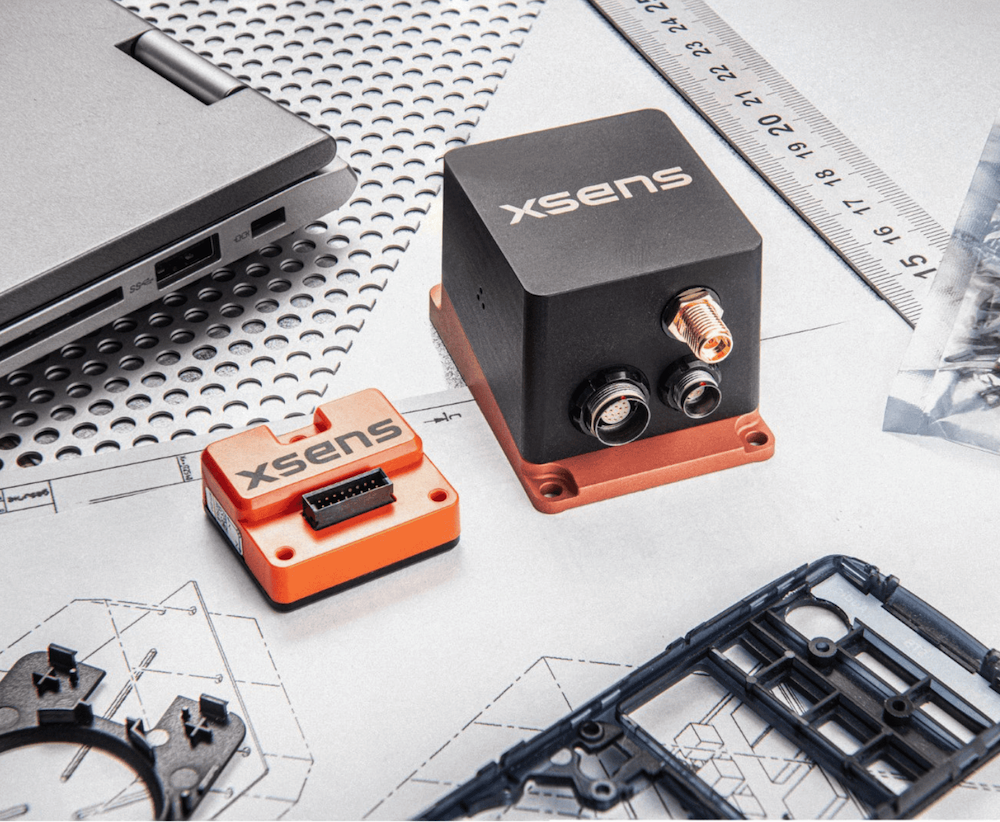
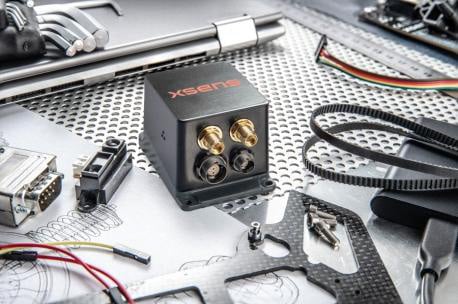
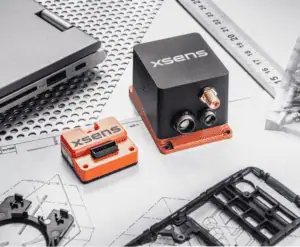
Xsens Sirius Series rugged IP68-rated inertial sensor modules, available as VRUs.
The primary function of a vertical reference unit is to establish a platform’s true orientation relative to the Earth’s gravity vector. Unlike basic tilt sensors that fail under dynamic acceleration, industrial-grade VRUs are engineered to operate reliably where rotational velocities and linear accelerations occur simultaneously. To achieve this, the onboard processor continuously fuses raw data from multiple internal inertial sensors, running advanced filtering algorithms to isolate the vehicle’s actual linear accelerations from the constant acceleration of gravity.
Measuring Roll and Pitch
Roll and pitch represent the two primary rotational degrees of freedom that define a marine platform’s cross-axis orientation. A VRU monitors these angular movements by pairing high-rate gyroscopes with low-noise accelerometers. Gyroscopes capture instantaneous angular velocity for rapid detection of orientation shifts, while accelerometers track the long-term direction of gravity. Fusing these inputs ensures the calculated attitude remains precise enough for demanding sensor stabilization and bathymetric mapping, where small angular errors can translate to significant positional divergence on the seafloor.
Determining the Vertical Reference
Establishing a dependable vertical reference becomes difficult the moment a vessel departs the dock. While gravity provides an unambiguous baseline under static conditions, wave-induced accelerations, sharp turns, and changes in speed introduce significant kinetic noise. Modern vertical reference units overcome this environment by utilizing multi-axis inertial measurement clusters coupled with adaptive estimation filters that track long-term gravity vectors while rejecting short-term dynamic disturbances.
Real-Time Motion Compensation
Real-time motion compensation is one of the most critical deployments for a vertical reference unit. By streaming low-latency attitude data, the VRU allows peripheral payloads to actively counteract vehicle motion as data is captured. This real-time compensation is vital for Multibeam Echosounders (MBES), side-scan sonars, marine LiDAR platforms, optical camera gimbals, satellite communication antennas, and oceanographic sensor deployments.
Signal Processing and Filtering Techniques
The true performance differentiator in a modern vertical reference unit lies within its processing firmware. Raw inertial data contains high-frequency noise, structural vibration, and transient spikes that must be filtered out before outputting attitude orientation. Engineers employ sophisticated sensor fusion architectures, such as extended Kalman filters (EKFs) and complementary filtering networks, to balance sensor inputs and dynamically adjust sensor weighting based on operational conditions.
Core Sensing Technologies in VRUs
MEMS-Based Inertial Sensors
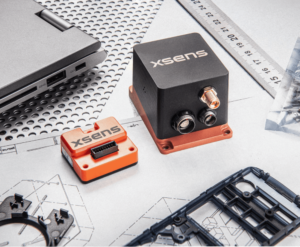
MTi 600-Series versatile inertial sensing solutions, available as VRU modules, from Xsens.
Micro-Electro-Mechanical Systems (MEMS) technology forms the mechanical core of modern VRUs, offering a balance of compact size, low power, and high shock tolerance ideal for Unmanned Surface Vehicles (USVs). Fabrication advancements in bias stability, noise reduction, and factory thermal calibration allow modern tactical-grade MEMS VRUs to achieve precisions that previously required expensive, bulky inertial architectures.
Accelerometers
Triple-axis solid-state accelerometers measure total linear acceleration to register the continuous gravity vector, establishing the baseline for absolute roll and pitch calculations. Because marine environments introduce significant kinetic noise from wave impacts and propulsion, internal processing loops must constantly isolate gravity from dynamic forces using high-linearity designs that prevent vibration rectification errors.
Gyroscopes
Gyroscopes measure angular rate of change across three orthogonal axes to capture high-rate vessel rotation and enable immediate response to unexpected orientation shifts. Continuous tracking of angular velocity maintains stable orientation data between accelerometer updates, meaning a lower gyroscope bias drift rate directly extends the VRU’s accuracy during sustained linear accelerations.
Solid-State Motion Sensing Technologies
The majority of professional VRUs rely on solid-state configurations to eliminate mechanical wear points and optimize shock and vibration resilience. This architecture ensures high reliability during long-endurance offshore deployments and autonomous operations where physical maintenance is impossible.
Fiber Optic and High-End Inertial Technologies
For applications demanding ultra-low noise, systems utilize Fiber Optic Gyroscope (FOG) or Ring Laser Gyroscope (RLG) technologies due to their near-zero bias drift and low angular random walk. These high-end instruments are critical for deep-water subsea navigation, defense assets, and precision hydrographic surveys where minute attitude errors compromise operations.
Sensor Fusion Architectures
Exceptional VRU performance depends on a unified sensor fusion framework that couples accelerometers, gyroscopes, and external aiding data into a single mathematical state estimator. This cooperative processing addresses individual sensor weaknesses, such as accelerometer vibration sensitivity and gyroscope drift, ensuring a stable attitude output across all marine conditions.
Vertical Reference Unit Construction & System Architecture
Internal Hardware Components
An industrial-grade VRU co-locates its inertial sensor clusters, high-speed microcontrollers, power isolation circuitry, and communication physical layers inside a ruggedized, shielded housing. This unified internal layout ensures low-latency signal routing from the raw sensor elements straight to the primary processing core.
Processing Electronics
The embedded Digital Signal Processor (DSP) or microcontroller serves as the computational backbone of the unit. It samples the high-rate inertial sensor arrays, executes complex matrix floating-point operations for sensor fusion, and builds output data packets in real time while managing built-in error compensation maps for thermal and cross-axis alignment corrections.
Power Management Systems
Vessel power grids are notoriously noisy environments, vulnerable to voltage drops and inductive spikes. VRUs feature internal power conditioning modules to step down and stabilize incoming DC voltage, incorporating galvanic isolation and over-voltage protection circuits to prevent electrical spikes from damaging sensitive internal components.
Environmental Protection and Housing Design
VRU housings are typically machined from high-grade anodized aluminum, titanium, or specialized marine plastics to provide robust protection against salt spray and moisture ingress. Internal components are often secured via internal dampening mounts to decouple the primary sensor arrays from high-frequency structural hull vibrations, carrying ingress protection ratings such as IP67 or IP68.
Embedded Software and Firmware
The internal firmware dictates how effectively a vertical reference unit performs in changing field conditions. Modern firmware architectures include field-upgradable frameworks, allowing operators to deploy updated filtering coefficients, configuration profiles, and diagnostic toolsets without extracting the physical hardware from the vessel’s electronics bay.
VRU Outputs, Interfaces & Data Formats
Analog and Digital Outputs
While legacy marine configurations occasionally require low-latency analog voltage outputs for specialized telemetry loops, modern installations rely almost exclusively on digital interfaces. Digital communication eliminates line noise vulnerabilities, preserves sensor resolution, and supports comprehensive error-checking protocols.
Serial Communications Interfaces
RS-232: A fundamental, widely compatible point-to-point standard suited for short-distance connections to legacy instrumentation.
RS-422: Utilizing differential signaling, RS-422 delivers high noise rejection and supports longer cable runs across large ship hulls.
RS-485: A multi-drop bus configuration that enables multiple sensors to communicate efficiently over shared serial lines within complex networks.
Ethernet-Based Interfaces
High-bandwidth Ethernet interfaces (such as UDP or TCP/IP) enable vertical reference units to broadcast high-rate attitude data concurrently to multiple clients, including survey computers, autopilot engines, and remote monitoring consoles, while streamlining top-level network cabling.
NMEA Standards and Marine Data Protocols
To ensure seamless multi-vendor interoperability, vertical reference units natively output standardized NMEA-0183 and NMEA-2000 data strings (such as PRDID or PASHR sentences). Many proprietary survey software suites also accept industry-specific binary formats, allowing direct integration without data translation layers.
Time Synchronization and Data Integrity
When correlating multi-beam echo soundings or LiDAR point clouds with spatial orientation, millisecond-level timing errors create significant spatial data artifacts. VRUs accept precise external time references (such as PPS signals or PTP/NTP network packets) to timestamp output packets at the exact instant of measurement.
Integration with Vessel Networks
In modern layouts, the vertical reference unit acts as a core node within a broad maritime ecosystem. Interconnecting the VRU with voyage data recorders, steering engines, and remote operations consoles improves situational awareness and operational safety.
Comparison With Other Marine Navigation Sensors
Technology
Performance
Applications
VRU
Measures dynamic roll and pitch relative to the local vertical axis.
Motion compensation, platform stabilization, and basic hydrographic survey.
Integrates an IMU with GNSS or acoustic aiding to compute absolute position, velocity, and orientation.
High-stakes autonomous navigation, long-range positioning, and operations in GNSS-denied environments.
Choosing the correct inertial sensor configuration involves balancing application requirements against cost constraints. A standalone vertical reference unit delivers an efficient, high-performance option for configurations that only require cross-axis roll and pitch compensation. However, if the deployment involves multibeam bathymetry where vertical tidal wave motion must be stripped out, a full Motion Reference Unit (MRU) with heave tracking is necessary. For complete platform guidance, an AHRS or an integrated INS is the standard choice.
Marine & Ocean Science Applications of Vertical Reference Units
Hydrographic Survey and Seafloor Mapping
In seafloor mapping, bathymetric data relies heavily on exact sensor alignment. As a survey vessel rolls and pitches across waves, the acoustic beams from hull-mounted multibeam echosounders sweep dynamically across the seabed. A vertical reference unit provides the real-time angular corrections required to true up those acoustic returns, ensuring clear, uncorrupted bottom topography models.
Marine Robotics and Autonomous Systems
The growth of USVs, Autonomous Underwater Vehicles (AUVs), and Remotely Operated Vehicles (ROVs) has broadened the application of vertical reference instruments. Autopilot controllers utilize high-rate attitude data from a vertical reference unit to execute responsive feedback loop adjustments, maintaining stable heading paths and smooth depth profiles through changing cross-currents.
Offshore Operations
Offshore energy construction demands rigorous safety and precision baselines. Onboard wind farm support vessels, oil platform supply ships, and dredging barges, VRUs feed critical orientation data into active heave compensation winches and dynamic positioning controllers. This integration stabilizes cranes and heavy subsea deployment lines during critical asset installations.
Emerging Trends in Vertical Reference Technology
The market for marine inertial sensing is evolving rapidly, driven by shifting operational demands and significant breakthroughs in hardware fabrication and signal processing.
Tactical-Grade MEMS Advancements: Continuous improvements in micro-structure design and capacitive sensing arrays are drastically lowering noise floors and bias drift. Modern MEMS-based vertical reference units now achieve precision levels that previously required costly fiber-optic modules.
AI-Enabled Error Modeling: Machine learning and adaptive filters are being integrated directly into sensor firmware. By modeling complex vessel dynamics and thermal variances, these networks reduce Allan variance and eliminate non-gravitational noise more effectively than traditional static Kalman models.
Deep Multi-Sensor Fusion: Modern architectures are moving beyond standalone inertial processing. Next-generation systems tightly fuse real-time velocity data from Doppler Velocity Logs (DVLs) or RTK-GNSS directly into the primary attitude algorithm, mitigating orientation drift during sustained vessel turns.
Embedded GNSS and INS Integration: The operational division between VRUs, AHRS, and full inertial navigation systems is disappearing. Manufacturers are embedding multi-frequency GNSS receivers straight into the VRU housing, creating single-component solutions that output position, true heading, and vertical reference metrics simultaneously.
Interconnected Smart Ship Architectures: With the maritime shift toward digital infrastructures, vertical reference units now feature native network capabilities. They support advanced streaming protocols and predictive health analytics for seamless integration into ship-wide automation suites.
Mandates for Marine Autonomy: The proliferation of Maritime Autonomous Surface Ships (MASS) and long-endurance unmanned drones requires extreme component reliability. This is forcing a shift toward internal hardware redundancy and advanced self-diagnostic routines within next-generation motion sensors.
High-performance MEMS inertial sensors from Tronics Microsystems provide reliable motion data for marine and subsea navigation, improving vessel control, mapping accuracy, and dynamic positioning performance
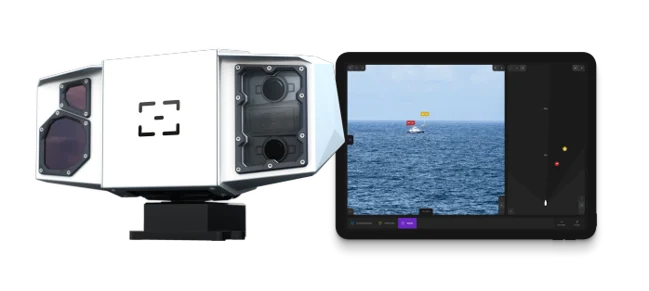
Xsens has provided the critical motion sensing technology for the Sentry AI lookout system from SEA.AI, enabling precise stabilization and object tracking for safer marine navigation in dynamic ocean conditions
OST is helping Tronics Microsystems showcase its high-performance, cutting-edge MEMS-based inertial sensing solutions for marine, offshore, and underwater applications
The latest offshore, subsea & marine technology news, straight to your inbox.
Get our weekly roundup of technology developments, new products and industry news.
THANK YOU FOR SIGNING UP
Thanks for joining us. Check your inbox.
We've sent you an email. Click the confirmation link to complete your subscription to the weekly eBrief. In the meantime, explore the latest news, suppliers and technologies.