Sonar Array Systems (Hydrophone Arrays) for Industrial, Scientific, and Military Applications
Sonar arrays, also known as hydrophone arrays, are advanced acoustic systems used in various maritime operations, including scientific, commercial, and defense applications. By combining multiple hydrophones in structured configurations, they allow for accurate direction-finding, extended detection ranges, and enhanced signal clarity. This spatial sensing capability offers significant advantages over single hydrophones, which are limited to detecting sound at a single point without directional information.
If you design, build or supply Sonar Array Systems (Hydrophone Arrays), create a profile to showcase your capabilities and connect with visitors who have an active requirement for your solutions.
Sonar Array Systems (Hydrophone Arrays) for Industrial, Scientific, and Military Applications
Overview by
Joe Macey
Updated:
A sonar array comprises multiple hydrophones (underwater acoustic sensors) arranged in specific geometries, linear, planar, spherical, cylindrical, and conformal, to sample acoustic waves from the underwater environment. By processing the time differences and phase shifts of sound signals arriving at each hydrophone, the system performs beamforming, enhancing signals from specific directions while suppressing noise.
Array vs Single Hydrophone
While a single hydrophone captures sound pressure, it cannot determine the direction of the source or suppress interference. A hydrophone array offers:
Directionality through beamforming, enabling bearing estimation, target tracking, and vessel tracking.
Improved signal-to-noise ratio through coherent combination of multiple sensors.
Range extension by using louder emissions in active modes and combining long arrays.
Types of Sonar Arrays for Non‑Consumer Use
Linear Arrays & Towed Arrays
Linear/horizontal arrays: hydrophones in a line or cylinder; used portside on ships or buoys for environmental monitoring, submarine detection, and marine mammal monitoring.
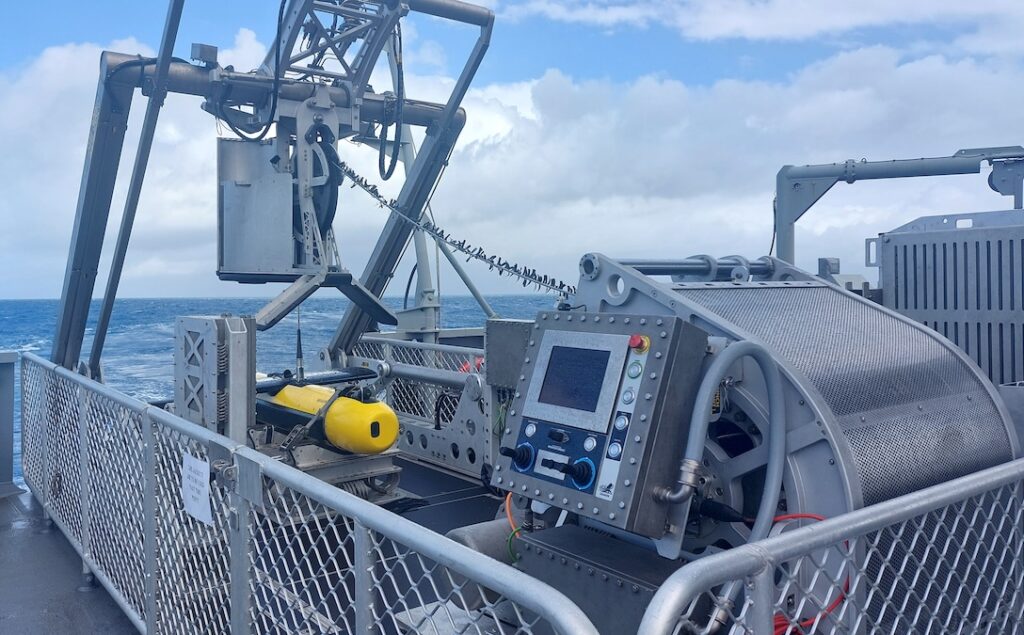
Towed array sonar: trailed behind a vessel on a tow cable; variable depth for ship or submarine-deployed detection and surveillance. Requires towed sonar array engineering and inertial sensors for positioning.
Conformal arrays: integrated into vessel hulls, ROVs, or ASVs while conforming to surfaces; optimal for mine countermeasures, oil & gas surveys, and offshore inspections.
Spherical arrays: 3D orientation with near-omnidirectional detection; ideal for acoustic communication, underwater archaeology, seabed mapping, and bathymetric surveys.
Cylindrical, SOSUS, Flank, Bow, and Vertical Line Arrays
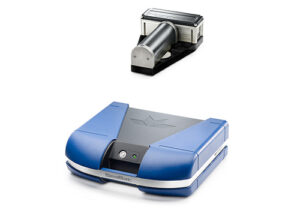
Shallow water multibeam echosounder, SeaBat, by Teledyne Marine.
Cylindrical arrays: wrap around structures like buoys or towers; used in seabed mapping, pipeline inspection, and port surveillance.
SOSUS hydrophone arrays: fixed large-scale seabed sensor nets for wide-area surveillance and anti-submarine warfare.
Flank or bow arrays: mounted on a ship’s sides or hull, used in active sonar array systems for submarine detection.
Vertical line arrays: deployed from surface vessels to detect depth-stratified targets and bottom reflections; useful for hydroacoustic research.
Multibeam & Synthetic Aperture Sonar
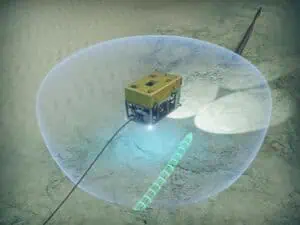
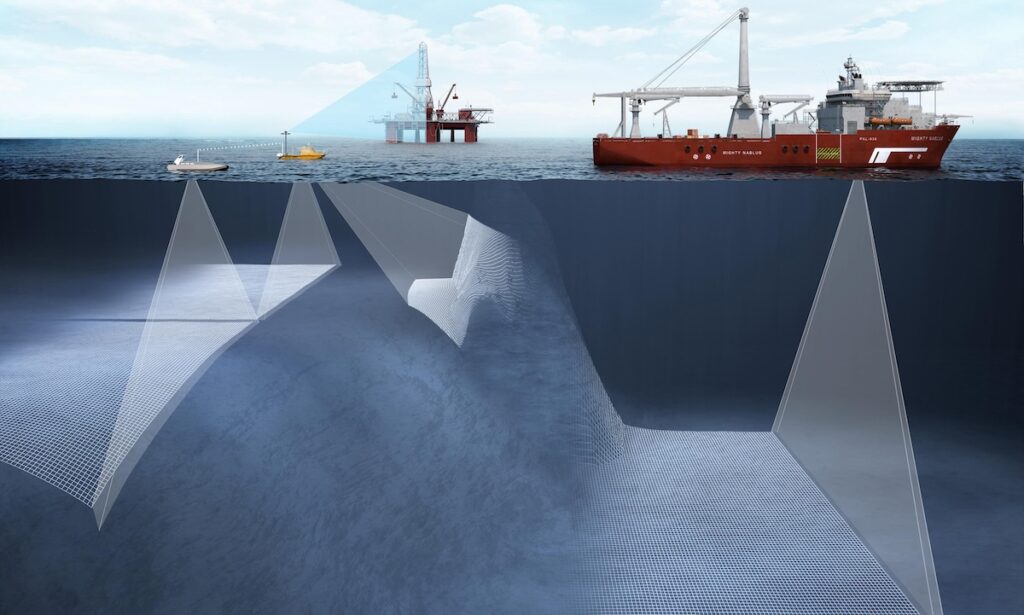
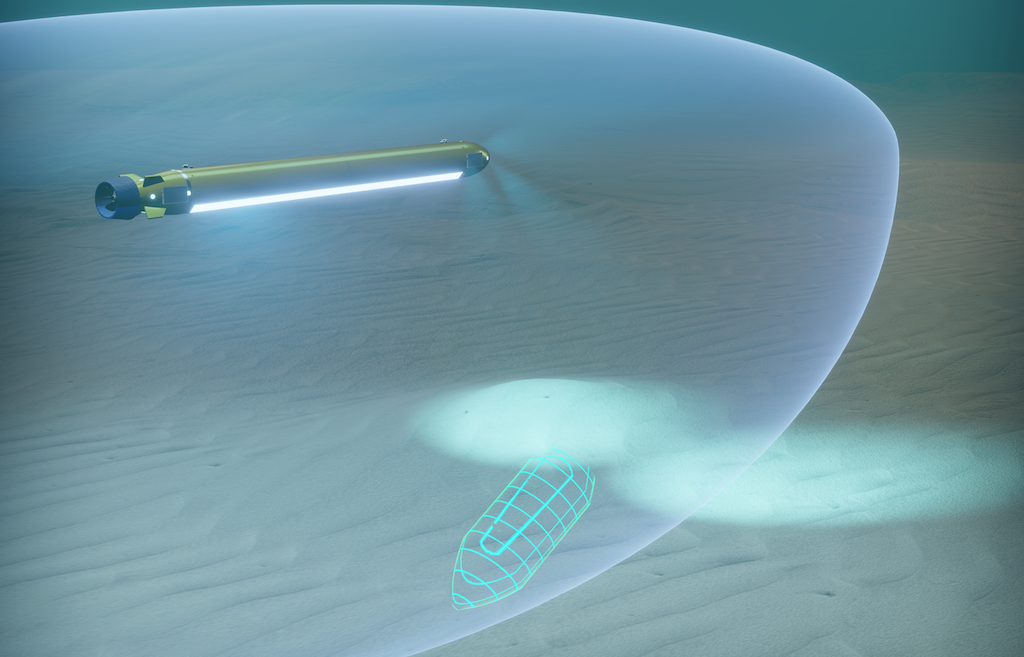
Multibeam sonar: emits fan-shaped pings to map seabed topography (bathymetric surveys), used with precise navigation systems for accurate 3D mapping.
Synthetic aperture sonar (SAS): combines ship or AUV motion with beamformed data to produce high-resolution 3D imagery of seabed features. Used in pipeline inspections, underwater infrastructure inspection, mine detection, and maritime surveillance.
Arrays on buoys and seabed installations support marine mammal monitoring, ocean-floor mapping, and long-term acoustics research.
Trawl Monitoring & Fisheries Research
Sonar arrays, particularly linear and planar configurations, are used in trawl monitoring to track net behavior, fish school density, and species identification in real time. These systems help optimize catch efficiency while minimizing environmental impact, and are often integrated with acoustic sensors and digital signal processors for precise data collection in fisheries research and management.
Offshore Inspection & Infrastructure
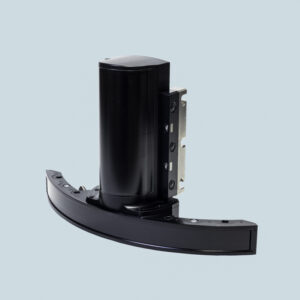
Multibeam sonar system, Norbit Winghead, by Norbit Subsea.
Conformal and multibeam arrays on ROVs and AUVs conduct pipeline inspections, seabed surveys, and infrastructure assessments with high-resolution imaging and site navigation awareness.
Subsea Mapping & Hydrographic Surveys
Multibeam and SAS arrays provide detailed bathymetric maps for navigational charts, cable routing, and scientific surveys.
Underwater Communication & Navigation
Arrays enable acoustic communication between submerged vehicles or with topside ships. Navigation-focused arrays on AUVs, ROVs, or submersibles ensure collision avoidance and accurate positioning.
Vessel & Port Security
Sonar arrays enable passive detection of incoming vessels or submarines, while active towed and hull-mounted arrays provide comprehensive security coverage. Variable-depth sonars (VDS) and dipping sonars are essential for ASW and port security missions.
Military & Defense
Fixed SOSUS arrays and mobile towed arrays support anti-submarine warfare, submarine detection, and maritime surveillance. Bow and flank arrays enable active detection for naval vessels.
Niche Uses
Underwater archaeology: non-invasive imaging via SAS or multibeam to map artifacts.
Fisheries research: arrays detect and track schools.
Pipeline monitoring: identify leaks, damage, or anchor strikes using moored arrays near critical assets.
Superior Detection, Navigation, Imaging, & Communication
Sonar array systems, ranging from simple linear wire arrays to sophisticated conformal and spherical configurations, are integral to maritime operations. By integrating multiple hydrophones, advanced electronics, and beamforming digital signal processors (DSPs), these systems achieve superior detection, navigation, imaging, and communication capabilities. Their applications span defense, offshore, scientific, and environmental spheres, delivering precise acoustic insights critical to undersea operations.
Following a successful sea demonstration, Kraken Robotics and SEFINE SISAM have signed a memorandum of understanding to integrate advanced sonar and automated target recognition into unmanned surface vessel mission software
Kraken Robotics has appointed BlueZone Group as an authorized reseller of its SAS and KATFISH platform, offering high-resolution underwater imaging, bathymetric mapping, and rapid data collection for defense and commercial surveys in Australia and New Zealand
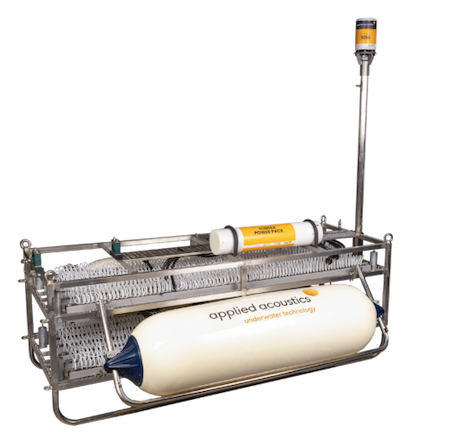
applied acoustics' sub-bottom profiling systems offer advanced solutions for detailed seabed imaging, combining cutting-edge technology and flexible designs to support diverse marine surveying applications
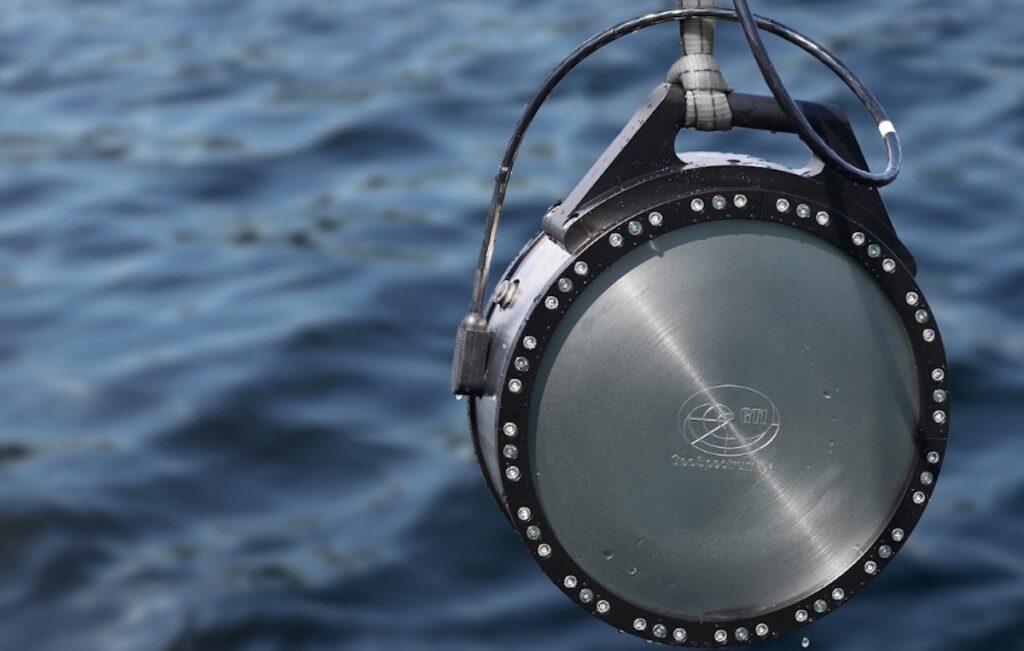
GeoSpectrum Technologies is showcasing its marine acoustic systems on OST, offering specialized hardware solutions for maritime surveillance, oceanography, and environmental research
NORBIT Subsea has partnered with OST to showcase its advanced multibeam sonar solutions, supporting high-resolution subsea mapping, imaging, and monitoring across offshore and marine industries
Crewless Marine is showcasing its underwater acoustic sensor technologies and autonomy solutions on OST, providing scalable, field-tested systems for uncrewed maritime vehicles across scientific research and environmental monitoring applications
Ocean Sonics has partnered with OST to demonstrate its innovative underwater acoustics solutions, enhancing marine monitoring and data collection for various offshore and oceanographic applications
OST has been showcasing ELWAVE’s innovative subsea imaging sensors, highlighting the company’s recent achievements and their unique biomimetic electric sensing technology
The latest offshore, subsea & marine technology news, straight to your inbox.
Get our weekly roundup of technology developments, new products and industry news.
THANK YOU FOR SIGNING UP
Thanks for joining us. Check your inbox.
We've sent you an email. Click the confirmation link to complete your subscription to the weekly eBrief. In the meantime, explore the latest news, suppliers and technologies.