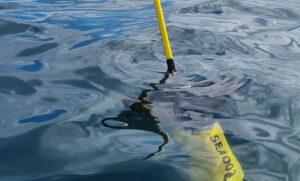
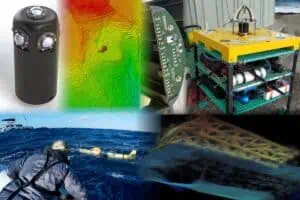
Underwater radiation detectors are instruments designed to measure ionizing radiation in marine and freshwater environments for monitoring, source detection, radiological assessment, and scientific research. Systems may use scintillation, semiconductor, neutron, or multi-detector architectures to provide count-rate measurements or gamma-ray spectroscopy for radionuclide identification.
This category highlights suppliers of underwater radiation detectors, supporting environmental monitoring, incident response, seabed surveys, and source localization.
If you design, build or supply Underwater Radiation Detectors, create a profile to showcase your capabilities and connect with visitors who have an active requirement for your solutions.
Overview of Underwater Radiation Detectors for Marine Radiation Monitoring
Overview by
William Mackenzie
Updated:
Introduction to Underwater Radiation Detectors
Underwater radiation detectors measure ionizing radiation in marine and freshwater environments, supporting environmental monitoring, source detection, radiological assessment, and scientific research. Unlike instruments used in air, underwater systems must account for the very short ranges of alpha and beta radiation, attenuation and scattering of gamma rays, neutron moderation, pressure, corrosion, temperature variation, biofouling, and the practical constraints of long-duration deployments.
The choice of underwater radiation detector depends on the radiation being measured, the required spectral resolution, expected activity levels, operating depth, and deployment platform. Instruments may provide basic count-rate measurements or detailed gamma-ray spectra that help identify individual radionuclides. Activity estimates also require efficiency calibration for the detector geometry and surrounding medium. Measurements of radiation underwater can also be combined with position, depth, and oceanographic data to build a more complete picture of ocean radiation levels.
Key Types of Marine Radiation Detectors
Scintillation Detectors
Scintillation detectors use materials that emit small flashes of light when ionizing radiation deposits energy within them. Photomultiplier tubes or solid-state photodetectors convert these light pulses into electrical signals for counting or spectroscopy. Their relatively high detection efficiency makes scintillators widely applicable to underwater gamma-ray monitoring, particularly where compactness and sensitivity are important.
Sodium Iodide NaI(Tl) Detectors
Thallium-doped sodium iodide, or NaI(Tl), is a well-established scintillation material for gamma-ray detection. It provides high light output and good detection efficiency, allowing relatively compact instruments to measure gamma radiation underwater. Its energy resolution is lower than that of some semiconductor and newer scintillator materials, so closely spaced spectral peaks may be more difficult to distinguish. Because NaI(Tl) is hygroscopic, reliable encapsulation is essential.
Cesium Iodide CsI(Tl) Detectors
Cesium iodide activated with thallium, commonly written CsI(Tl), is another scintillation material used for gamma detection. It has high density and is generally less hygroscopic than NaI(Tl), supporting compact detector designs. CsI-based systems can be useful where instrument size and physical resilience are important considerations, although detector response and readout design must be matched carefully to the intended application.
High-Resolution Scintillators
Advanced scintillator materials, including lanthanum bromide LaBr3(Ce) and cerium bromide CeBr3, can provide improved energy resolution compared with conventional NaI(Tl) systems while retaining many of the efficiency advantages of scintillation detection. These detectors can improve discrimination between radionuclides with similar gamma-ray energies. Material selection also depends on factors such as optical properties, intrinsic background, temperature response, mechanical durability, availability, and integration requirements.
Semiconductor Gamma-Ray Detectors
Semiconductor detectors convert deposited radiation energy directly into electrical charge rather than first producing light. This direct conversion can provide better energy resolution than many scintillation systems, making semiconductor detectors valuable where precise radionuclide identification is required. High-purity germanium (HPGe) offers particularly high spectral resolution but normally requires cooling. Their use underwater requires careful attention to electronics, temperature stability, pressure housings, moisture isolation, and overall power consumption.
Cadmium Zinc Telluride (CZT) Detectors
Cadmium zinc telluride detectors provide room-temperature gamma-ray spectroscopy without the cryogenic cooling required by some other semiconductor technologies. CZT instruments can therefore be attractive for compact underwater systems, autonomous vehicles, and long-duration monitoring platforms. Their strong spectral performance can help distinguish gamma-emitting radionuclides, although active volume, cost, and detector geometry may influence system design.
Neutron Detectors
Neutron detectors address applications where neutron radiation must be identified separately from gamma radiation. Because neutrons interact differently with matter, dedicated conversion materials and detector architectures are generally required. Underwater neutron detection can be challenging because water moderates neutrons effectively, so detector response depends strongly on neutron energy, surrounding materials, geometry, and distance from the source.
Detector Arrays and Multi-Detector Systems
Detector arrays combine multiple sensing elements to increase effective detection volume, improve coverage, or provide complementary measurements. Multi-detector systems may also pair materials with different spectral or radiation-response characteristics. For underwater surveys, arrays can support improved sensitivity or localization, although they add requirements for synchronization, power distribution, pressure-resistant packaging, calibration, and data processing.
Core Applications of Underwater Radiation Detectors
Marine and Environmental Radioactivity Monitoring
Long-term monitoring systems can track changes in marine radioactivity and establish baselines against which unusual readings can be evaluated. Detectors may be installed at fixed locations or deployed from ships, buoys, moorings, Autonomous Underwater Vehicles (AUVs), or Remotely Operated Vehicles (ROVs). These measurements can contribute to assessments of ocean radiation and help characterize spatial or temporal changes in radionuclide activity.
Coastal, Offshore, and Nuclear Facility Monitoring
Coastal and offshore detectors can support surveillance around locations where radiological monitoring is required, including areas near nuclear facilities. Continuous or periodic measurements can complement laboratory sampling programs by providing more immediate information about changing conditions. Instrument positioning, currents, bathymetry, sediment interaction, and local background radiation all influence interpretation.
Radiological Incident Response
Following a radiological release or suspected incident, underwater detectors can help survey affected waters and identify areas requiring closer investigation. Mobile instruments mounted on vessels or robotic platforms can extend measurements across a defined search area. Spectroscopic systems may provide additional information by distinguishing radionuclide signatures rather than reporting only total radiation counts.
Underwater Radioactive Source Detection and Localization
Detection systems may be used to search for localized radioactive sources on the seabed, within infrastructure, or elsewhere in the water column. Because water rapidly attenuates many forms of ionizing radiation, detection range can be limited and depends strongly on radiation type, energy, source strength, shielding, and detector sensitivity. Accurate localization therefore benefits from controlled survey patterns, reliable navigation data, and appropriate detector positioning.
Seabed, Sediment, and Natural Radionuclide Surveys
Gamma-ray detectors can support investigations of radioactive materials associated with seabed sediments and naturally occurring radionuclides. Variations in sediment composition can produce measurable differences in gamma spectra, allowing radiation data to supplement geological or environmental surveys. Detector height above the seabed and the surrounding geometry must remain well characterized because both affect measured count rates.
Oceanographic and Marine Research
Radiation measurements can be combined with salinity, temperature, depth, currents, turbidity, and other oceanographic parameters to investigate the transport and distribution of radioactive materials. Marine radioactivity programs may analyze radionuclides in seawater, sediments, suspended material, and biological samples, while in situ detectors provide complementary temporal and spatial measurements. Together, these methods support a more complete assessment of ocean radiation levels.
Standards, Calibration Quality & Radiological Monitoring Practice
Reliable underwater measurements depend on documented calibration, traceable reference methods, and consistent data-quality procedures. Relevant considerations include:
ISO 11929: This standard provides a framework for characteristic limits in ionizing-radiation measurements, including decision thresholds and detection limits.
Calibration traceability: Reference sources and documented procedures help ensure that measurements can be compared across instruments and monitoring programs. Calibration should reflect measurement geometry where practical.
Measurement uncertainty: Detector efficiency, counting statistics, background radiation, geometry, environmental conditions, and calibration all contribute to overall uncertainty.
Marine monitoring protocols: Measurements should include sufficient spatial, temporal, deployment, and environmental metadata to support interpretation and later comparison.
Applying these principles is particularly important in marine environments, where detector response can change with geometry, pressure, temperature, platform motion, biofouling, and the surrounding water mass.
Emerging Developments in Underwater Radiation Detection
Research and development are increasingly focused on improving spectral performance while reducing the size, power demand, and deployment burden of underwater systems. Important developments include:
Compact platform-agnostic detectors: Smaller instruments can be integrated with a wider range of AUVs, ROVs, buoys, moorings, and other marine platforms.
Higher-resolution solid-state detectors: CZT and related technologies can improve radionuclide discrimination where detailed spectroscopy is required.
Advanced scintillator materials: New scintillators are being investigated to improve energy resolution, efficiency, stability, or overall detector performance.
Autonomous radiation surveys: Integration with robotic platforms enables repeatable, georeferenced surveys with reduced dependence on continuously crewed vessels.
These developments are expanding the role of the underwater radiation detector from a standalone monitoring instrument toward an integrated component of autonomous marine sensing and environmental observation systems.