Showcase your capabilities
If you design, build or supply Methane (CH4) Sensors, create a profile to showcase your capabilities and connect with visitors who have an active requirement for your solutions.


Subsea methane sensors are critical for detecting and measuring methane (CH4) levels in underwater environments. They are essential for applications such as environmental monitoring, natural gas pipeline leak detection, and scientific research. With advances in sensor technology, modern probe sensors can accurately measure partial pressure and dissolved methane concentrations and detect leaks under high hydrostatic pressure conditions. This category highlights key methane sensor technologies, their applications, and the various types of subsea methane detection instruments available today.
Read the Technology Overview
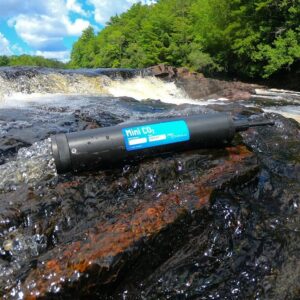
High-Accuracy Dissolved Gas Sensors for Oceanography, Environmental Monitoring, and Oil & Gas Applications

If you design, build or supply Methane (CH4) Sensors, create a profile to showcase your capabilities and connect with visitors who have an active requirement for your solutions.

A methane sensor is a specialized instrument designed to detect and measure methane gas (CH4) concentrations in different environments. In subsea applications, methane sensor probes are engineered to function reliably under extreme conditions such as high hydrostatic pressure and varying temperatures. Subsea methane sensors typically operate by measuring the partial pressure of methane gas (pCH4) or detecting dissolved methane in water. These sensors are crucial for monitoring methane leakage in marine environments and conducting environmental studies on gaseous hydrocarbons.
Methane sensors often integrate advanced probe technology and infrared detection systems to ensure precise measurements. Depending on the application, these sensors can be mounted on remotely operated vehicles (ROVs), autonomous underwater vehicles (AUVs), or deployed as stationary subsea instruments for continuous monitoring.
Methane sensors have a wide range of applications within underwater and marine industries. These include:
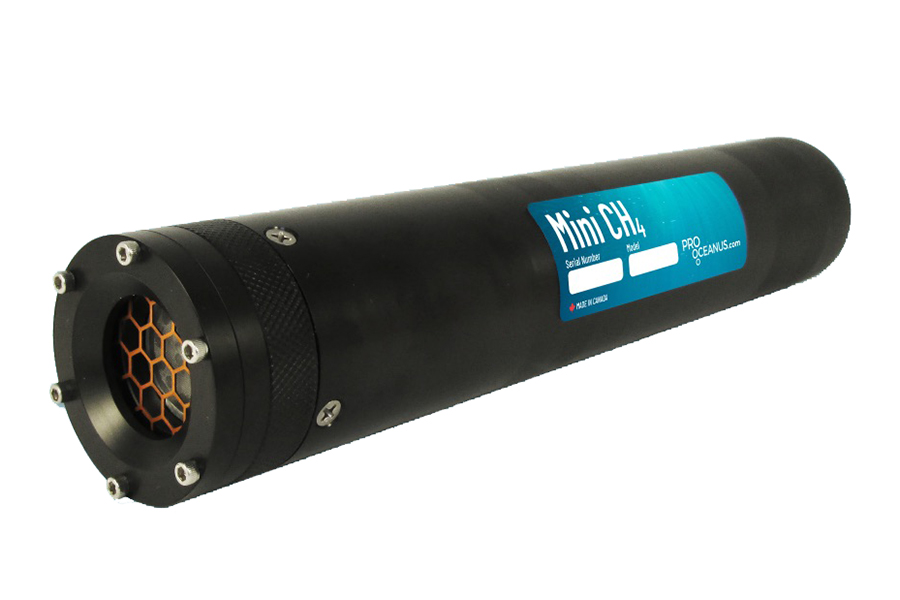
Methane CH4 Sensor Probe by Pro-Oceanus
Methane sensors are used in natural gas pipeline leak detection systems to identify methane leaks in subsea infrastructure. Detecting CH4 leakage early is essential to prevent environmental damage and ensure the integrity of pipelines.
Researchers use methane sensors to study dissolved methane concentrations in oceanic and marine environments. This ocean monitoring data helps assess the impact of natural and man-made sources of methane on global warming and ocean health.
In oil and gas operations, methane sensors monitor gaseous hydrocarbons to identify potential hydrocarbon reservoirs or detect leaks from subsea installations.
These sensors support studies on methane seepage, clathrate hydrates, and the role of methane in marine ecosystems. Measuring the partial pressure of CH4 helps researchers better understand the dynamics of methane in the ocean.
Methane probes are deployed to monitor subsea structures, including pipelines, wellheads, and subsea equipment, ensuring operational safety and preventing environmental hazards.
There are various types of methane sensors designed for subsea and underwater applications, each with unique features for different use cases.
These sensors measure the partial pressure of methane in water, providing critical data for environmental monitoring and leak detection.
These instruments detect dissolved methane concentrations in water, ideal for scientific research and environmental studies.
Utilizing infrared detection technology, these sensors offer high precision in detecting methane gas even in challenging subsea conditions.
Combining temperature sensors with methane detection, these probes provide comprehensive data for analyzing methane behavior under different thermal conditions.
Designed for deep-sea deployment, these probes can withstand high hydrostatic pressure and provide in situ measurements of methane concentrations.
These multi-parameter probes measure methane concentrations alongside water turbidity, helping to identify potential methane sources and their impact on water quality.
Recent advancements in subsea methane sensor technology have significantly enhanced their accuracy, durability, and ease of use. One key innovation is improved infrared detection systems, which now offer more reliable methane measurements even in turbid or low-visibility environments. This ensures consistent performance during challenging subsea operations.
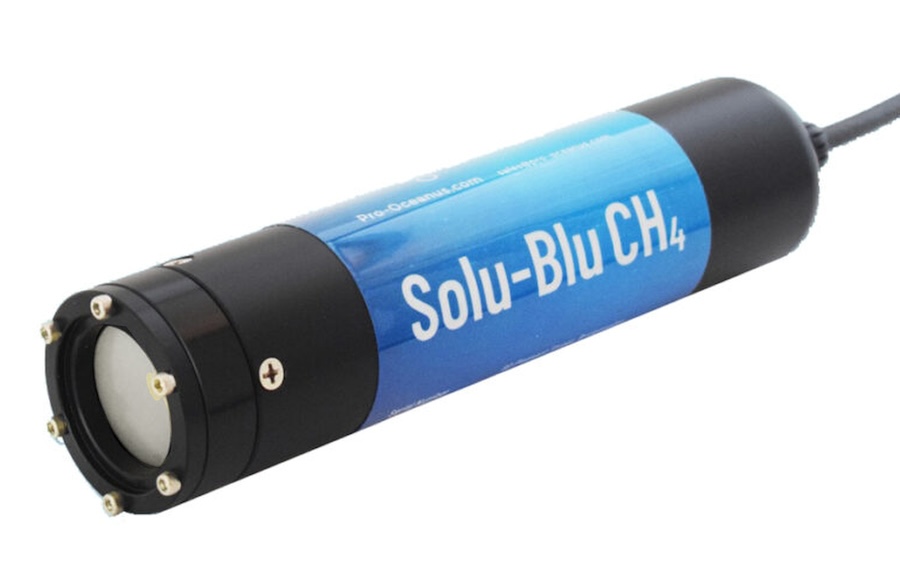
Solu-Blu CH4 Dissolved Gas Sensor by Pro-Oceanus
Additionally, miniaturized probe sensors have been developed with compact and lightweight designs, making them suitable for deployment on smaller unmanned underwater vehicles. This increased versatility allows for a broader range of applications in marine research and industry.
Modern methane sensors also feature smart sensor integration, enabling intelligent data processing. This advancement allows for faster and more efficient analysis of dissolved methane concentrations and partial pressure measurements, improving data quality and decision-making.
Furthermore, robust subsea housings made from enhanced materials ensure that these sensors maintain their accuracy and performance over extended periods. Their durable designs withstand prolonged exposure to seawater and the extreme pressures found in deep-sea environments, making them reliable tools for long-term subsea monitoring.
Methane leakage from subsea pipelines poses significant environmental and safety risks. Methane sensors play a pivotal role in detecting leaks early and mitigating potential hazards. Modern pipeline leak detection systems use methane probes and infrared sensors to continuously monitor subsea pipelines, ensuring prompt identification and response to any leaks. These systems are critical for maintaining the integrity of natural gas pipelines and protecting marine ecosystems.
When choosing a methane sensor for subsea applications, consider the following factors:
Subsea methane sensors are indispensable tools for detecting and measuring CH4 in underwater environments. They support critical applications such as pipeline leak detection, environmental monitoring, and scientific research. Thanks to technological advances, modern methane probes offer high precision, durability, and versatility, ensuring reliable methane detection even under challenging subsea conditions.
 Searching Companies & Products

 Subscribe to the Weekly eBrief
The latest engineering and technical developments straight to your inbox - join thousands of engineers who receive it.
Subscribe to the Weekly eBrief
The latest engineering and technical developments straight to your inbox - join thousands of engineers who receive it.