Showcase your capabilities
If you design, build or supply CDOM & FDOM Sensors, create a profile to showcase your capabilities and connect with visitors who have an active requirement for your solutions.


Colored Dissolved Organic Matter (CDOM) sensors measure the optical properties of dissolved organic material in marine, coastal, estuarine, and freshwater environments. Fluorescent Dissolved Organic Matter (FDOM) sensors use fluorescence measurements, while absorption-based instruments characterize CDOM more directly.
This category showcases suppliers of FDOM and CDOM sensors for water-quality monitoring, carbon-cycle research, pollution assessment, river-plume studies, and ocean-color validation.
Read the Technology Overview
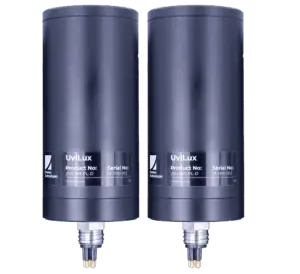
Advanced Water Quality Monitoring & Environmental Sensing Solutions

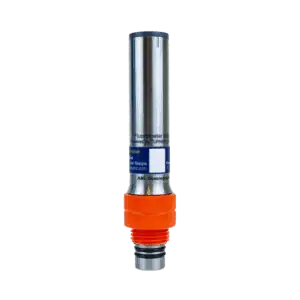
Modular Hydrographic & Oceanographic Instrumentation for Survey, Research & Autonomous Marine Operations

If you design, build or supply CDOM & FDOM Sensors, create a profile to showcase your capabilities and connect with visitors who have an active requirement for your solutions.

CDOM and FDOM sensors provide optical measurements of dissolved organic matter in marine, coastal, estuarine, and freshwater environments. These instruments support water-quality monitoring, biogeochemical research, carbon-cycle studies, pollution assessment, and oceanographic surveys by detecting optical signatures associated with dissolved organic material.
Colored Dissolved Organic Matter (CDOM), also known as Chromophoric Dissolved Organic Matter, is the light-absorbing fraction of dissolved organic matter and can significantly influence water color and the underwater light field. Fluorescent Dissolved Organic Matter (FDOM) is the fluorescent fraction of dissolved organic matter. Although CDOM and FDOM are sometimes used interchangeably in instrument terminology, they represent related but distinct optical properties.
CDOM is fundamentally characterized through light absorption, while FDOM is measured through fluorescence. In practice, many instruments described as a CDOM sensor, CDOM probe, or CDOM fluorometer measure fluorescence because it enables compact and sensitive in situ observations. These instruments therefore measure FDOM and may use the fluorescence signal as a proxy for changes in CDOM or dissolved organic matter when an appropriate relationship has been established for the water body and measurement objective.
| Measurement | Optical Principle | Typical Measurement Output | Key Advantages | Limitations |
| CDOM | Absorption of ultraviolet and visible light | Absorbance, absorption coefficient, or related spectral measurement | Directly characterizes the light-absorbing component of dissolved organic matter | Requires appropriate spectral selection and control of instrumental, particle, and sample effects |
| FDOM | Fluorescence following optical excitation | Fluorescence intensity, Relative Fluorescence Units (RFU), Quinine Sulfate Units (QSU), or other calibrated equivalent units | Sensitive and suitable for rapid in situ monitoring | Response depends on fluorophore composition and can be affected by temperature, turbidity, optical absorption, and other interference |
Single-channel fluorometers use a defined excitation band and emission detection band to target a selected fluorescent region of dissolved organic matter. Their relatively simple optical configuration makes them suitable for fixed stations, profiling packages, autonomous platforms, and other applications where compact instrumentation and straightforward data output are important. Excitation and emission wavelengths, measurement range, detection limit, response time, calibration method, and depth rating should be considered when comparing sensors.
Multi-channel instruments combine several fluorescence channels within one sensor package. They may measure FDOM alongside chlorophyll or other fluorescent targets, or use multiple wavelength combinations to provide additional information about dissolved organic material. Wavelength configurations and calibration methods should be considered when comparing data because sensor designs can respond differently to the same natural water.
Optical absorption sensors measure changes in transmitted light across one or more wavelengths to characterize colored dissolved organic matter more directly. Depending on the instrument, measurements may be collected at selected optical bands or across a broader spectrum. These sensors are appropriate when CDOM absorption itself, rather than fluorescence as a proxy, is the principal quantity of interest. Optical path length, scattering, and fouling can influence measurements and should be considered during deployment and data processing.
Spectral and hyperspectral systems resolve optical properties across numerous closely spaced wavelengths. Depending on sensor design, the additional spectral information can support analysis of absorption shape, spectral slopes, and optically complex waters. These measurements are particularly valuable when relating in situ observations to laboratory spectroscopy, radiometry, or ocean-color remote sensing.
A dissolved organic matter sensor can be integrated into a multiparameter sonde alongside conductivity, temperature, depth, turbidity, dissolved oxygen, chlorophyll, and other measurements. Collecting these parameters together provides environmental context for interpreting CDOM or FDOM changes. Multiparameter configurations are widely used on oceanographic Conductivity, Temperature, and Depth (CTD) systems and other water-quality platforms.
CDOM and FDOM measurements provide high-frequency indicators of changes in optically active dissolved organic matter. They can resolve spatial gradients, seasonal cycles, mixing events, and shorter-term variability that may be difficult to characterize using discrete water samples alone. Sensor measurements should still be interpreted as optical observations rather than universal direct measurements of dissolved organic carbon concentration.
Coastal and estuarine environments commonly contain strong gradients in salinity, suspended material, phytoplankton, and terrestrially derived dissolved organic matter. A CDOM or FDOM probe can help identify changes associated with tides, freshwater discharge, storm events, and water-mass mixing when measurements are interpreted alongside relevant physical and optical data.
CDOM can be prominent in freshwater entering coastal environments, making optical measurements useful for investigating river plumes and land-ocean exchange. Continuous measurements can help researchers follow the distribution and mixing of dissolved organic material from river mouths into estuaries and shelf waters. Combining CDOM or FDOM observations with salinity measurements provides additional information about freshwater influence.
Dissolved organic matter is a chemically diverse component of aquatic carbon cycling. CDOM and FDOM sensors allow researchers to examine how optically active fractions vary during biological production, microbial processing, photochemical alteration, and physical transport. Relationships between fluorescence and dissolved organic carbon can be useful, but they depend on environmental conditions and should be established rather than assumed.
Fluorescent dissolved organic matter can provide useful indicators in studies of wastewater influence and contaminant transport. Field-deployable fluorescence sensors are used for applications that include wastewater tracking and monitoring changes in water quality. However, an FDOM sensor does not inherently identify a specific contaminant, so complementary measurements are important when source attribution or chemical identification is required.
CDOM absorbs strongly at shorter wavelengths and can substantially affect the spectral light field measured by ocean-color instruments. In situ CDOM measurements therefore support optical characterization and the interpretation of remote-sensing observations, especially in coastal waters where phytoplankton, suspended particles, and dissolved color may vary independently.
CDOM and FDOM measurements become more informative when synchronized with sensors that describe the surrounding physical, particulate, biological, and chemical environment.
For FDOM measurements in particular, temperature, turbidity, fouling, optical attenuation, and inner-filter effects can influence the observed signal. Correction procedures may be sensor-specific or site-specific, making appropriate calibration, quality control, cleaning, and supporting measurements important for defensible data interpretation.
Development of CDOM and FDOM sensing technology increasingly focuses on obtaining richer optical information while reducing the size, power requirements, and maintenance burden associated with long-duration observations.
As these observing systems become increasingly integrated, consistent calibration, excitation and emission wavelength documentation, correction methods, and metadata remain important for comparing measurements across instruments, environments, and time periods.
 Searching Companies & Products

 Subscribe to the Weekly eBrief
The latest engineering and technical developments straight to your inbox - join thousands of engineers who receive it.
Subscribe to the Weekly eBrief
The latest engineering and technical developments straight to your inbox - join thousands of engineers who receive it.