
Showcase your capabilities
If you design, build or supply Anemometers, create a profile to showcase your capabilities and connect with visitors who have an active requirement for your solutions.


Source anemometers for marine applications from specialist suppliers and manufacturers. These instruments measure wind speed and direction for offshore operations, environmental monitoring, and oceanographic research, feeding reliable wind and weather data into modern forecasting and safety systems.
Read the Technology Overview
If you design, build or supply Anemometers, create a profile to showcase your capabilities and connect with visitors who have an active requirement for your solutions.

Anemometers measure wind speed — and, in many configurations, wind direction — to support offshore forecasting, storm tracking, and environmental research. Used on buoys, vessels, and weather stations, they provide continuous wind data in units such as meters per second or knots. Modern anemometers employ mechanical, ultrasonic, or thermal sensing principles and are built for durable, accurate performance in harsh marine environments, supporting maritime operations, scientific studies, and regulatory monitoring.
Anemometers come in various forms depending on their measurement technique and intended use:
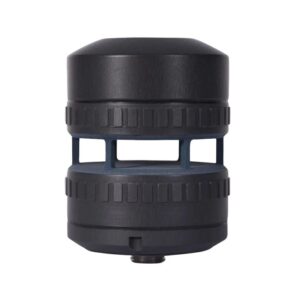
FT743-SM by FT Technologies.
Anemometers are foundational tools for marine meteorology, enabling the monitoring of wind velocity and direction over oceanic regions. Data collected in real time allows for the forecasting of severe weather, such as tropical storms and cyclones, which is essential for safeguarding maritime operations and coastal infrastructure.
Anemometers are integrated into terrestrial and marine weather stations as part of broader meteorological networks. They provide continuous wind measurements that support short- and long-term forecasting models, especially in coastal and offshore zones.
In ocean science, understanding the interactions between atmospheric and oceanic systems is central. Anemometers provide wind data necessary to model sea-air exchanges, quantify heat and moisture fluxes, and evaluate the effects of wind-driven surface currents. These data are especially critical in oceanographic research campaigns focused on phenomena such as upwelling, wave generation, and coastal erosion.
Deployed alongside current meters, wave sensors, and atmospheric pressure devices, anemometers contribute to multi-parameter environmental datasets. This integration enables comprehensive modeling of marine systems and supports the calibration and validation of satellite observations and numerical simulations.
Wind data plays a pivotal role in global climate models. Long-term deployment of anemometers on remote buoys, weather stations, and research vessels facilitates continuous atmospheric monitoring. These datasets support assessments of climate variability, storm frequency, and shifting wind patterns related to global warming and polar changes.
Anemometers contribute to the structural health monitoring of offshore platforms, wind turbines, and floating infrastructure. Wind speed and direction influence design parameters and are used in dynamic load assessments. Continuous wind measurement is necessary for compliance with engineering safety standards and for scheduling maintenance activities under favorable conditions.
Anemometers assist in marine navigation by supplying sailors and onboard systems with accurate wind speed and direction information. This is vital for routing, sail configuration, and emergency maneuvering. Integrated with other meteorological instruments, they form part of maritime safety systems on commercial ships and autonomous vessels.
Regulatory frameworks for marine environmental protection often mandate the monitoring of atmospheric conditions, including wind patterns. Anemometers installed at coastal facilities or in marine protected areas help assess pollutant dispersion, monitor dust and aerosol transport, and validate air quality models in compliance with environmental legislation.
Wind speed and direction measurements from anemometers inform models that predict the transport and dispersion of airborne pollutants. This is particularly relevant for monitoring emissions from coastal industrial facilities and ports.
Anemometers are used extensively in the site assessment phase of offshore wind farm development. Measuring vertical and horizontal wind profiles over extended periods, they help determine the energy potential and inform turbine placement. Ultrasonic anemometers and LiDAR systems are commonly employed in these high-precision evaluations.
Real-time anemometer data supports storm tracking and emergency decision-making. High-resolution wind measurements map storm intensity and path, allowing for early warnings and targeted response strategies in coastal regions vulnerable to hurricanes or typhoons.
Anemometers are commonly mounted on autonomous surface vehicles (ASVs), unmanned aerial systems (UAS), and remotely located data buoys. These platforms allow for continuous data acquisition in regions otherwise inaccessible, expanding observational coverage for ocean and atmospheric science.
In recreational and competitive sailing, handheld and onboard anemometers are used to assess wind conditions in real time. Accurate wind data aids in route planning, sail trim adjustments, and overall vessel handling under varying weather conditions.
Key components include rotors, vanes, propellers, and sensor heads, all mounted within weather shields or protective casings. Transducers convert physical motion into signals processed by circuit boards and signal processors. Readouts may be shown on display units or transmitted to remote systems via data loggers or communication interfaces.
Anemometers designed for marine and environmental use feature corrosion-resistant housings, precision bearings, and rugged mounting brackets. Shafts and rotors are engineered for long-term operation in dynamic oceanic conditions. Systems may include:
| Type | Mechanical Parts | Accuracy | Size/Weight | Use Case |
| Cup Anemometer | Yes | Moderate | Medium | Weather stations, training bases |
| Vane Anemometer | Yes | Good | Compact | Portable field operations |
| Ultrasonic Anemometer | No | High | Lightweight | UAVs, onboard systems |
| Hot-Wire Anemometer | Yes | Very High | Small | Research, confined environments |
| Laser Doppler Anemometer | No | Very High | Bulky | Targeting systems, research labs |
Anemometers used in professional and scientific settings often conform to international standards, such as:
These standards ensure interoperability, reliability, and accuracy in data collection across global research and industrial applications.
Modern digital anemometers may include:
Emerging technologies include AI-powered wind analysis, compact sensor fusion systems for autonomous platforms, and increased use of ultrasonic transducers in climate monitoring stations. These trends reflect a growing need for precise, reliable wind data in ocean science, meteorology, and environmental stewardship.
 Searching Companies & Products