
partner with OST

Charles River to Develop MAGNETO Submarine Detection System for U.S. Navy

Charles River Analytics is set to develop its MAGNETO submarine detection system for the U.S. Navy, leveraging magnetic signals to to detect stealthier and quieter submarines By William Mackenzie / 04 Feb 2025

Discover World-Leading Technologies for Ocean Science

Discover cutting-edge solutions from leading global suppliers
SUPPLIER SPOTLIGHT
Charles River to Develop MAGNETO Submarine Detection System for U.S. Navy
Follow OS&T

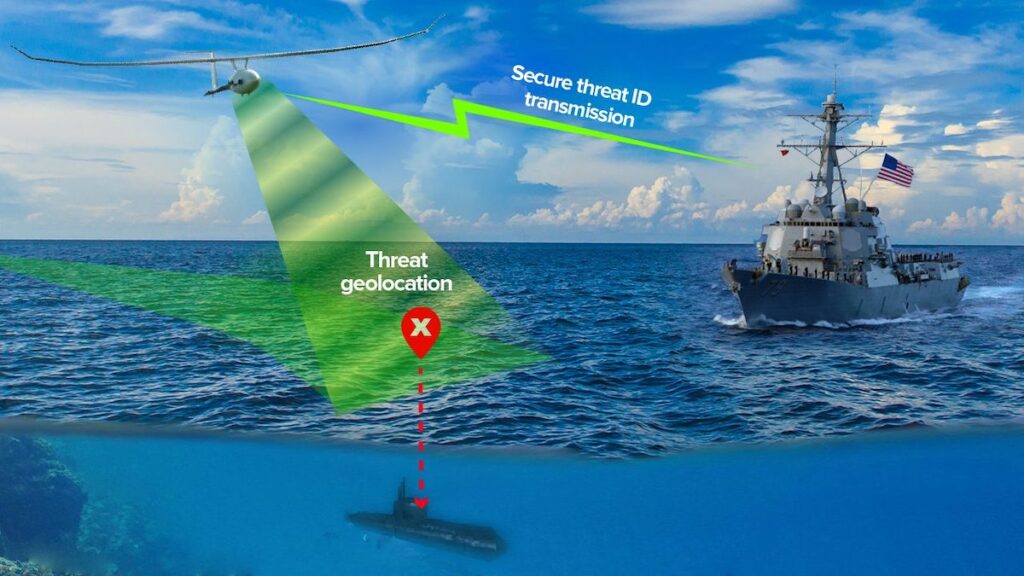
Charles River Analytics is set to develop an alternative system to effectively detect submarines for the U.S. Navy, using their magnetic signals to detect stealthier and quieter vessels.

Under the new Small Business Innovation Research (SBIR) Phase II contract, valued at nearly $1 million, Charles River Analytics will improve upon current detection tools which primarily focus on acoustic measurements.

The Magnetometer-based ASW Guidance for Naval Enhancement of Tactical Operations (MAGNETO) tool uses a magnetic anomaly detection (MAD) sensor to detect and track distortions in the earth’s magnetic field caused by the ferromagnetic materials in submarines.

One challenge in this development is that magnetic signals decrease cubically with distance, making them difficult to detect. Interference from other objects also poses a problem, though magnetic signals do not depend on the medium they are traveling through. Artificial intelligence (AI) and machine learning (ML) technologies help solve these challenges by effectively isolating and extracting relevant signals from the surrounding noise.

In addition to detecting the presence of magnetic fields, anti-submarine warfare (ASW) techniques must also differentiate signals from submarines from those of large boats or even sunken shipping containers. To support this, AI can develop a distinct “signature” for submarine detection. Future iterations of MAGNETO will also be capable of analyzing wave noise to determine whether it indicates the presence of submarines.

MAGNETO tracks what is essentially a one-dimensional signal (a vessel’s “magnetic moment”) over time and compares it to previous detections. Charles River’s Vector Intelligence Build Environment (VIBE) workbench provides the 1D signal ML models that form the foundation for MAGNETO.

The tool follows a hierarchical approach, narrowing down the process of identification in successive stages. The first stage detects the presence of a submarine, the second stage determines the type of submarine—such as nuclear missile, diesel—continuing until a precise identification is made. This hierarchical system allows MAGNETO to rapidly process information in real time, ensuring only relevant data passes the initial screening and advances to subsequent stages.

Before reaching the classifier stage, MAGNETO first cleans the signals, removing any noise. In the second stage, a feature extractor selects only critical parts of the signal that may indicate activity. The classifier forms the final layer of analysis.

Dr. Todd Jennings, Research Scientist at Charles River Analytics and Principal Investigator of MAGNETO, commented, “The purpose of this project is to leverage advances in machine learning and signal processing to more reliably extract the signatures of these submarines and distinguish them from the magnetic signatures of other objects. The biggest advantage of MAGNETO is that it allows us to detect ultra-low-noise submarines reliably, quickly, and efficiently while minimizing risk to the warfighter.”

Other use cases for the tool reportedly include detecting airplane wreckage, underground power cables, and dropped shipping containers in the ocean. Lessons from MAGNETO and the VIBE workbench can also translate to other signals, including acoustic, LIDAR, and radio frequency.

Posted by William Mackenzie Will is a Content Specialist at Ocean Science Technology. Joining in 2024 with a background in professional copywriting and creative content, Will brings expertise in oceanographic monitoring, aquaculture, and environmental analysis. He provides in-depth coverage of breakthroughs in marine research, subsea systems, and autonomous platforms, drawing on his specialist understanding of ocean technology to highlight innovations shaping the future of the marine industry. Connect

Latest Articles

MostaTech to Showcase Ultra-Compact & Rugged Inertial Sensors at INTERGEO 2026

MostaTech will exhibit its latest line of miniaturized and extreme-environment fiber optic gyroscopes for surveying, mapping, and autonomous navigation at INTERGEO 2026

Aug 25, 2026
Choosing the Right Underwater Laser

SubC Imaging outlines how underwater laser types support subsea measurement, surface profiling, photogrammetry, and inspection across different platforms, camera orientations, and environmental conditions

Aug 24, 2026
Partners to Bring Wireless Subsea Robotics to Scandinavia

Scandinavian maritime and defense operators are set to gain advanced subsea inspection capabilities as Hydromea and SepcoTech partner to deploy wireless robotics designed for dangerous confined underwater spaces

Aug 24, 2026
PLOATECH Marine Engineering & Underwater Innovation Joins OST Ecosystem

PLOATECH delivers advanced marine science, engineering services, and customized underwater technologies for complex offshore, scientific, and deep-sea missions

Aug 24, 2026
Oceanloop to Scale Land-Based Aquaculture

German aquaculture tech firm Oceanloop has secured up to €38.5 million in equity and venture debt to scale its recirculating systems and expand commercial production of Europe’s first farmed Giant Grouper

Aug 21, 2026
Kongsberg Maritime Secures Major Deck Machinery & Automation Contract

Kongsberg Maritime has secured a major contract to deliver an integrated heavy-duty deck machinery and automation solution for a new floating production, storage, and offloading vessel operating in Asia

Aug 21, 2026

Featured Content

Teledyne Marine ADCP Technology Advances Three Decades of Coastal Research

Oceanographer Arnoldo Valle-Levinson’s three decades of research with Teledyne Marine ADCP technology reveal how evolving current profiling systems have advanced coastal science worldwide

Aug 21, 2026
Custom USV Platforms for Survey & Environmental Monitoring

AGISTAR develops custom USV platforms that combine integrated sensing, navigation, software, and flexible payload configurations to support survey, monitoring, inspection, and other autonomous marine operations

Aug 17, 2026
Layered Media Detection Added to WINGHEAD X Midwater Multibeam Sonar System

NORBIT Subsea has introduced Layered Media Detection for WINGHEAD X Midwater, enabling simultaneous identification of fluid mud layers and navigable bottom during hydrographic surveys

Aug 14, 2026