The NMEA 2000 communication standard has become the backbone of modern marine electronics, enabling seamless integration across a vessel's networked systems. This protocol, designed to work with CAN Bus technology, allows multiple devices to communicate efficiently within the same network, ensuring reliable data transmission in the demanding marine environment. From navigation instruments to engine monitoring systems, NMEA 2000 simplifies the complexity of serial communications and fosters interoperability among diverse devices.
If you design, build or supply NMEA 2000 Network Devices, create a profile to showcase your capabilities and connect with visitors who have an active requirement for your solutions.
NMEA 2000 is a communications standard developed by the National Marine Electronics Association and designed for the networking together of sensors and electronic equipment on board marine vessels.
NMEA 2000 is an open standard protocol that facilitates data sharing between marine electronic devices over a single cable. It is an evolution of the NMEA 0183 standard but offers faster data transfer rates, higher device compatibility, and more robust network capabilities.
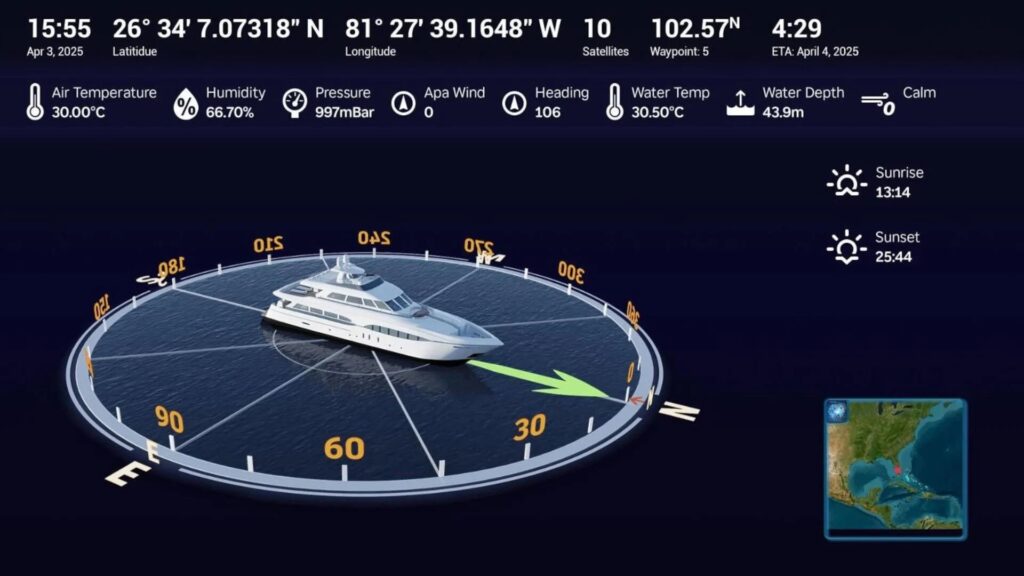
The system operates on a Controller Area Network (CAN bus), a two-wire communication link designed to withstand the harsh conditions found in marine environments. NMEA 2000 supports bidirectional data flow, allowing for efficient communication between multiple devices on the network, such as GPS, sonar, autopilot, radar, and engine monitoring systems.
Key Features of NMEA 2000 Protocol
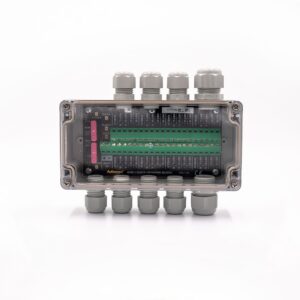
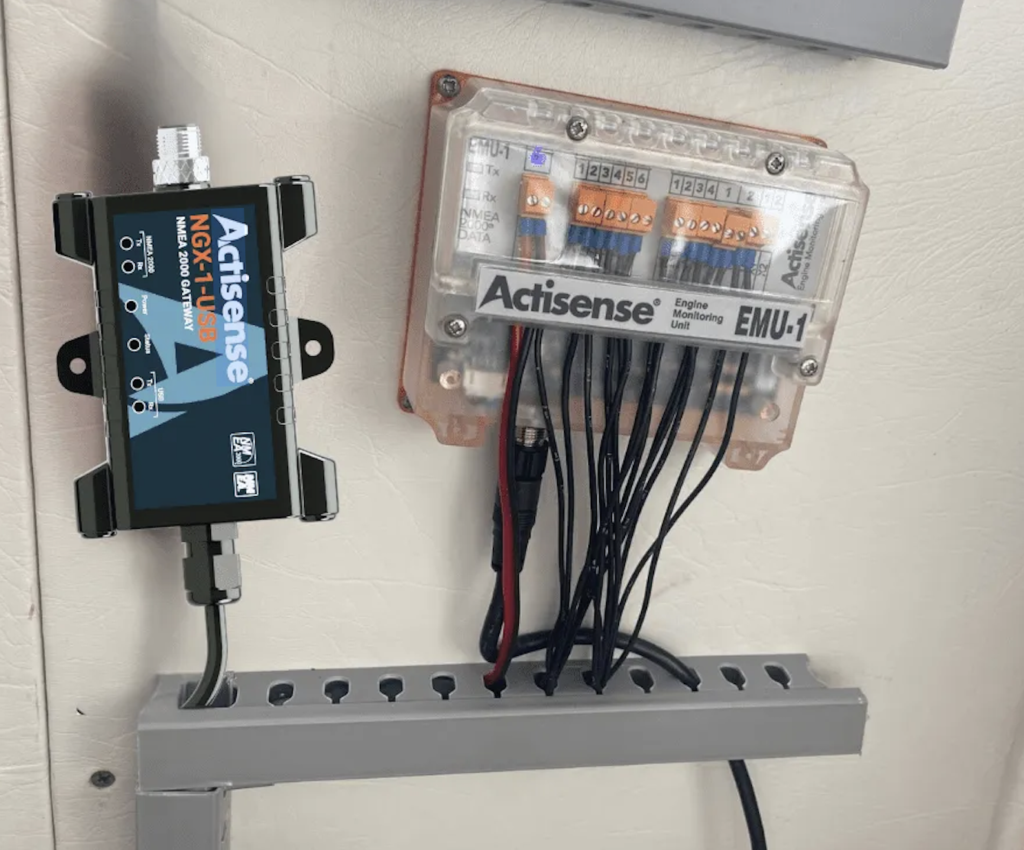
NMEA 2000 QNB-1 Network Block by Actisense
Based on the CAN (Controller Area Network) Bus electrical standard but with specific adaptations for marine and maritime environments, NMEA 2000 allows a wide variety of devices from different manufacturers to communicate and exchange data with each other. Devices certified for NMEA 2000 compatibility can be mixed and matched to create a comprehensive, fully integrated marine electronics system and includes devices such as:
Instruments such as wind and weather sensors, compasses, depth sounders, fish finders, sonars, and radars
Navigation and communications systems such as GPS and GNSS receivers, AIS (Automatic Identification System) transponders and VHF radios
Chart plotters and multifunctional displays
Monitoring systems, gauges, level sensors and flow meters on engines and fuel tanks
Advantages of NMEA 2000 over NMEA 0183
NMEA 2000 provides a number of advantages over its predecessor standard, NMEA 0183. The most significant change is that all devices on an NMEA 2000 network are able to send and receive data simultaneously. NMEA 0183 provided a much more restricted communications capability that allowed only one device to transmit at a time while all others listened.
NMEA 2000 also provides faster data transfer speeds of up to 250 kbps, compared to NMEA 0183’s 38.4 kbps maximum. It can support a greater number of devices on the network, and also uses more robust communications protocols with error correction.
NMEA 2000 Network Architecture
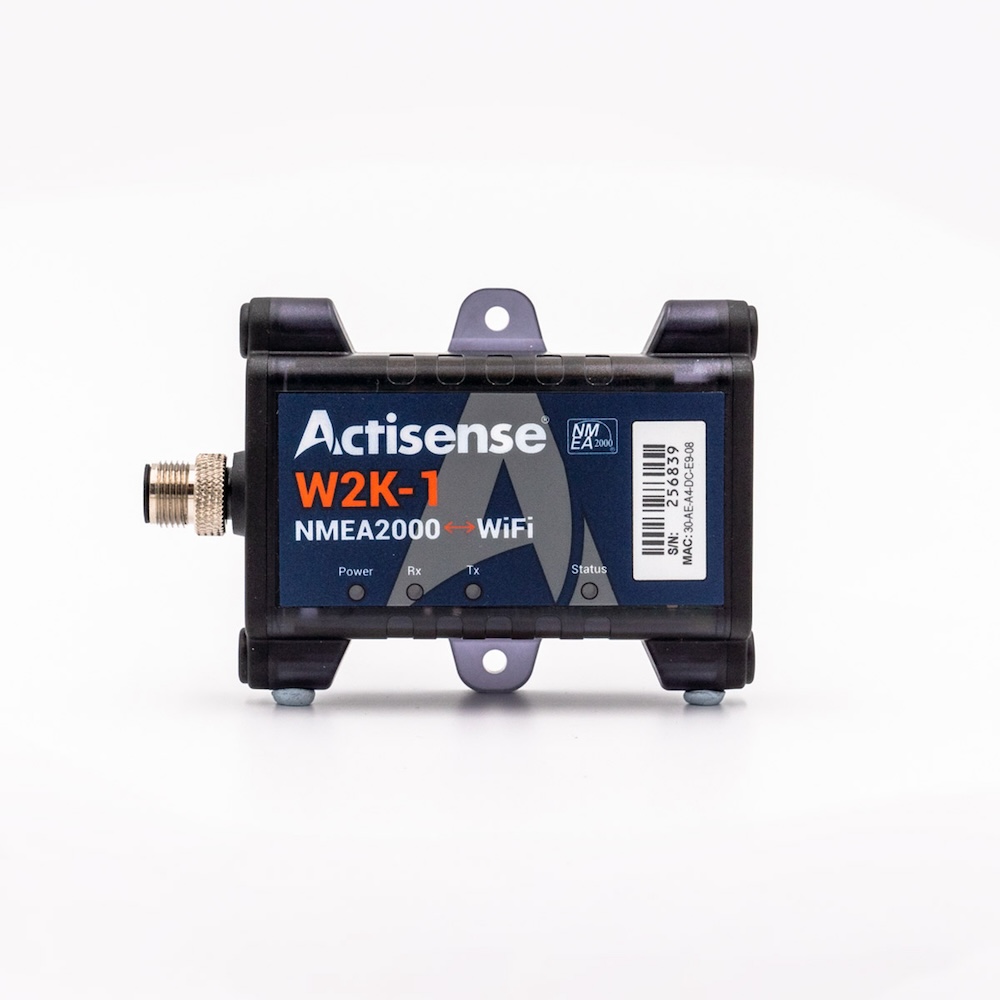
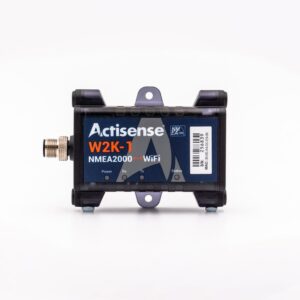
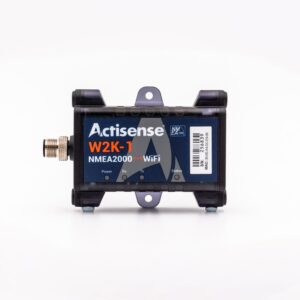
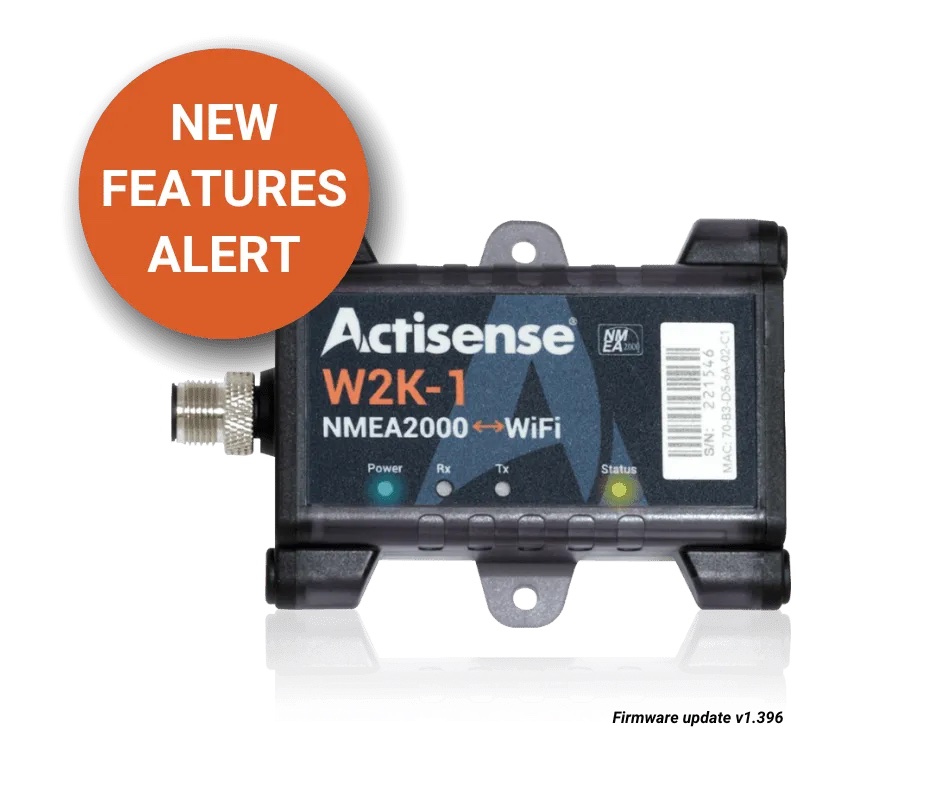
NMEA 2000 Gateway W2K-1 by Actisense
The NMEA 2000 network follows a straightforward, scalable architecture, often described as a “backbone” with “drop lines.” The backbone is the main data line, running the length of the boat, while drop lines connect individual devices to the backbone.
Backbone Cable: The backbone is the core of the network, usually consisting of a shielded, twisted-pair cable that reduces interference from electrical noise. It provides the network infrastructure for data and power distribution.
Drop Lines: Drop lines are shorter cables that connect devices like GPS receivers, fish finders, and engine monitoring systems to the backbone. These cables allow flexibility in where devices are placed on the vessel.
Terminators: Both ends of the NMEA 2000 backbone must be terminated with resistors to ensure proper network performance. Without proper termination, the network may suffer from data loss or communication failures.
NMEA 2000 Gateways
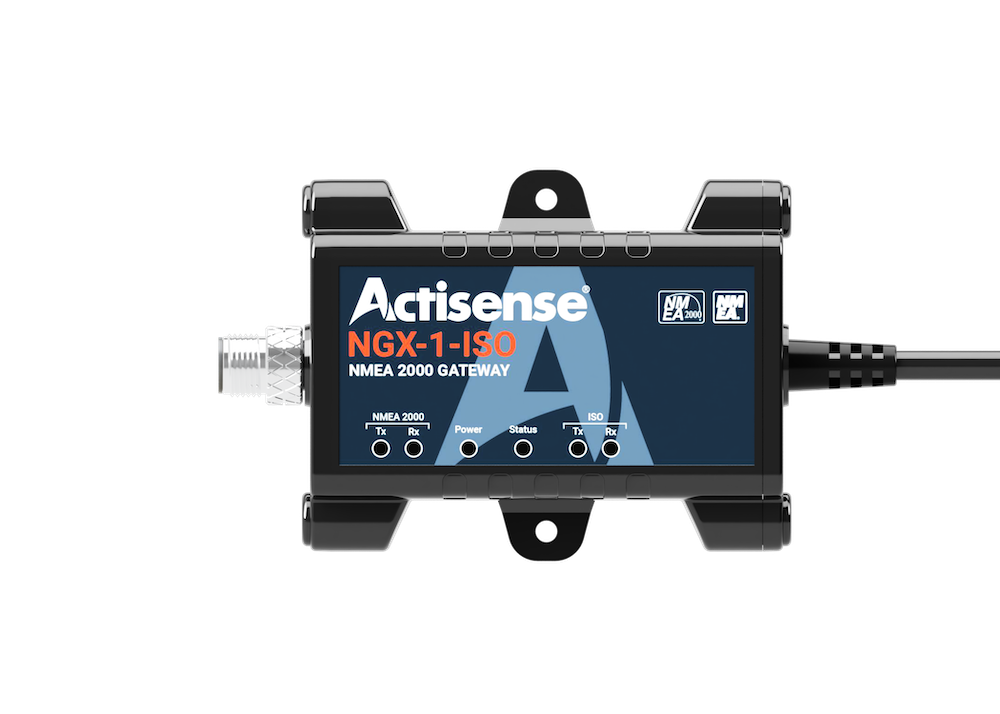
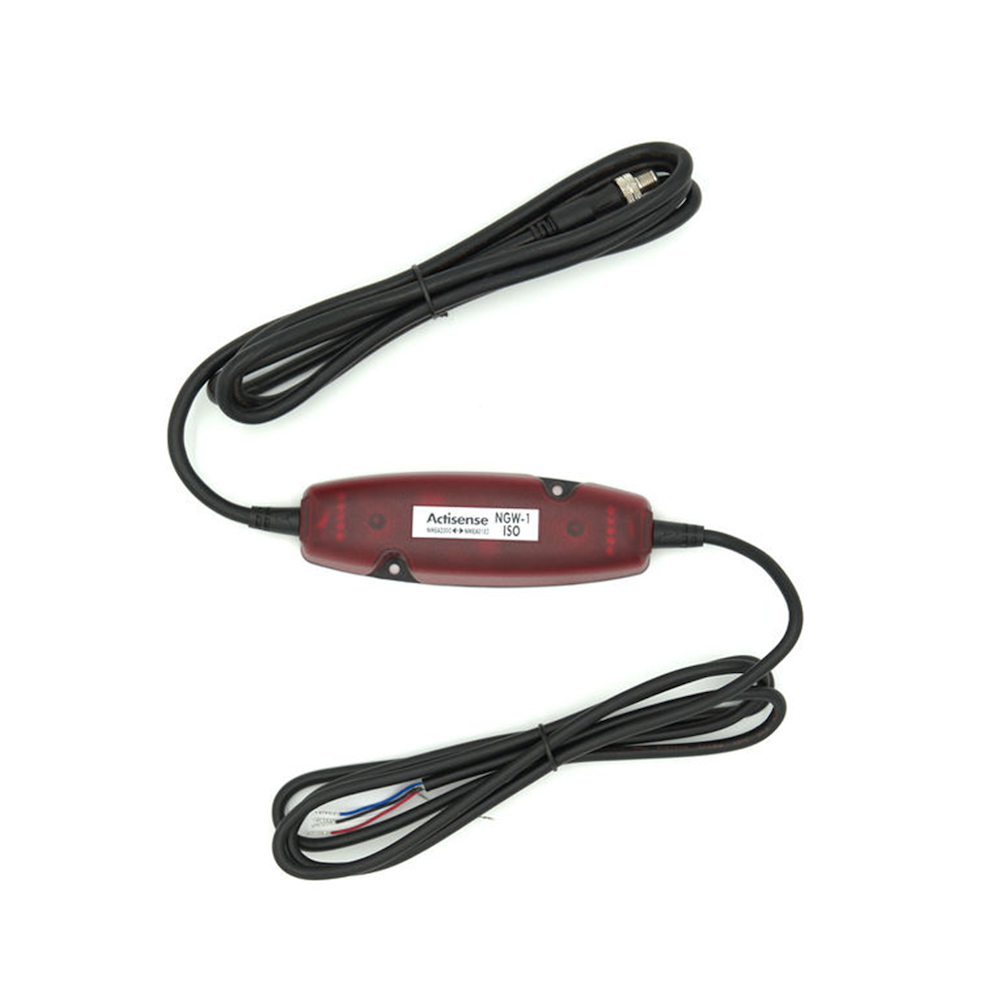
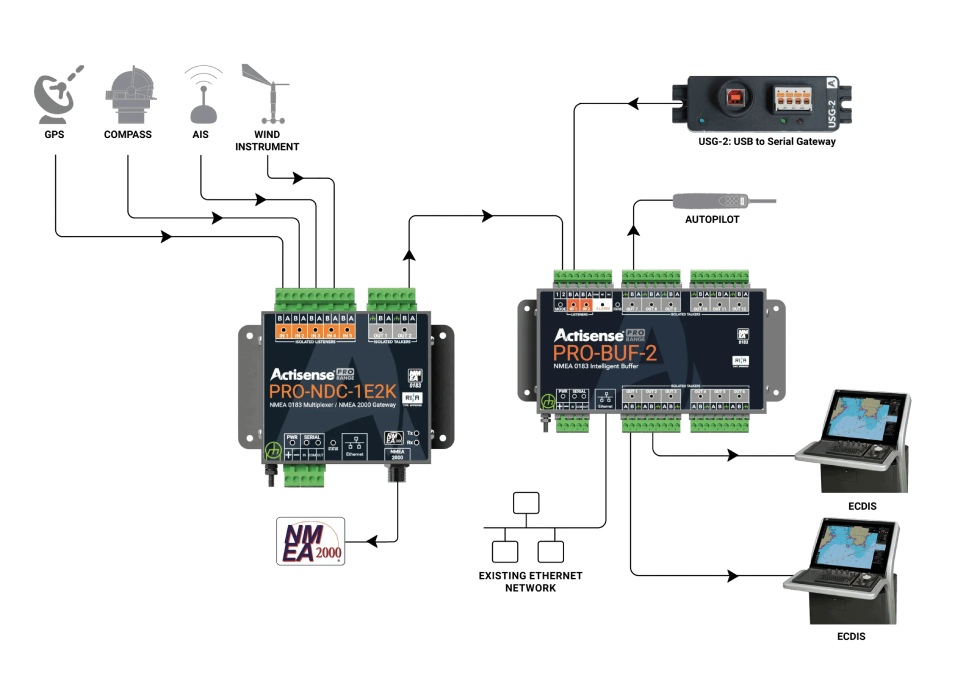
NMEA 0183 devices are not natively compatible with NMEA 2000 networks, and vice versa, but can still be connected by means of an NMEA 2000 gateway that performs bi-directional data conversion.
NMEA 2000 gateways allow integration with older NMEA 0183 devices or other systems that use different communication protocols. These gateways translate data between different standards, ensuring backward compatibility and future-proofing the network.
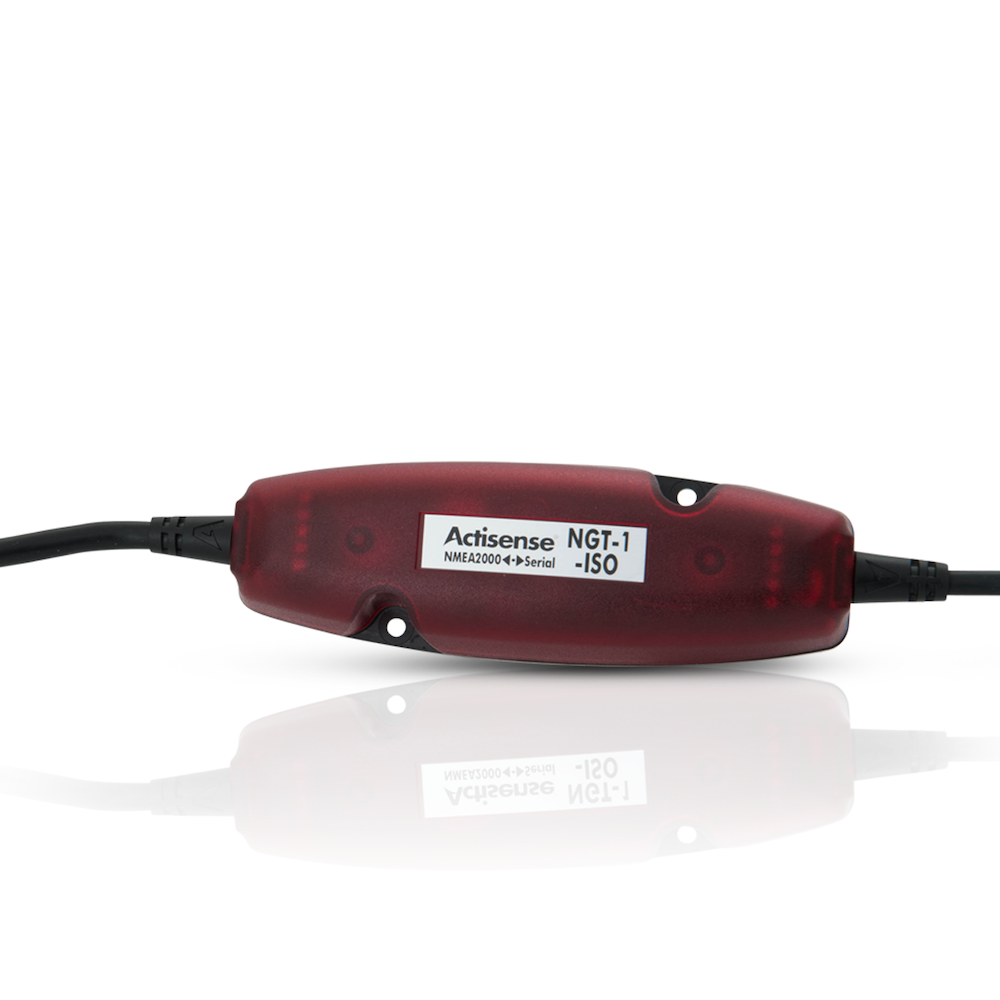
Actisense provides NMEA multiplexers that integrate AIS data from multiple sources, supporting vessel operations and maritime safety by enabling reliable transmission, monitoring, and collision avoidance
Actisense PRO devices offer RINA-approved integration of NMEA 0183 and NMEA 2000 systems for commercial vessels, enabling reliable data sharing and intelligent filtering
Actisense outlines how commercial vessels use NMEA 0183 to manage onboard data integration, addressing system complexity, installation challenges, and protocol trade-offs
Actisense explains why certified and approved products are essential for maintaining safe, stable, and compatible NMEA 2000 marine electronics networks
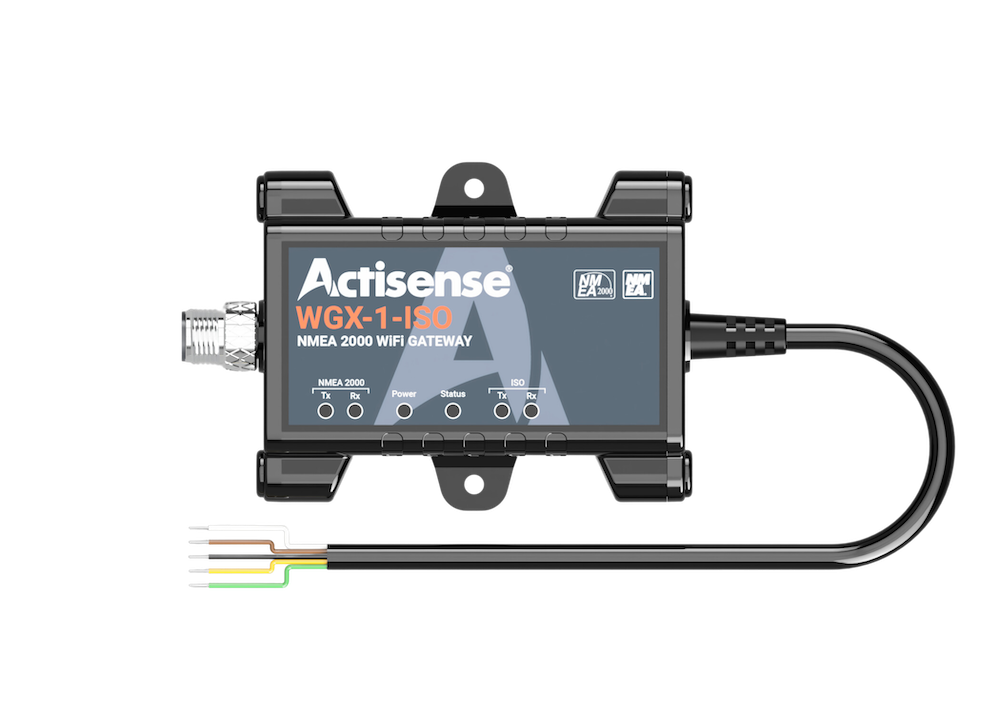
SmartMyBoat Navigator enhances navigation and monitoring on Roku by using onboard NMEA 2000 data delivered over Wi-Fi via Actisense W2K-1 or WGX-1 gateways
Andy Campbell, Chief Engineer at Actisense, has been appointed NMEA 0183 Committee Chair, leading efforts to enhance the standard’s interoperability and future development
Actisense has introduced new interface updates, including improved navigation, real-time NMEA data viewing, enhanced logging, network mapping, and simplified data routing for better system diagnostics and management
Discover how Actisense makes upgrading your boat’s electronics affordable and efficient, with innovative solutions for integrating legacy systems into modern NMEA 2000 networks
The latest offshore, subsea & marine technology news, straight to your inbox.
Get our weekly roundup of technology developments, new products and industry news.
THANK YOU FOR SIGNING UP
Thanks for joining us. Check your inbox.
We've sent you an email. Click the confirmation link to complete your subscription to the weekly eBrief. In the meantime, explore the latest news, suppliers and technologies.