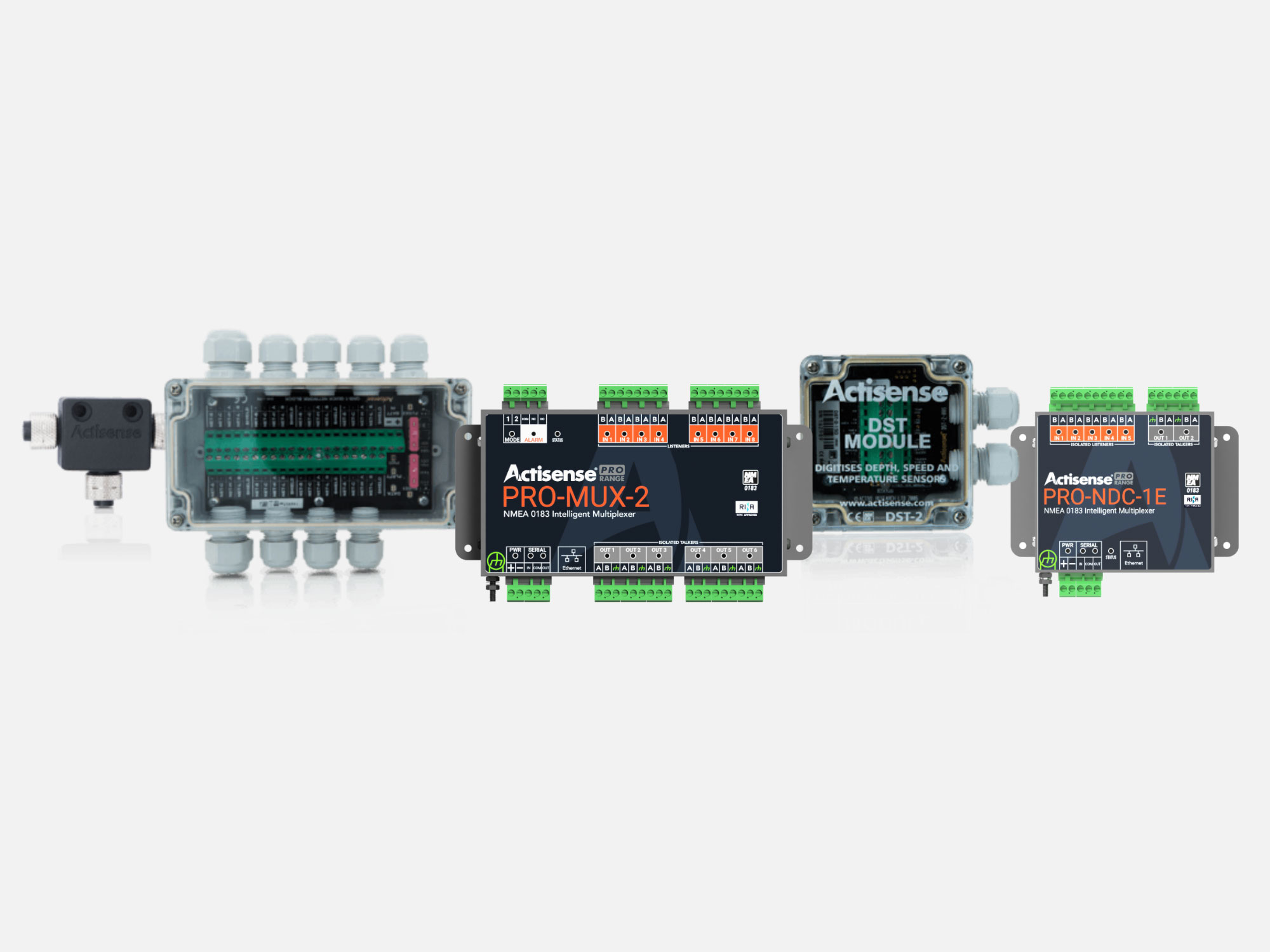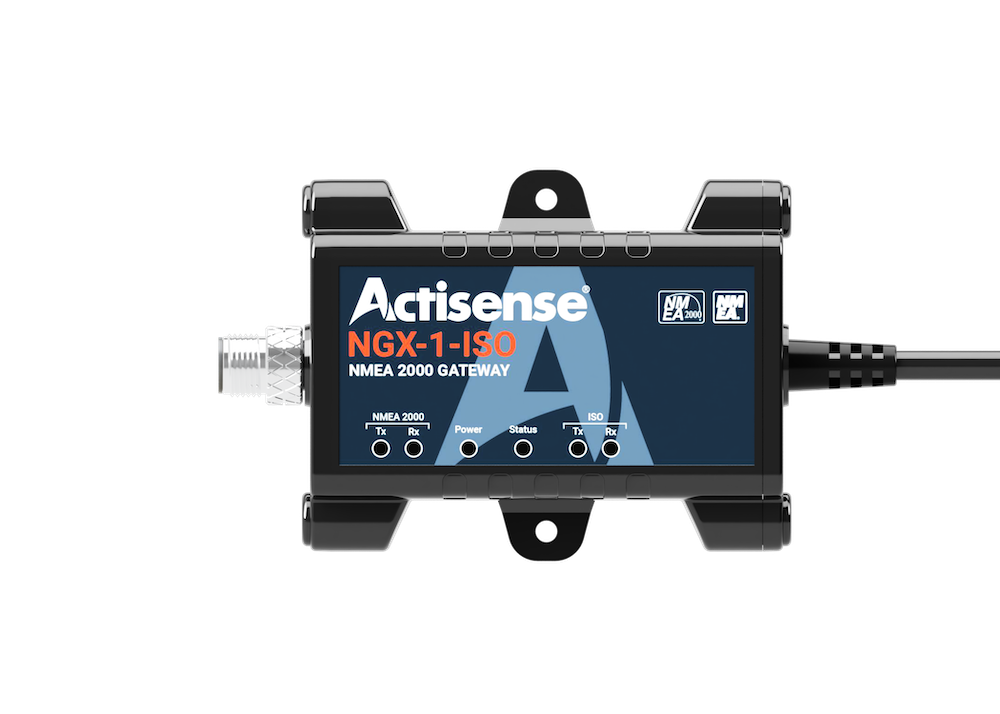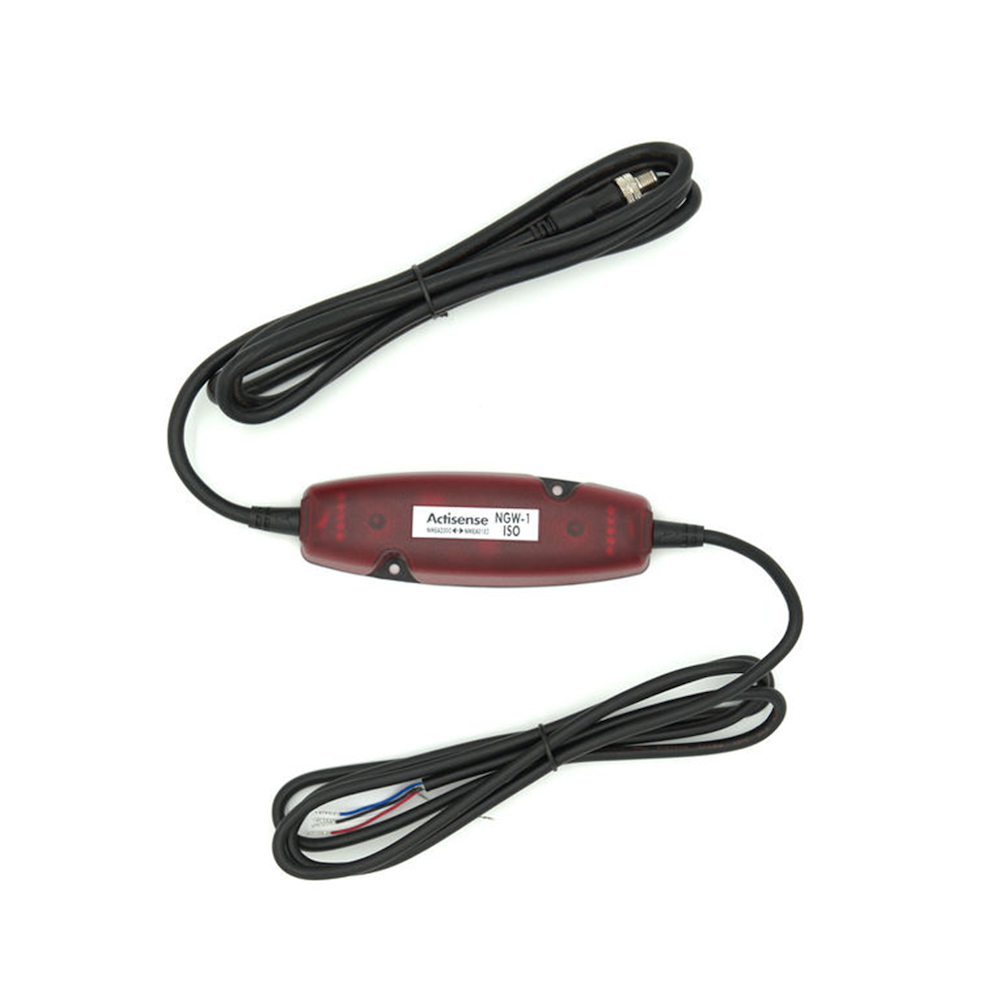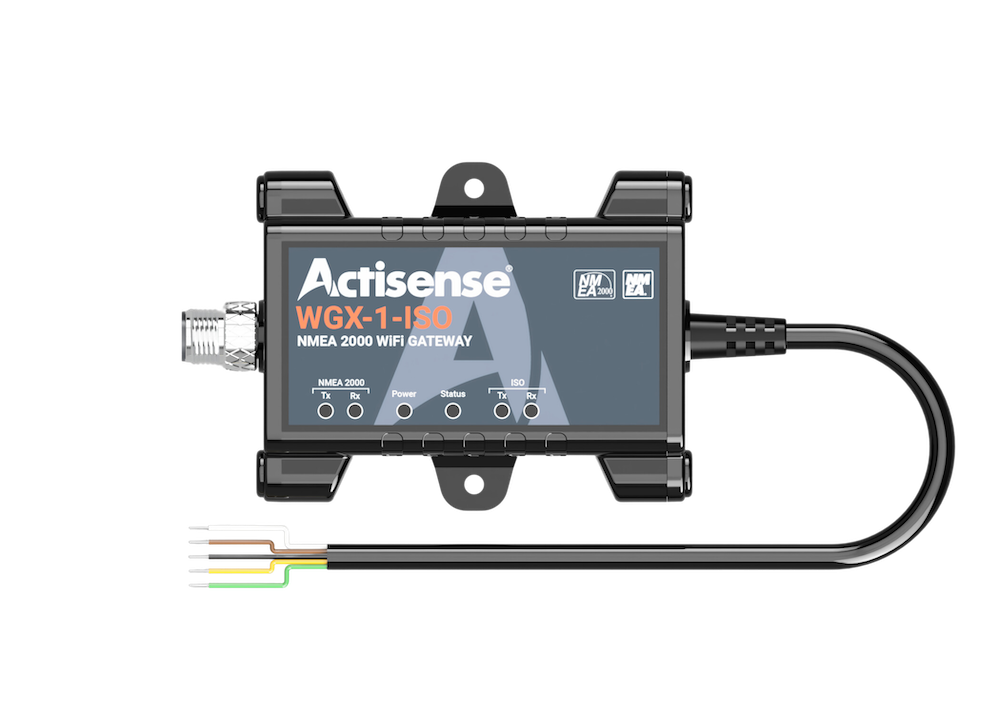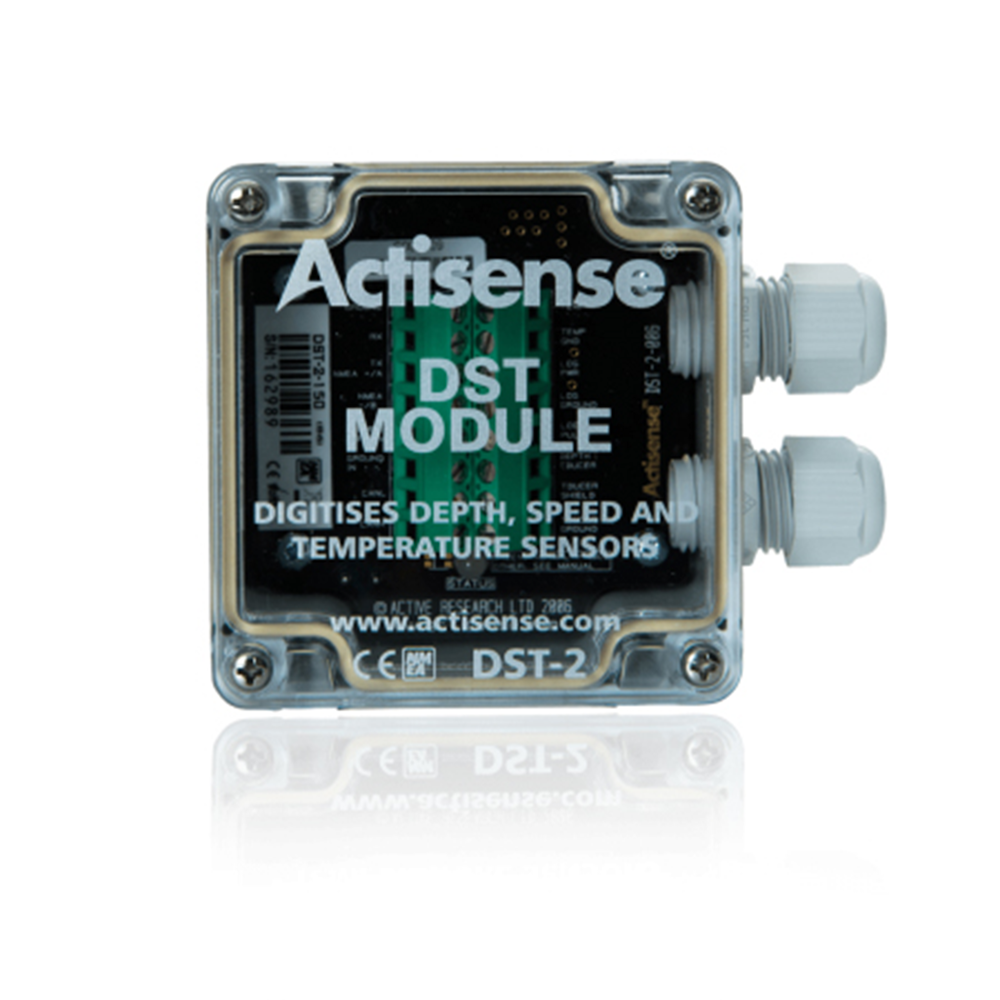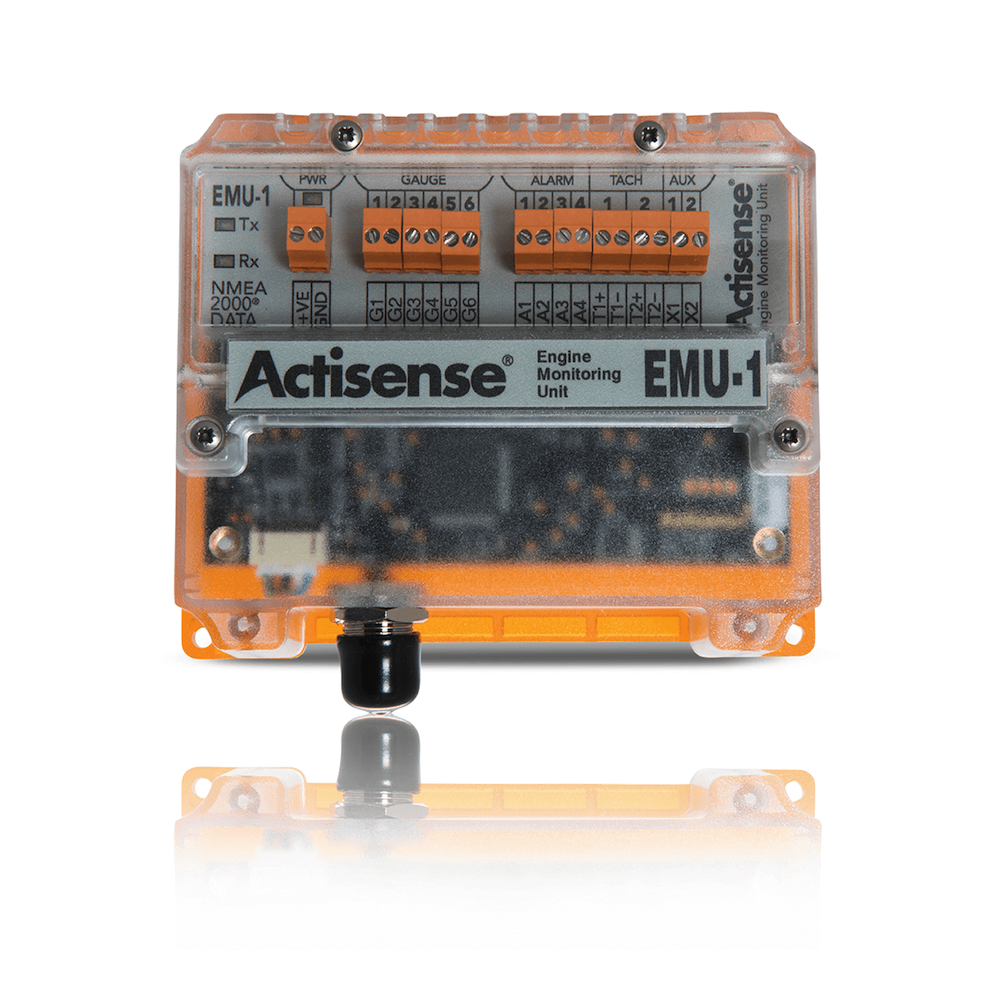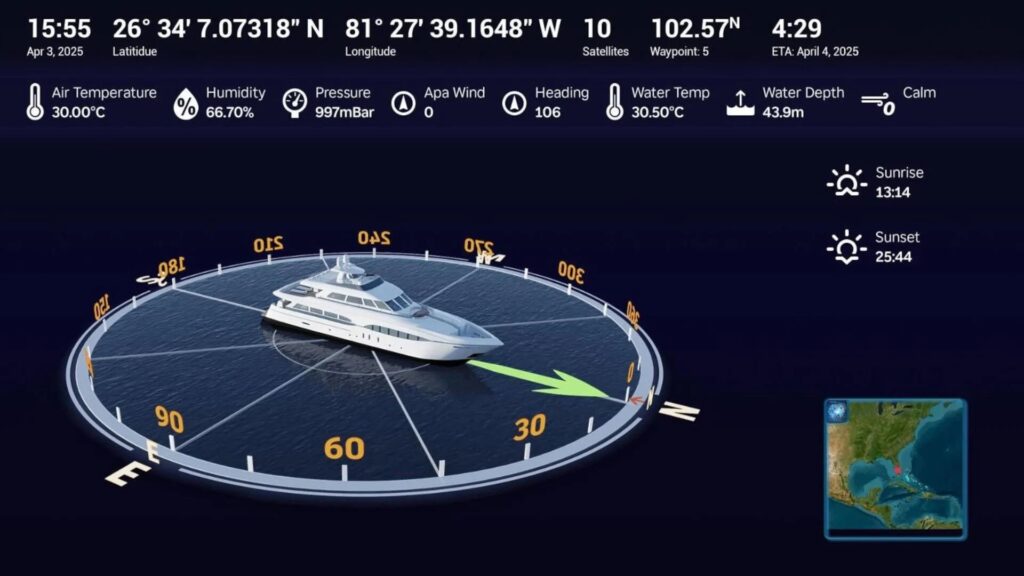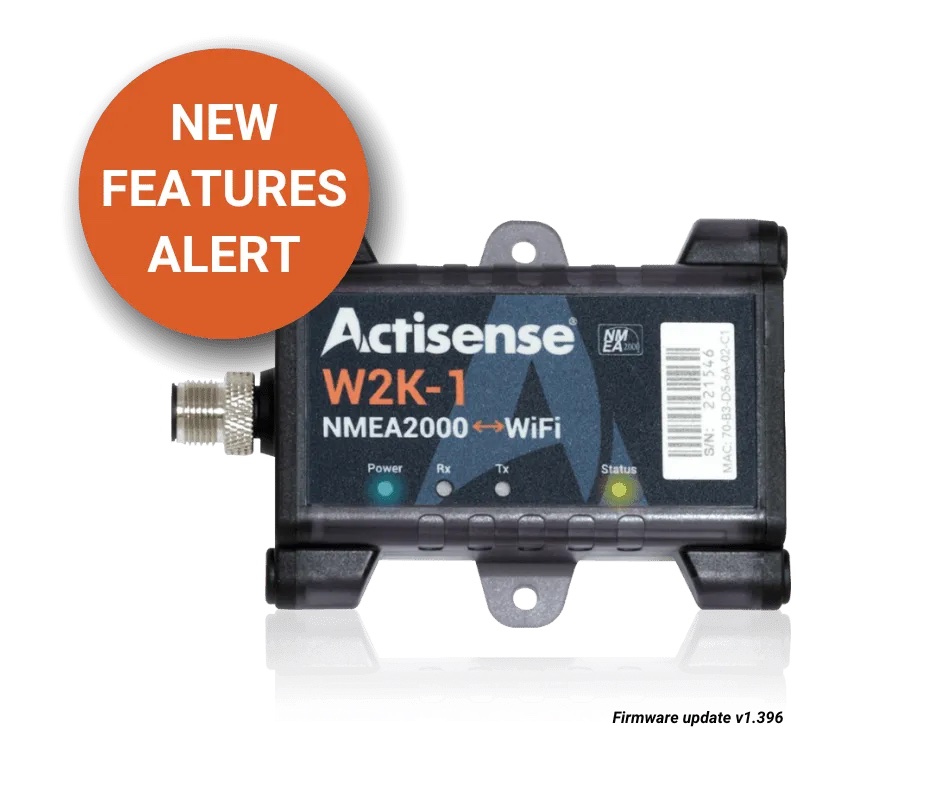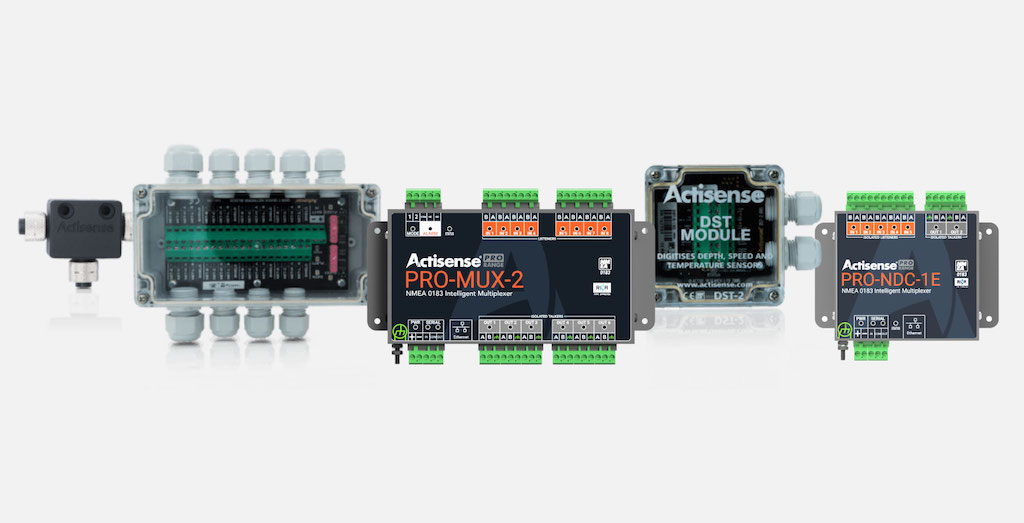
Actisense provides robust gateways and sensor solutions for managing NMEA 0183 and NMEA 2000 data communication and integration on commercial vessels of all sizes.
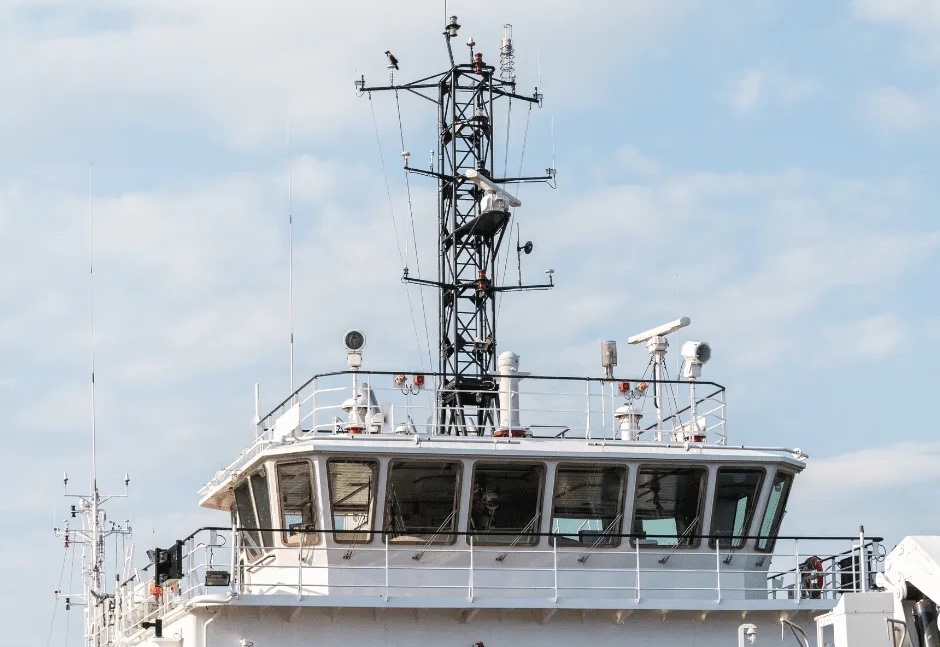
The commercial marine sector encompasses a wide range of vessel types, from compact fishing boats and small utility craft to expansive cruise liners and cargo ships.
Due to the breadth of applications and operational needs, no universal solution exists for gathering and distributing onboard data. Equipment requirements vary widely by vessel type, and installation techniques differ depending on layout, scale, and usage.
Installation Considerations on Commercial Vessels
Compared to leisure craft, commercial ships face harsher operational environments. Installations must account for challenges such as persistent vibrations, rough seas, onboard water ingress, and high winds. These elements can severely impact the integrity of electronic systems, requiring thoughtful planning of locations for power supplies, critical hardware, and safety equipment.
System Complexity Relative to Vessel Size
Larger vessels typically feature more expansive and distributed systems, often composed of several subsystems operating independently or in coordination. Smaller commercial boats—like workboats or fishing vessels—may have a single system located at the helm or bridge. In contrast, larger ships often require separate systems across multiple compartments, which must be integrated to function cohesively, adding complexity to design and installation.
Ongoing Relevance of NMEA 0183 in Commercial Shipping
This operational complexity helps explain why many commercial vessels still depend on NMEA 0183. The physical cable limits of NMEA 2000 are inadequate for larger vessels such as cargo ships, and the 50-device cap can become restrictive.
In contrast, NMEA 0183 allows each device to function independently, and RS-422 supports data transmission up to 1000 meters. This makes it easier to aggregate data from multiple instruments using multiplexers and buffers than to rely on NMEA 2000’s more limited framework with converters and bridges.
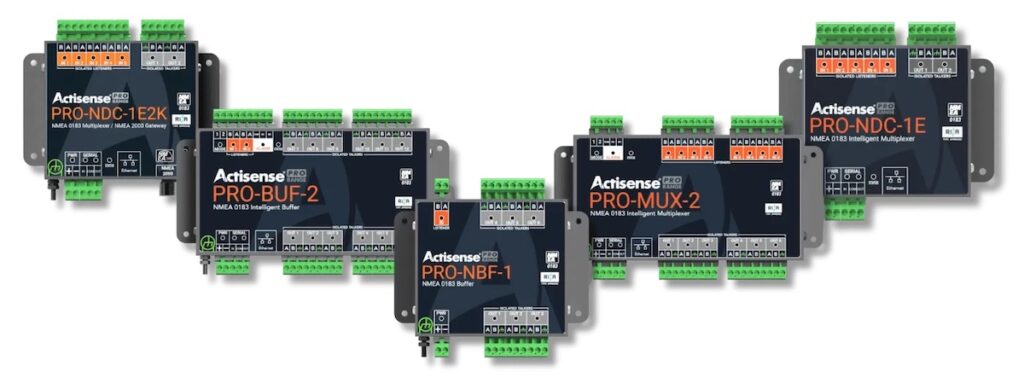
Clarifying Terms: Buffers, Splitters, Combiners & Multiplexers
Terminology surrounding NMEA data routing can sometimes cause confusion. “Buffers” and “splitters” refer to the same type of device: units that distribute data from a small number of sources—typically GPS—to multiple output systems such as autopilots, gyrocompasses, and AIS receivers.
Conversely, “combiners” and “multiplexers” serve the opposite role, merging data streams from several input devices and delivering them to a smaller number of endpoints like ECDIS or onboard computers.
Specialist Equipment & Vessel-Specific Requirements
Different vessel classes call for different technologies. Fishing boats frequently integrate fish finders, transducers, and other gear to measure factors such as water temperature and fish population density. Larger ships, particularly those governed by SOLAS standards, may require multiple ECDIS units and more complex integrations.
However, NMEA 0183 systems introduce their own challenges. While the independent nature of each device can be advantageous and offers redundancy, it also results in higher installation complexity and wiring demands. Each component needs its own power supply, unlike NMEA 2000 setups where devices are powered directly through the network bus.
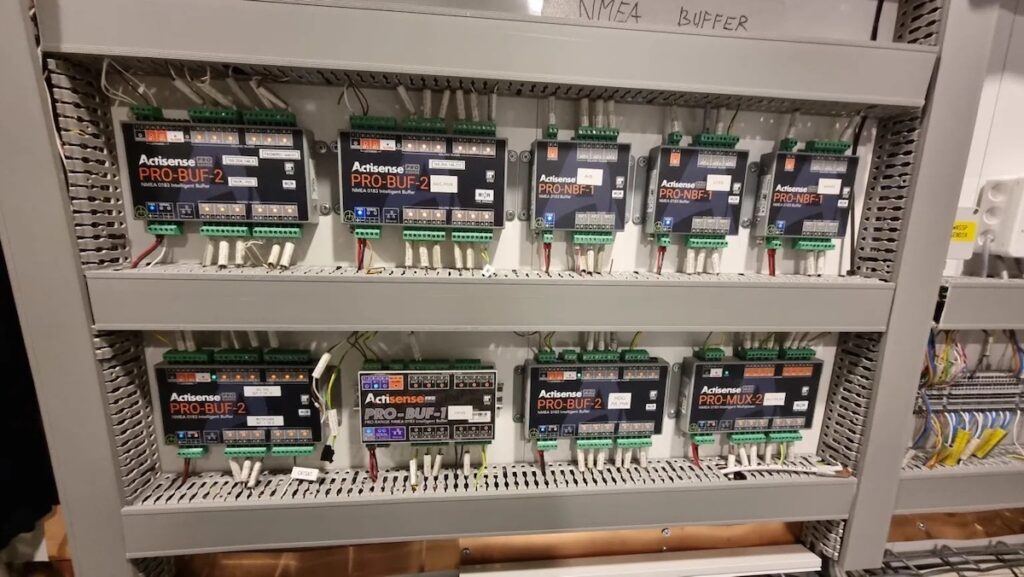
Wiring Implications & Cost Considerations
A vessel outfitted with 30 instruments must support 30 separate power supply connections. Along with the associated data cabling, this can create an overwhelming tangle of wires. While structured routing through ducting and proper labeling can improve organization, it does not reduce the quantity of wiring involved.
In some cases, deploying multiple NMEA 0183 devices can become more expensive than implementing a NMEA 2000 system. As the number of required multiplexers, buffers, and other auxiliary equipment increases, costs can climb quickly. By contrast, NMEA 2000 systems, which run on a single bus without the need for additional combiners, often result in lower overall system costs and simpler configuration.
Summary
Commercial vessels rely on tailored setups to manage onboard data, with no universal system meeting all needs. NMEA 0183 continues to play a crucial role in the sector due to its range and flexibility but can become increasingly complex and expensive as system scale grows.
NMEA 2000 offers an integrated, more centralized approach that can reduce complexity and cost. Understanding the trade-offs between these protocols is key to selecting the right solution for any commercial marine application.