Showcase your capabilities
If you design, build or supply Benthic Landers, create a profile to showcase your capabilities and connect with visitors who have an active requirement for your solutions.


Benthic landers are autonomous or semi-autonomous seabed platforms designed to support in situ oceanographic measurement, sampling, imaging, and experimentation. Configurations include benthic chamber, profiling, camera, sampling, experimental, deep-sea, and hadal landers, with payloads such as CTDs, chemical sensors, ADCPs, hydrophones, cameras, and sediment samplers.
This guide covers benthic landers for benthic biogeochemistry and ecology, sediment transport, pollution monitoring, carbon storage studies, and offshore infrastructure assessment.
Read the Technology Overview
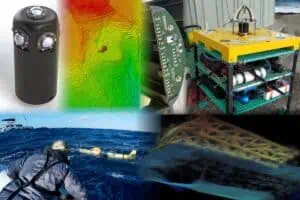
Cutting-Edge Marine Technologies & Engineering Services for Challenging Subsea Operations

If you design, build or supply Benthic Landers, create a profile to showcase your capabilities and connect with visitors who have an active requirement for your solutions.

Benthic landers are autonomous or semi-autonomous platforms that carry instruments, samplers, cameras, and experimental systems to the seabed, where they provide a stable base for in situ observations that can be difficult to obtain from moving vessels or underwater vehicles.
Many systems are deployed by free fall and operate independently on the seafloor before releasing ballast and returning to the surface under positive buoyancy, with acoustic releases and surface beacons commonly used to support recovery. This operating approach allows a benthic lander to function as a versatile underwater laboratory for deep-ocean research without requiring a permanent cabled connection.
Benthic chamber landers isolate a defined area of sediment and overlying water, allowing researchers to track changes in dissolved compounds over time and quantify exchanges of oxygen, nutrients, carbon-system parameters, and other solutes across the sediment-water interface. Because chamber insertion and mixing can influence measured fluxes, these effects need to be considered when interpreting results.
Profiling landers position microsensors through bottom water and into the upper sediment, using fine vertical movement to produce high-resolution measurements of variables such as oxygen, sulfide, and pH. This approach helps resolve chemical gradients across the sediment-water interface that conventional bottle sampling can miss.
Imaging landers use still cameras, time-lapse systems, or video to observe benthic organisms and habitat without the need for continuous vehicle piloting. The usefulness and interpretation of the resulting visual record depend on factors including lighting, field of view, image scale, deployment duration, baiting, and any disturbance caused by the platform itself.
Sampling landers collect water, pore water, sediment, particles, or biological material directly at the seafloor. Automated sampling can be synchronized with sensor measurements or experimental activity, while the recovered samples can then be used for more detailed laboratory analysis.
Experimental landers actively alter controlled conditions at the seabed to investigate process rates or ecosystem responses while recording the resulting environmental change. Depending on the experiment, they may incorporate chambers, injectors, pumps, resuspension devices, tracer additions, or other specialized modules.
Deep sea landers are engineered to operate under high hydrostatic pressure, low temperatures, and difficult recovery conditions. Hadal systems extend this approach into ocean trenches, where free-fall camera landers can combine imaging, CTD measurements, and acoustic ballast release at extreme depths, requiring pressure housings, flotation, and release systems to be rated appropriately for mission depth.
Benthic landers support measurements of respiration, nutrient regeneration, organic matter remineralization, and carbon exchange between sediments and bottom water. Chamber and profiling systems are particularly useful for direct observations of processes occurring across the sediment-water boundary, while some systems also support eddy-covariance measurements of benthic fluxes without physically enclosing the sediment.
A lander can function as a compact deep sea observatory in environments that are difficult to revisit regularly. By combining cameras, acoustic sensors, environmental probes, and baited systems, these platforms can document behavior, abundance, habitat use, and relationships between benthic fauna and local environmental conditions.
Current meters, ADCPs, turbidity sensors, cameras, and near-bed profilers can be used together to characterize erosion, deposition, resuspension, and boundary-layer flow. Combining hydrodynamic and optical measurements helps relate observed seabed change to the forces acting immediately above the sediment, although sensor height and frame-induced flow disturbance should be considered when interpreting the data.
Benthic observatory systems can establish baseline conditions and track chemical or physical changes around sites affected by pollution, deoxygenation, offshore development, or subseabed carbon storage. Their long residence times allow measurements to be collected close to potential sources or sensitive habitats over extended periods.
Landers can monitor conditions around pipelines, cables, foundations, and subsea installations by supporting localized measurements of currents, sediment response, water chemistry, acoustics, and ecological change. This allows environmental conditions around infrastructure to be observed without continuous vessel or vehicle presence.
Payload design determines measurement capability, endurance, power demand, storage requirements, and overall mission complexity, so the instrument package needs to be matched closely to the objectives of the deployment. Common payload options include the following.
| Sensor/Payload | Overview |
| CTD and hydrographic sensors | Measure conductivity, temperature, pressure, and derived seawater properties near the seabed. |
| Dissolved oxygen sensors and optodes | Track oxygen conditions in bottom water, chambers, or experimental volumes. |
| pH, redox, and chemical sensors | Measure chemical conditions relevant to biogeochemistry and sediment processes. |
| Current meters and ADCPs | Characterize near-bed flow, current profiles, and hydrodynamic forcing. |
| Turbidity and optical sensors | Monitor suspended particles, optical backscatter, fluorescence, or related properties. |
| Cameras and lighting systems | Provide still, time-lapse, or video observations of the seabed and benthic fauna. |
| Hydrophones and acoustic sensors | Support passive acoustic monitoring and other seafloor acoustic measurements. |
| Water and pore-water samplers | Collect discrete samples for laboratory analysis. |
| Sediment and biological sampling systems | Recover physical material for geological, chemical, microbiological, or ecological study. |
Combining complementary payloads can turn one platform into an integrated underwater observatory, allowing several environmental variables or processes to be examined during the same deployment. Calibration, synchronization, and antifouling therefore become increasingly important during long deployments, particularly where multiple sensors are expected to operate together over extended periods.
The measurement objective and operating environment should determine lander selection, with the platform, payload, and recovery system considered as parts of the same mission design. Key selection factors include:
Seabed slope, sediment strength, current speed, frame stability, and the risk of sinking or scour should also be considered because each can affect both measurement quality and successful recovery. Taken together, these factors determine whether a benthic lander is suitable for the intended mission.
 Searching Companies & Products

 Subscribe to the Weekly eBrief
The latest engineering and technical developments straight to your inbox - join thousands of engineers who receive it.
Subscribe to the Weekly eBrief
The latest engineering and technical developments straight to your inbox - join thousands of engineers who receive it.