

In this Q&A, Ultra Motion provides an in-depth look at their advanced linear and rotary servo actuators, designed for demanding marine, defense, and unmanned applications.
Readers will learn how the T-Series and L-Series maintain reliability in harsh environments, support unified CAN-based control, and integrate seamlessly across platforms. The article also highlights Ultra Motion’s R&D priorities for 2026, showcasing their commitment to innovation and subsea performance.
Are T‑Series Actuators Available in Pressure‑Compensated Versions for Deep‑Water Subsea Deployments?
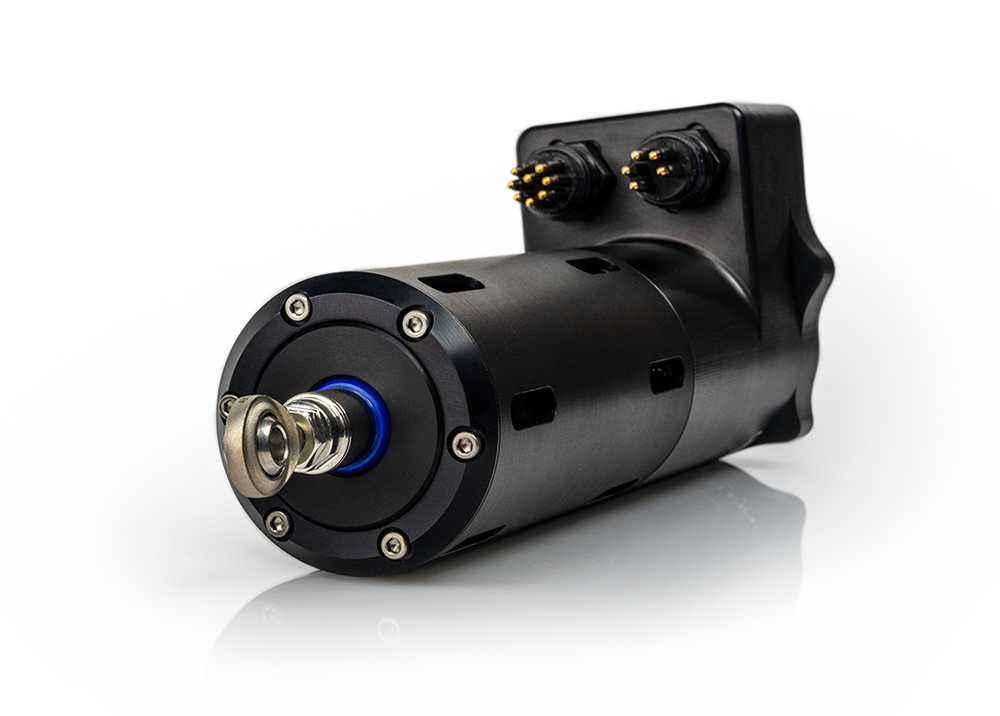
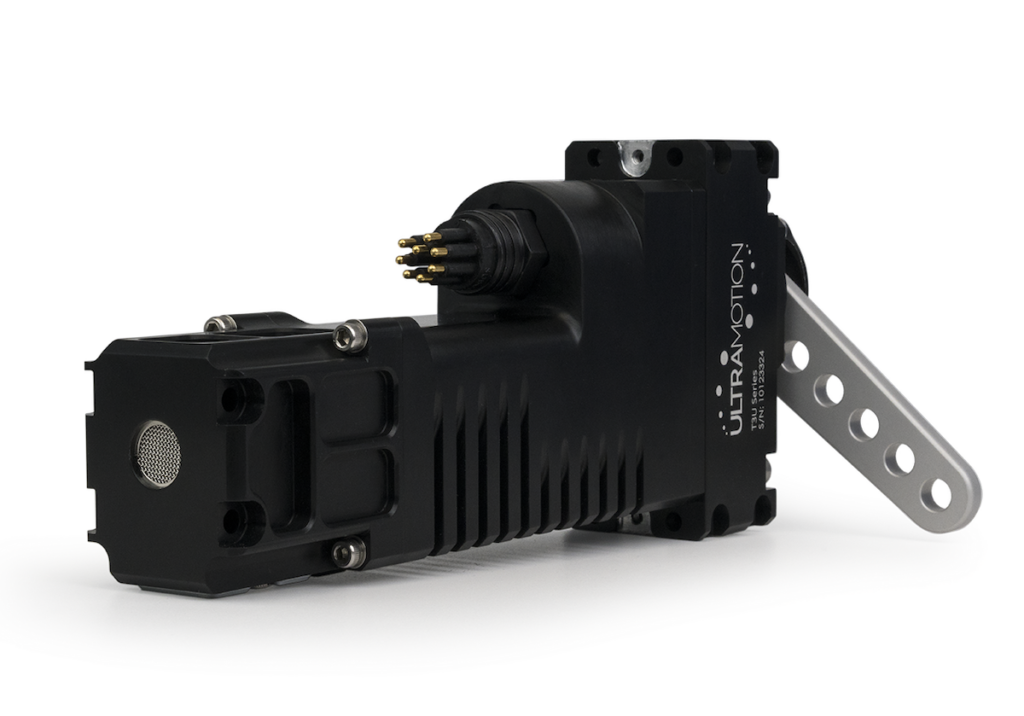
Ultra Motion offers pressure‑compensated variants of the T‑Series rotary actuators specifically engineered for deep‑water subsea environments. Built on the same high‑performance electromechanical platform as the standard T3 Series, the subsea variant known as the T3U Series integrates a pressure‑balanced, oil‑filled housing with all of the servo electronics, absolute position sensing, and advanced control features required for demanding underwater applications.
The pressure‑compensated design enables continuous operation at depths exceeding 6000 meters (10,000 psi) by equalizing internal fluid pressure with the external environment, minimizing structural stress and improving long‑term reliability under hydrostatic load. This makes the T3U ideally suited to marine robotics, unmanned underwater vehicles, subsea valve actuation, control surface actuation on subsea craft, and other submerged control tasks.
In addition to robust mechanical performance, the actuator retains built‑in brushless DC control, absolute feedback, multi‑mode positioning/velocity/torque capabilities, and support for multiple interfaces such as CAN 2.0B, RS‑485, and PWM, which simplifies integration with subsea control systems.
How Does the L‑Series Maintain Reliability in Corrosive Marine Environments Over Long‑Duration Missions?
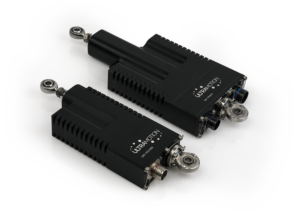
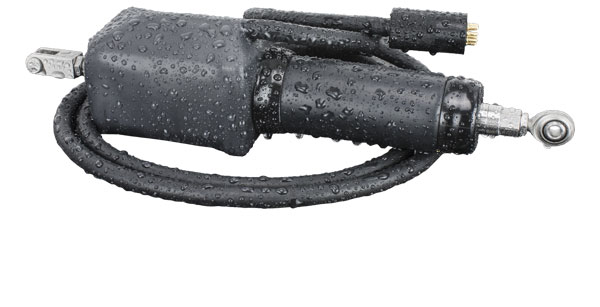
L-Series actuators from Ultra Motion.
Ultra Motion designs its L‑Series actuators with multiple layers of environmental protection to ensure long‑term reliability in corrosive marine and offshore environments. Rather than relying on large molded gaskets, which can degrade or fail under shock, vibration, or thermal cycling, the L‑Series uses O‑ring seals on all static interfaces and precision spring‑energized shaft seals on dynamic interfaces to prevent water ingress while tolerating mechanical stress. Internally, printed circuit boards (PCBs) are conformally coated to resist moisture and salt contamination, and a custom‑molded desiccant pack helps control humidity during extended operation, reducing the risk of condensation and corrosion inside the actuator.
Material selection further enhances corrosion resistance: housings are made from hardcoat anodized 6061 aluminum, with electrically conductive chem‑filmed surfaces to improve EMI/EMC resilience and corrosion protection, and key structural components such as the output shaft and mounting hardware are made from marine‑grade stainless steels like Nitronic 60, 17‑4PH, and PH13‑8Mo. These alloys exhibit excellent resistance to saltwater corrosion and galvanic degradation, and are often paired with cathodic protection strategies on subsea variants. This combination of robust sealing, humidity control, and corrosion‑resistant materials ensures that L‑Series actuators perform reliably on long‑duration missions in harsh maritime environments.
Do the T‑Series and L‑Series Support Unified CAN‑Based Control for Integrated Maritime, Defense, or Unmanned Platforms?
Absolutely. One of the strengths of Ultra Motion’s actuator ecosystem is the consistency in communication and control protocols across product lines, including the T‑Series rotary actuators and the L‑Series linear servos. Both families support CAN 2.0B, a widely adopted standard in maritime, defense, robotics, and unmanned system architectures, enabling not only command of position, velocity, and torque but also rich telemetry such as absolute position, motor currents, bus voltage, temperature, humidity, and internal health diagnostics.
This unified CAN protocol, along with support for complementary interfaces such as RS‑485 and PWM where appropriate, makes integration into complex, multi‑actuator systems significantly easier. Whether controlling rudders and hydrofoils on an unmanned surface vessel or managing precision motion in an autonomous underwater vehicle, designers can use the same CAN‑based command and feedback framework across different actuator types, reducing software complexity and accelerating system development.
Are There Standard Mounting Options That Allow the T‑Series and L‑Series to be Swapped or Scaled Across Different Platforms?
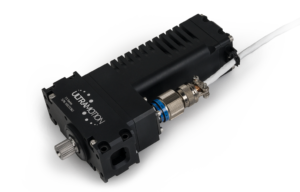
Ultra Motion T-Series actuators.
Both the T‑Series and L‑Series actuator families are offered with standardized mounting interfaces and accessory options that streamline installation and allow configuration across a variety of platforms. Standard mounting provisions (such as clevises, trunnions, and threaded holes) and available accessories help ensure that actuators can be mechanically integrated into existing designs with minimal modification. At the same time, Ultra Motion routinely works with customers to design custom housings, mounting features, and mechanical interfaces tailored to specific platform requirements, whether that means adapting to constrained spaces on unmanned surface vessels, aligning with structural points on subsea vehicles, or accommodating unique load paths in defense systems.
This blend of standardization and customization provides system designers with flexibility: engineers can take advantage of off‑the‑shelf mounting patterns for rapid prototyping and initial integration, and then transition to custom‑optimized mounting solutions for production or mission‑critical deployments, all while maintaining consistent actuator performance and control compatibility across platforms.
Find out more about Ultra Motion’s actuators on their website.