

applied acoustics is a provider of subsea and marine navigation, positioning, and survey solutions.
In this exclusive Q&A, OST sat down with Michael Calvert, Geophysical Product Manager at applied acoustics, to discuss the HydraSeis multichannel seismic system and its role in delivering high-resolution shallow subsurface data for offshore surveys.
Can you provide an overview of the HydraSeis system and its role in offshore geophysical surveys?
HydraSeis is applied acoustics’ multichannel seismic streamer system, designed for high-resolution subsurface profiling in offshore environments. Its purpose is straightforward, delivering broadband, high-resolution seismic data for the first tens to ~100 m below the seabed. This depth range is increasingly critical for offshore wind, cable routes, UXO assessment, and near-surface engineering.
A major design objective was practicality. HydraSeis is compact, simple to deploy, and avoids the logistical burden typically associated with multichannel systems. At its core is a 24-bit delta-sigma ADC architecture that enables 16 kHz sampling (0.0625 ms) and approximately 4.3 kHz bandwidth, giving the system true UHR (EHR) capability. An 8 kHz sampling mode is also available, reducing network load while still delivering ~2.1 kHz bandwidth, and increasing channel capacity for 3D configurations.
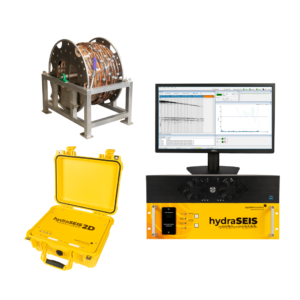
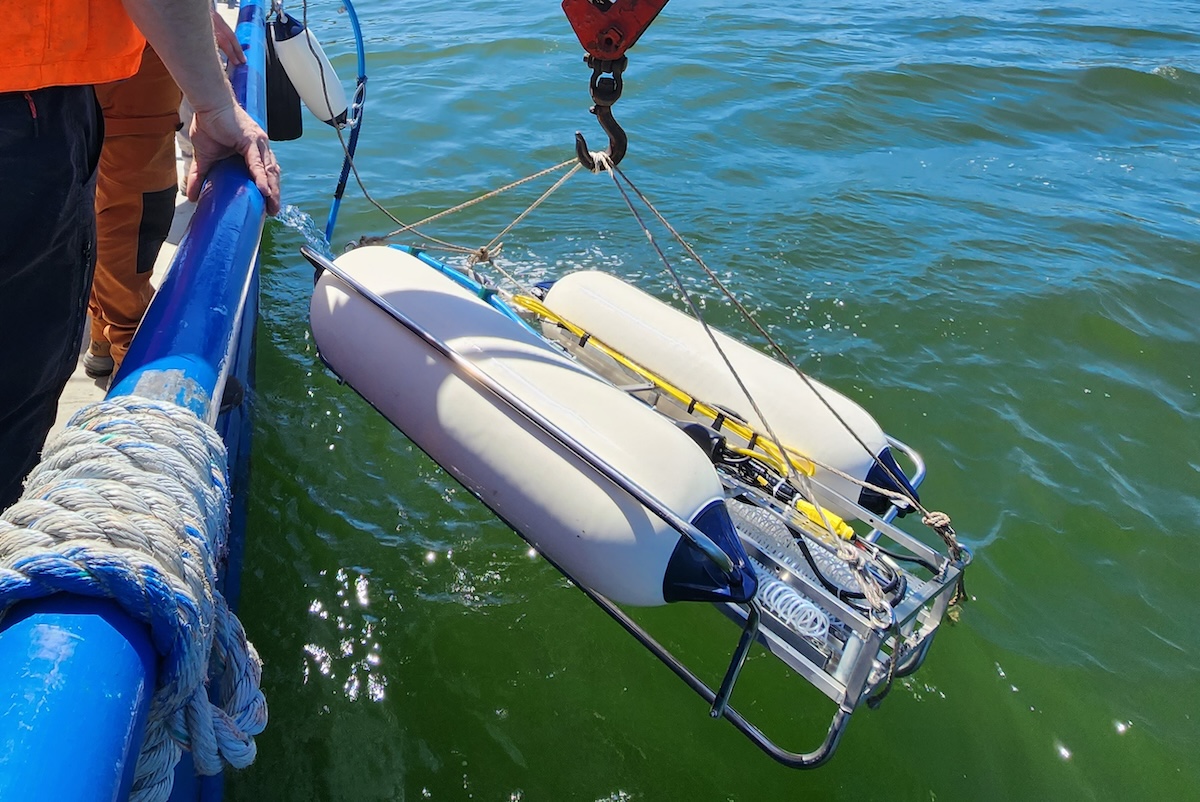
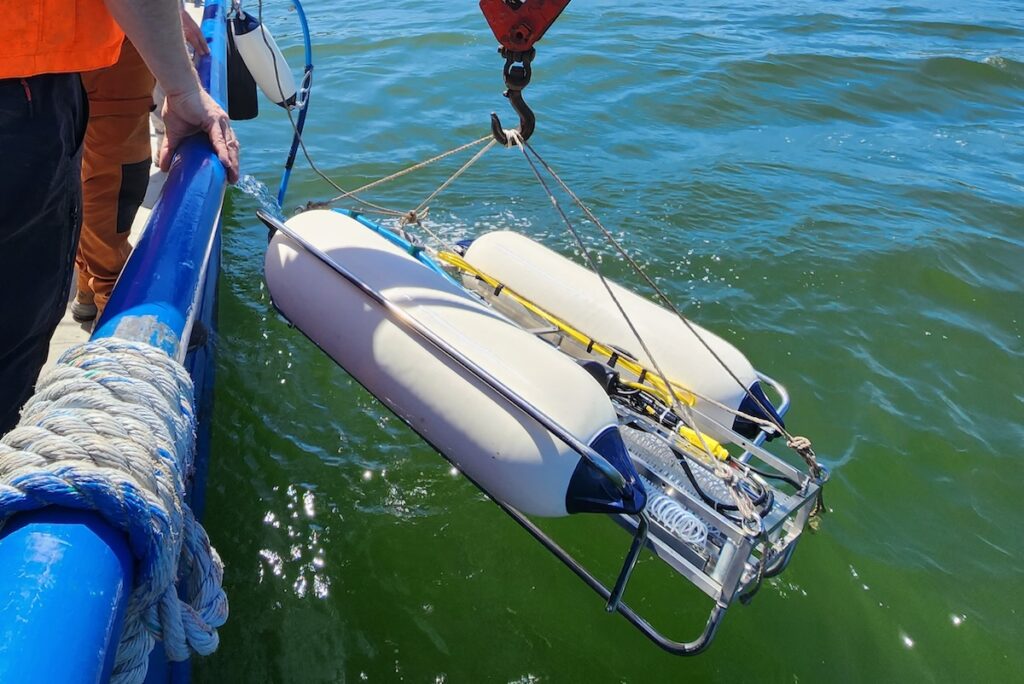
HydraSeis Multi-Channel Seismic Streamer.
What types of marine survey applications is HydraSeis designed to support?
Offshore wind site investigations are a natural fit for HydraSeis, since they require tight spatial sampling, high bandwidth, and reliable shallow imaging. The system is not limited to renewables and is suitable for any project where high-resolution shallow subsurface data is important, including geohazard assessment, ground model development, route and corridor surveys, construction support, and broader near-surface characterization.
HydraSeis is also designed to work effectively with high-frequency sparker sources such as the DuraSpark range. The system preserves the full bandwidth of these sources, ensuring that the acquisition hardware does not become the limiting factor in recorded data quality.
HydraSeis combines in-water electronics, acquisition software, and navigation inputs. What design choices help ensure high data quality and accurate positioning?
A key design principle was protecting high-frequency signal content from unnecessary degradation. HydraSeis achieves this by digitizing the seismic signal in-water, inside each streamer section. By placing the 24-bit ADCs close to the hydrophone groups, the system avoids long analogue transmission paths, which are more susceptible to noise and interference. Once digitized, the data is transferred via a 100 Mbps Ethernet link, providing stable throughput for high-sample-rate multichannel acquisition.
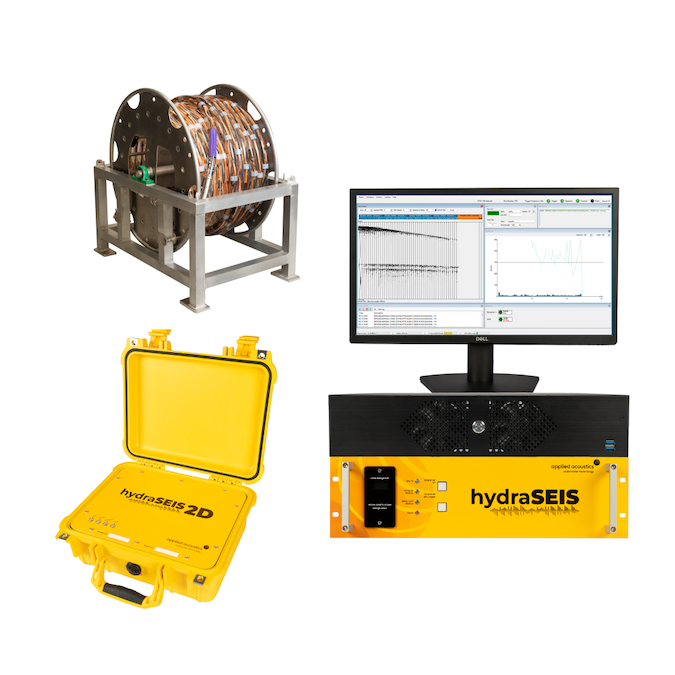
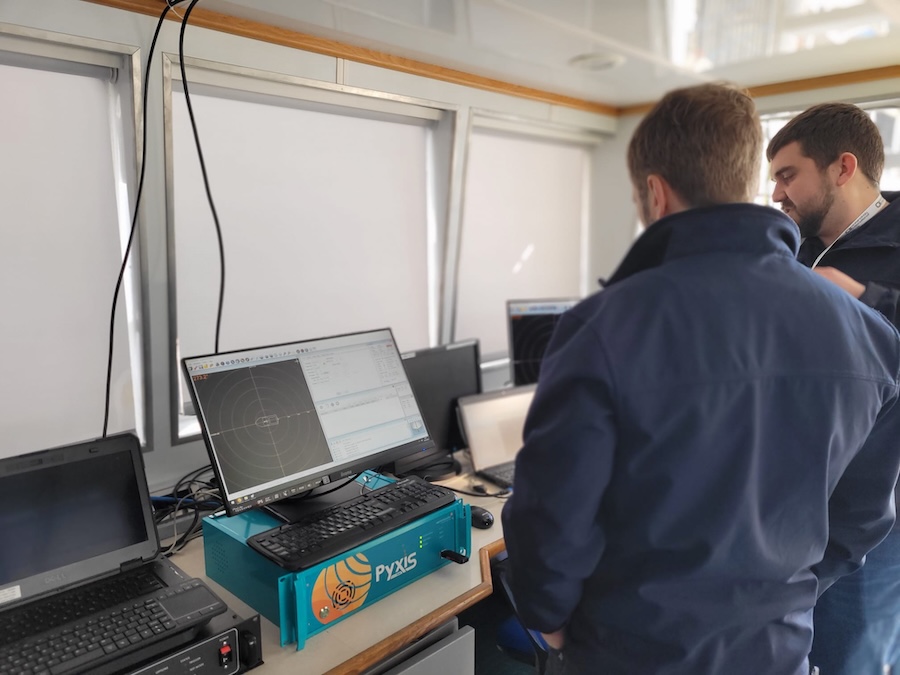
On the vessel, the HydraSeis console and interface unit manage power, triggering, navigation capture, and streamer connectivity, while the acquisition PC runs the HydraSeis software for configuration, real-time QC, and recording. Data is stored in SEG-D format, which supports standard processing workflows.
Navigation is recorded in standard formats such as NMEA GGA, written directly into the SEG-D file, embedding positional information within the seismic record for downstream processing. Two auxiliary channels provide additional flexibility, for example capturing near-field source signatures when required.
How is the HydraSeis streamer configured for shallow, high-frequency work, and why do features like short group length and tight channel spacing matter?
HydraSeis uses modular 24-channel active sections, which allow the spread to be scaled to suit project requirements and vessel constraints. Standard configurations use 1 m or 2 m group intervals, giving a maximum active length of 100 m or 200 m respectively. Each section is lightweight, approximately 45 kg, and compact, approximately 45 mm in diameter, which supports practical handling, rapid mobilization, and low operational overhead.
For shallow, high-frequency imaging, receiver geometry is particularly important. HydraSeis uses short group lengths, approximately 150 mm in the standard dual-element configuration, with a single-element option also available. Short groups minimize spatial averaging and reduce destructive interference, an issue that becomes more pronounced in shallow water when longer groups are used. When combined with tight channel spacing, this geometry supports decimeter-scale vertical resolution where geology and survey conditions allow.
What are the practical advantages of multichannel seismic (MCS) compared with single-channel sub-bottom profiling (SCS) for site investigation?
Multichannel seismic offers several advantages that directly benefit engineering-focused surveys:
- Improved signal-to-noise ratio through stacking of coherent reflections
- More reliable penetration at high frequencies
- Multi-offset information, enabling more robust processing
- Reduced sensitivity to shallow-water artifacts compared with single-channel systems
- Access to a wider range of processing techniques, including velocity analysis, deghosting, multiples, and bubble pulse suppression
In shallow water, SCS systems can be particularly vulnerable to geometry limitations, sea-state effects, and destructive interference. By distributing information across multiple channels, MCS helps distinguish genuine geology from acquisition artifacts and produces a more stable, interpretable final image.
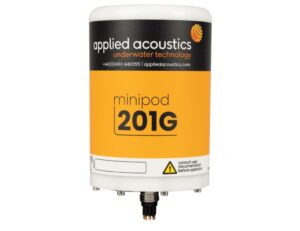
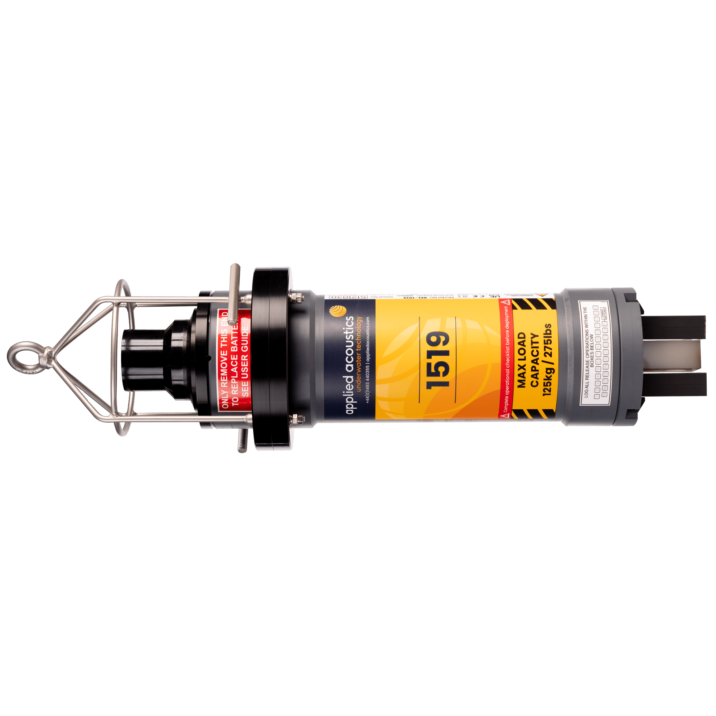
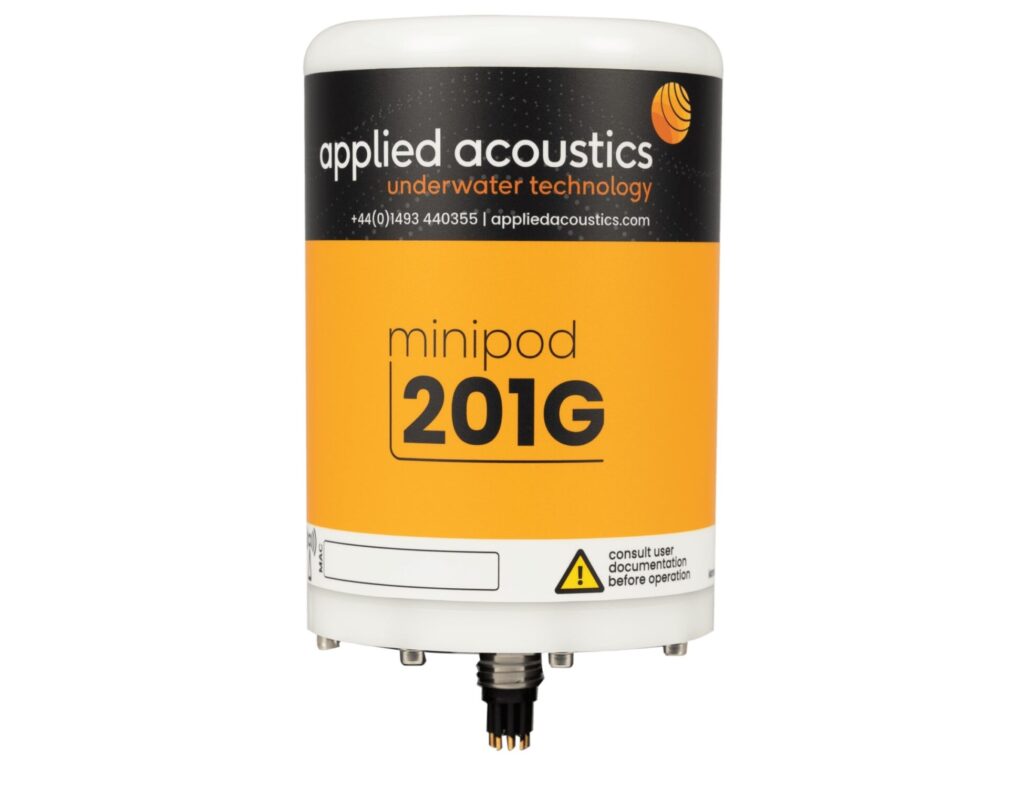
MiniPods.
HydraSeis is often deployed alongside DuraSpark and MiniPods. How does this ‘single-supplier spread’ approach simplify tendering, mobilization, and offshore operations?
The benefit is not just in the individual components, but in reducing the number of interfaces that need to be managed. A single-supplier spread simplifies tendering by removing many of the assumptions and integration risks that sit between vendors, for example triggering arrangements, cabling standards, documentation, and responsibility boundaries.
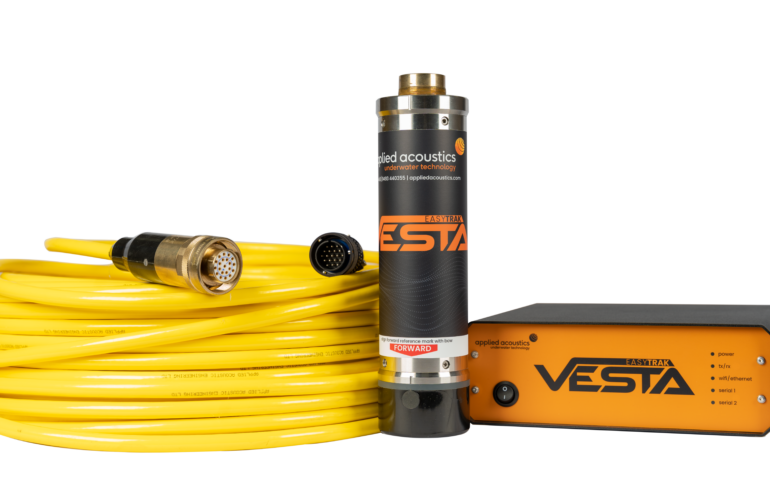
Operationally, this leads to faster mobilization and fewer unexpected issues offshore. HydraSeis is designed as a natural partner for the DuraSpark high-frequency sparker range, so the source and receiver behave as a coordinated system rather than an improvised integration. MiniPod GNSS receivers then provide lightweight and practical positioning for source and streamer buoys, following the same compact deployment philosophy.
Support is also streamlined, with fewer compatibility concerns, clearer troubleshooting pathways, and simpler spares management.
Thank you for your time. It has been a pleasure speaking with applied acoustics. We look forward to following continued developments in high-resolution offshore seismic survey technologies and their application in site investigation.