The Global Sourcing Hub for Marine, Subsea & Offshore Technology
Discover cutting-edge solutions from leading global suppliers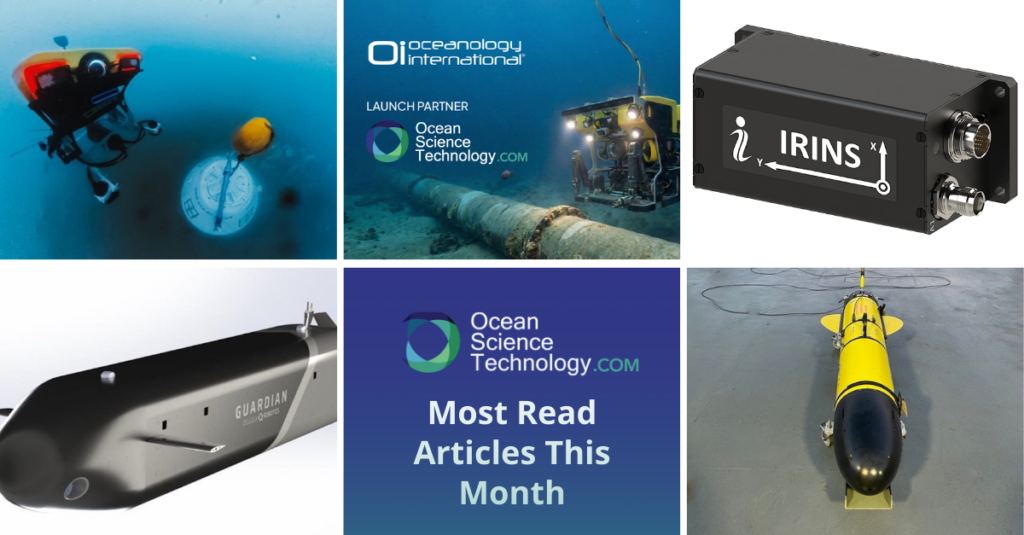
February’s most-read stories on OST painted a consistent picture: the ocean technology sector is moving fast, and the gap between concept and operational reality is closing.
Readers were drawn to demonstrations, trials, and partnerships that showed autonomy and assured positioning working in practice — not just on paper. Across subsea warfare, long-endurance AUVs, mine countermeasures, resilient navigation, and global industry collaboration, the month’s standout coverage shared a common thread: technology that performs when it matters.
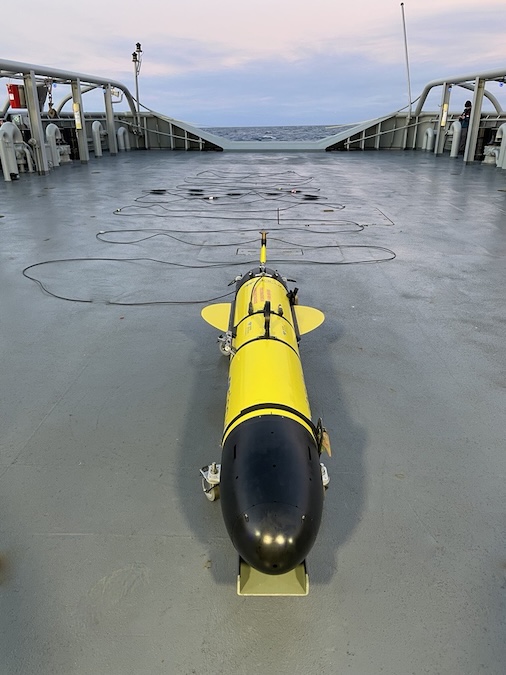
Teledyne Marine attracted some of the strongest attention with an Anti-Submarine Warfare demonstration conducted for NATO members in Icelandic waters. Working out of its Gavia facility in Kópavogur between January 17 and 22, the company deployed multiple autonomous platforms equipped with passive acoustic systems, supported by the Icelandic Coast Guard aboard ICGV Þór in the strategically significant Greenland–Iceland gap.
The demonstration brought together a Slocum Sentinel glider carrying a 60-metre passive acoustic towed array, a Slocum G3 glider integrated with Teledyne Benthos acoustic communications, and two Advanced Profiling Explorer (APEX) floats configured for ambient noise monitoring.
Acoustic data was exfiltrated from a seabed node and transmitted near real-time via satellite to Mission Operations Control Centers in both Iceland and the United Kingdom — with a Remote Operations Center, established in partnership with the National Oceanographic Centre, enabling joint piloting from both locations simultaneously. It was a compelling demonstration of what distributed, resilient operational control can look like in practice.
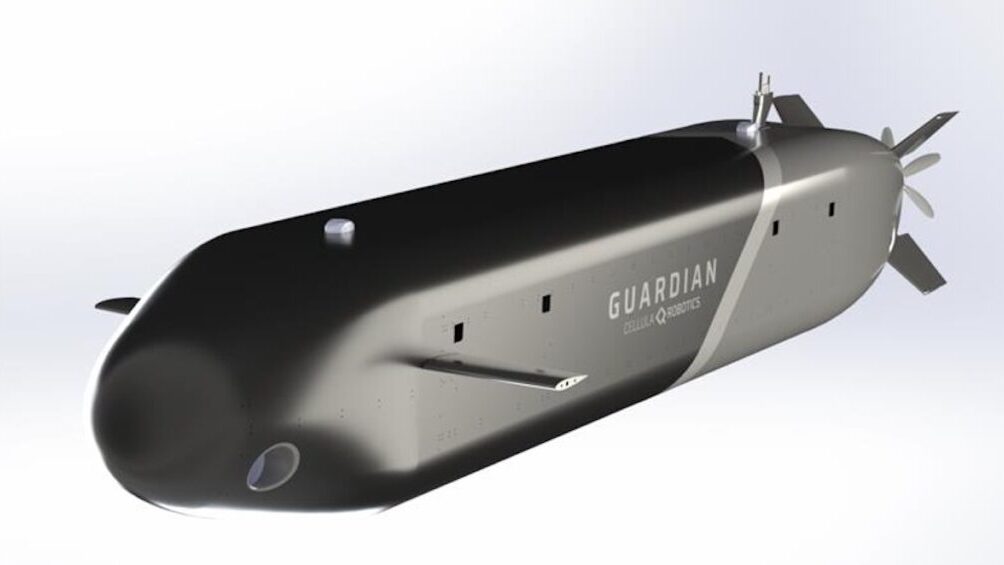
Cellula Robotics also drew significant reader interest after being shortlisted for Vimy Forge’s inaugural Black Flight cohort. Vimy Forge is Canada’s sovereign defence and national security innovation accelerator, built to connect small and medium-sized enterprises with operational stakeholders, procurement pathways, and strategic capital.
The shortlisting speaks to Cellula’s focus on fuel-cell-powered AUVs engineered for high-persistence, long-endurance missions — platforms designed for under-ice ISR, subsea monitoring, mine warfare, and critical infrastructure inspection. The cohort’s name is a nod to the all-Canadian B Flight of No. 10 (Naval) Squadron, Royal Naval Air Service, recognised in 1917 for operational discipline and innovation.
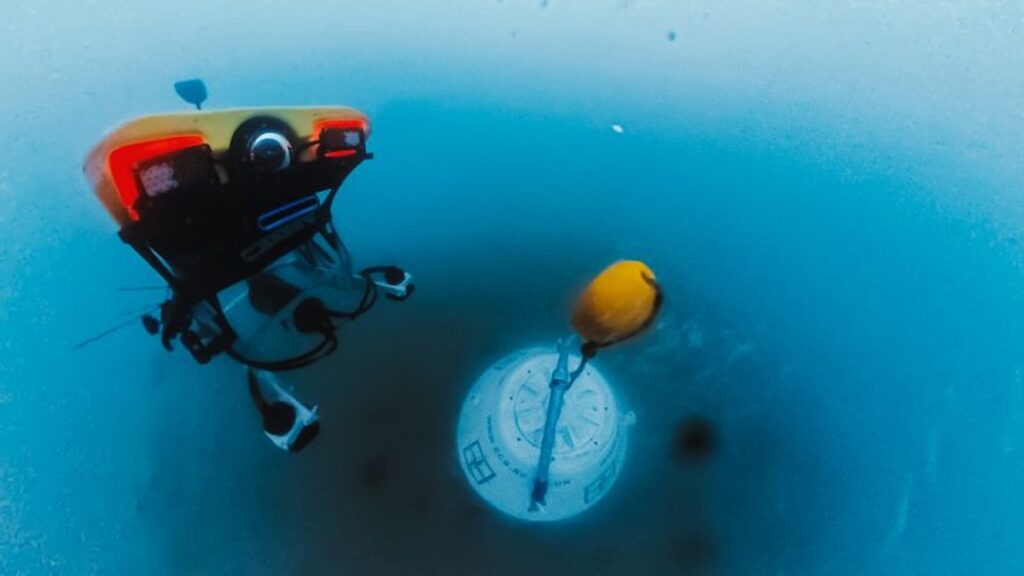
Mine countermeasures drew strong interest too, following Elwave’s completion of collaborative on-water trials of its TETRAPULSE active electric-mapping sensor in Portland Harbour, UK. The trials brought together Elwave’s EPULSE sensing range with VideoRay’s Mission Specialist Defender ROV and Sonardyne’s Sprint-Nav Micro navigation system, a compact robotic stack with a specific objective: detect and localise an ECS Special Projects inert target mine.
The integrated suite succeeded, identifying and precisely marking both metallic and non-metallic objects in a realistic operational environment. Conducted alongside Sonardyne International, ECS Special Projects, Voyis, and Atlantas Marine Limited, the trials demonstrated that survey-grade navigation and buried target detection are achievable on an inspection-class ROV platform, a genuine “find, fix, and finish” MCM capability in a compact form factor.
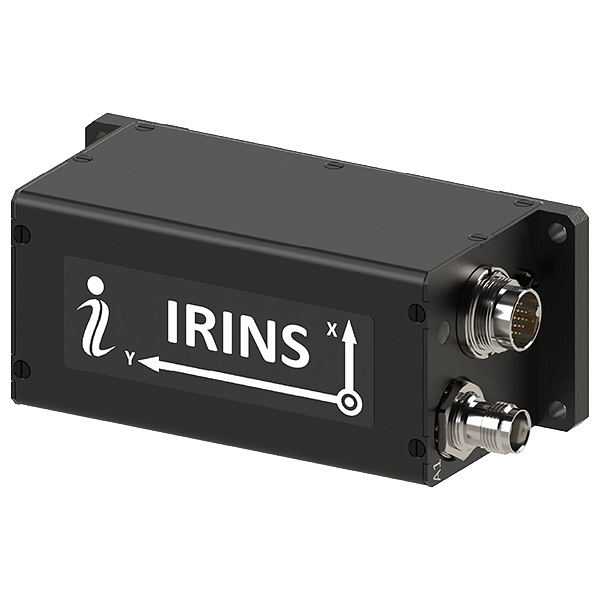
Positioning, navigation, and timing resilience also featured prominently. Inertial Labs introduced its IRINS navigation system — part of the VIAVI Solutions Assured Positioning, Navigation and Timing (APNT) portfolio — designed for marine, aerial, and land-based platforms operating where GNSS simply can’t be relied upon.
The system integrates an Inertial Navigation System, an Altitude and Heading Reference System, and an STL-2600 LEO Iridium receiver module that draws on the Iridium satellite constellation to provide a resilient backup layer beyond traditional GNSS. It also includes a GNSS receiver with a Controlled Reception Pattern Antenna port to counter spoofing threats. Housed in a compact IP67- and MIL-STD-810G-certified enclosure, IRINS is built to maintain precise heading, velocity, and timing continuity in exactly the conditions where other systems struggle.
Rounding out the month, Oceanology International 2026 announced OceanScienceTechnology.com as its Official Launch Partner for the event at ExCeL London, running 10–12 March 2026.
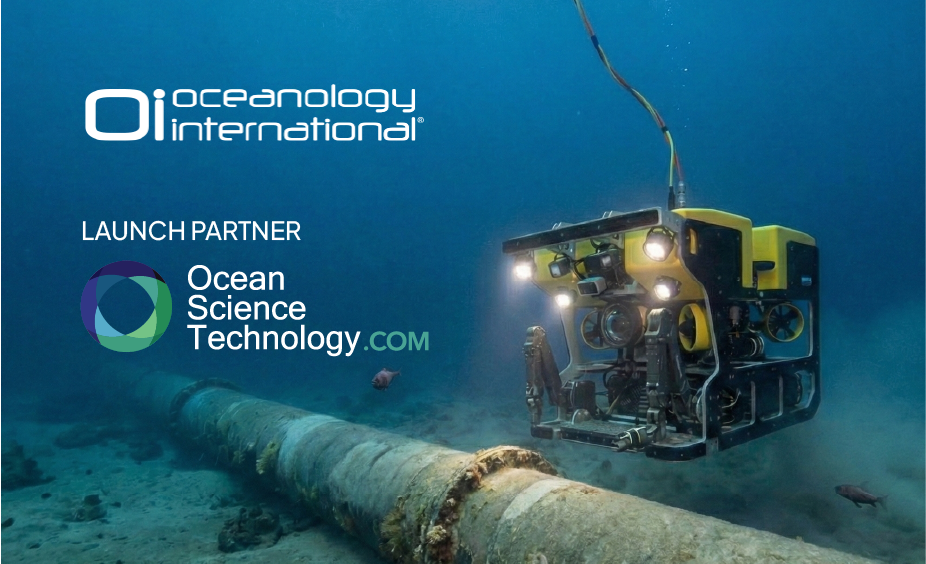
The partnership is designed to extend exhibitor visibility beyond the show floor, giving companies launching new systems at Oi26 the opportunity to reach OST’s global technical audience before, during, and after the event. OST will be on-site at Booth S440, and exhibitors can submit innovations for prioritised coverage through the platform.
Taken together, February’s most-read stories reflect where the sector is heading: persistent autonomous capability, compact integrated mission systems, navigation architectures that hold up under pressure, and stronger collaboration between innovators and the people who actually deploy these technologies. It’s a sector that’s clearly maturing — and February’s coverage showed that in real, measurable ways.