

Knight Optical examines the applications of LiDAR technology and the optical components that enable its operation. Although often regarded as a recent development, LiDAR has been in use for several decades. Read more >>
Early LiDAR systems were typically large and complex, whereas modern designs are more compact and efficient. Advances in optical component design have contributed significantly to these improvements.
The global LiDAR market is forecast to grow from $2.89 billion in 2025 to approximately $15.83 billion by 2034. This expansion reflects the technology’s transition from industrial-scale use to wider adoption in everyday applications, including smartphones and road vehicles. LiDAR continues to be selected for its accuracy, resolution, and measurement speed.
How LiDAR Works
LiDAR, or light detection and ranging, is a laser-based measurement method. It operates by emitting pulses of laser light and measuring the time taken for each pulse to reflect from surrounding objects and return to the system. This time-of-flight (ToF) measurement enables optical receivers to generate accurate three-dimensional representations of the environment.
System performance depends on detecting timing differences measured in nanoseconds or picoseconds. Optical receivers must therefore be capable of detecting very low signal levels. Optical filters are commonly used alongside receivers to block unwanted wavelengths and improve measurement precision.
Unlike camera-based systems that rely on ambient illumination, LiDAR generates its own light source. This allows consistent operation across a range of lighting conditions. Systems may operate at wavelengths in the ultraviolet, visible, or infrared regions of the spectrum, depending on application requirements. Autonomous vehicles typically use 905 nm or 1550 nm, while larger-scale commercial applications often employ 355 nm, 532 nm, or 1064 nm wavelengths.
Types of LiDAR
LiDAR systems are available in several configurations, each suited to specific operational requirements:
- Mechanical Scanning LiDAR uses rotating components, such as mirrors, to direct the laser beam across the environment.
- Flash LiDAR illuminates an entire field of view using a single, wide laser pulse rather than sequential scanning.
- Optical Phased Array (OPA) LiDAR uses solid-state electronic beam steering instead of mechanical or rotating components.
Typical LiDAR Applications
While commonly associated with vehicle technologies, LiDAR is used across a wide range of sectors:
- Military, Defense, and Aerospace applications include flash LiDAR for autonomous landing and spacecraft proximity operations, as well as MEMS-based LiDAR for battlefield mapping, navigation, and target identification.
- Construction and Infrastructure projects use terrestrial and aerial LiDAR systems to create detailed surveys of land areas for urban development.
- Archaeology employs airborne LiDAR as a non-invasive method for site documentation and mapping.
- Disaster Management uses LiDAR-derived Digital Elevation Models (DEMs) and Digital Terrain Models (DTMs)to support flood analysis, wildfire modeling, and infrastructure assessment.
Optical Components in LiDAR Systems
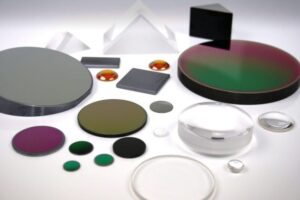
Optical components are fundamental to LiDAR system performance, controlling and directing the laser source throughout the measurement process.
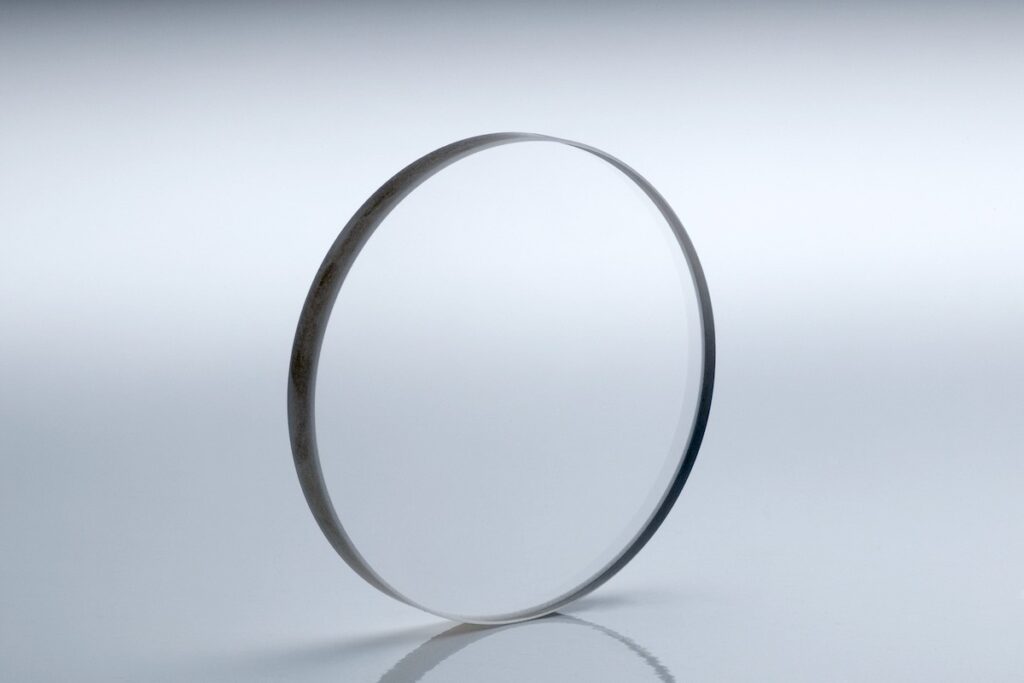
Optical filters are among the most widely specified components. They block unwanted wavelengths so that only the required spectral range reaches the detector, reducing interference and improving signal quality.
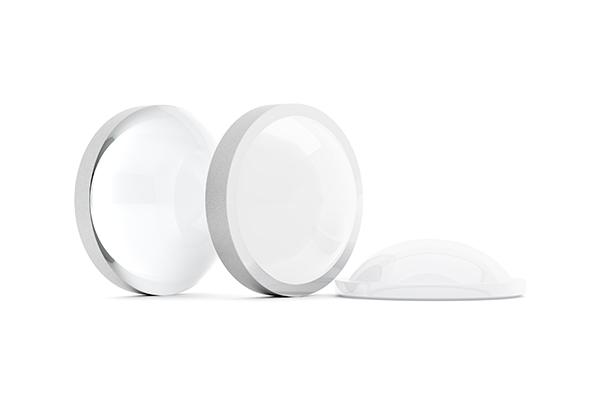
Lenses serve multiple functions within LiDAR systems. Collimating lenses convert diverging laser output into parallel beams, while focusing lenses concentrate reflected light onto optical receivers.
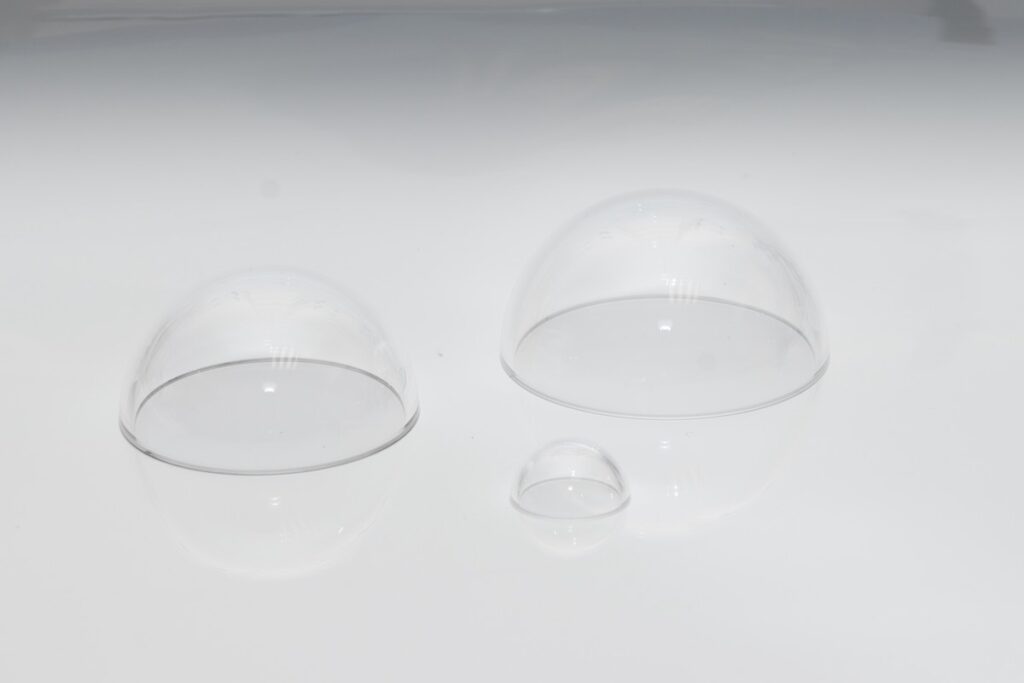
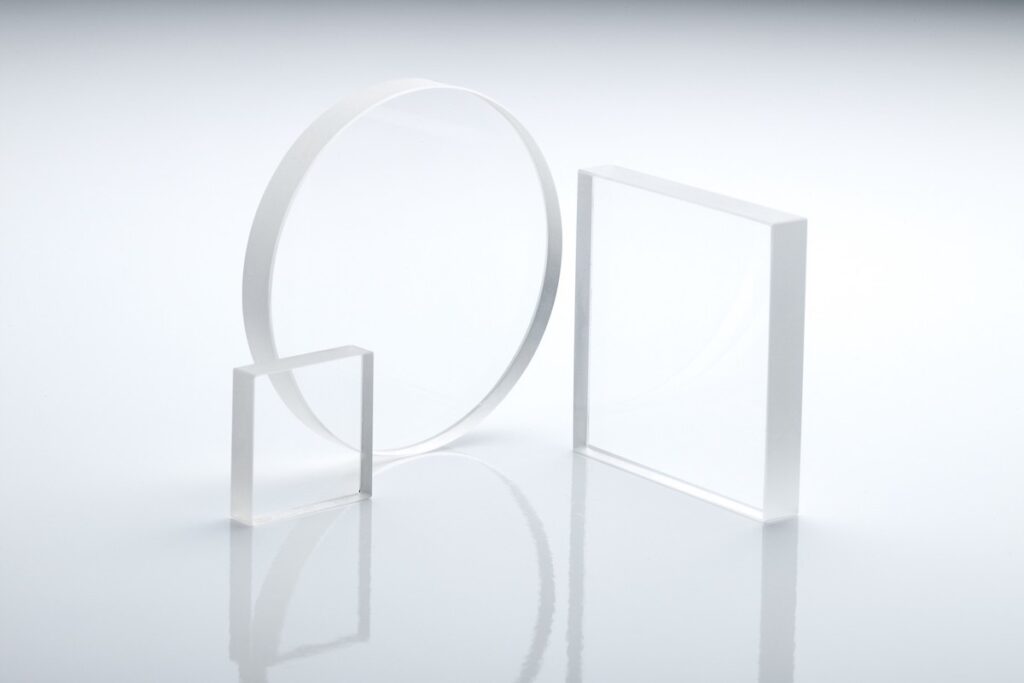
Protective windows shield internal optical components from environmental exposure. These elements must maintain optical clarity while providing resistance to dust, moisture, and mechanical impact.
Mirrors, beamsplitters, and prisms manage internal light paths. Front-surface mirrors enable accurate beam steering, prisms redirect or fold optical paths, and beamsplitters divide light between separate channels, such as transmitted and received signals.
Read more about how Knight Optical supports LiDAR system performance across a range of applications.