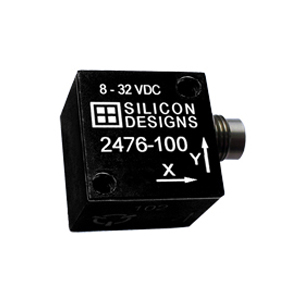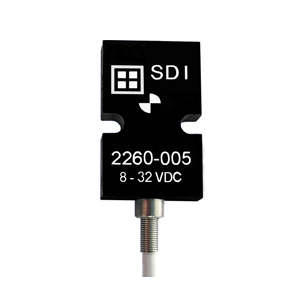

Silicon Designs offers a broad range of rugged MEMS DC accelerometers engineered for precision, reliability, and long-term stability across unmanned systems, aerospace, and industrial applications.
Selecting the right model requires evaluating key factors including acceleration range, environmental conditions, power supply, form factor, and installation requirements.
Choosing the appropriate g-range is critical. A range too high reduces sensitivity; too low risks data loss through saturation. Seismic sensors may use 2G or lower, while automotive crash testing can demand 200G+. SDI sensors are matched to their g-ranges for optimized frequency response.
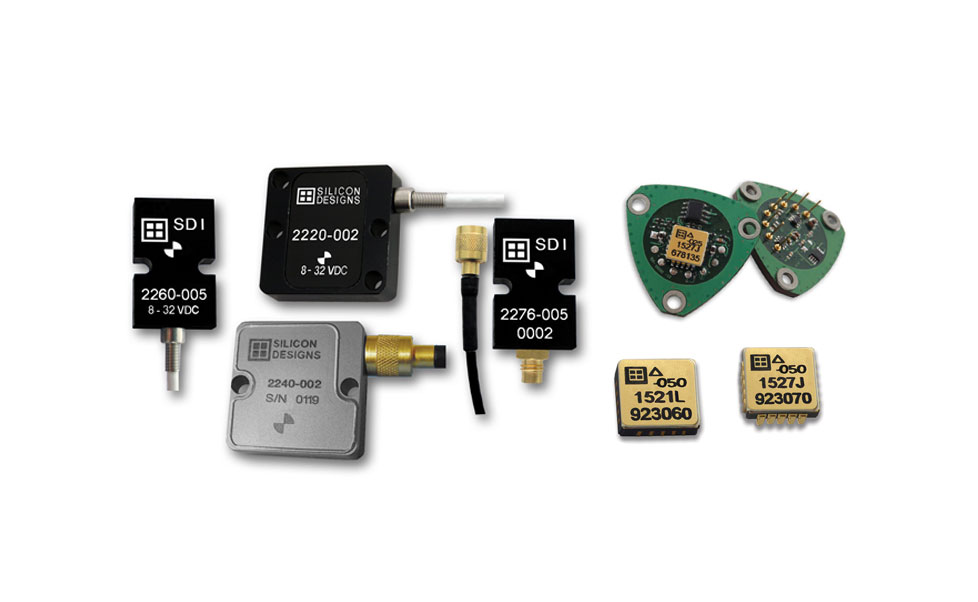
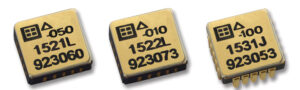
Silicon Designs’ surface-mount chips include:
- 1521: General-purpose, rugged and stable.
- 1522: Temperature-compensated for thermal stability.
- 1531: High-temperature operation up to +175°C.
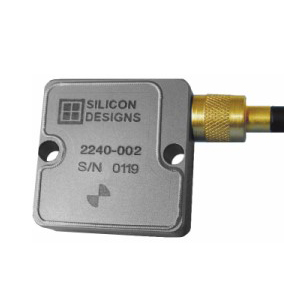
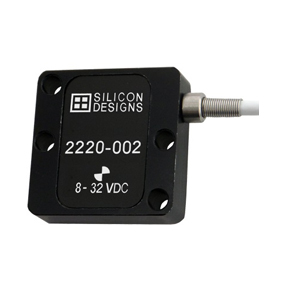
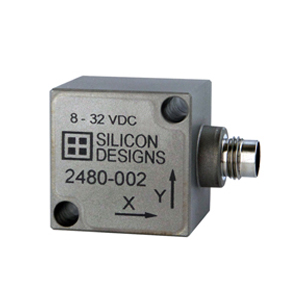
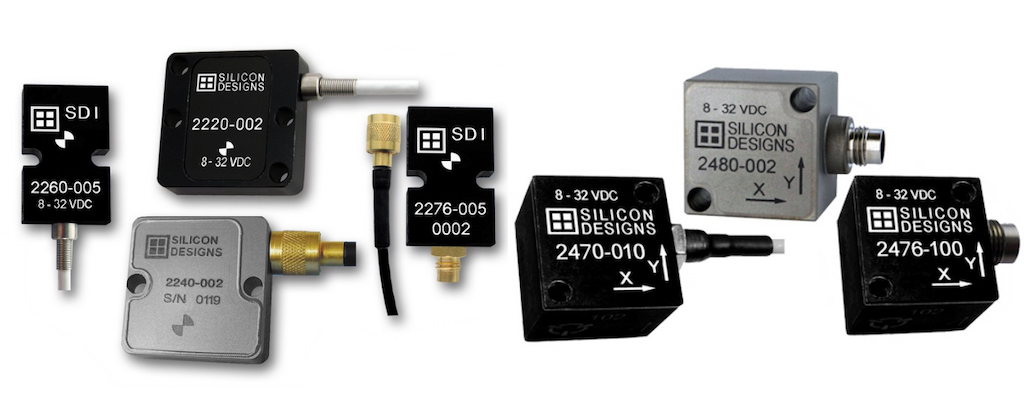
Low-cost modules (e.g., 2210, 2260, 2460) suit general-purpose applications. High-performance options (e.g., 2220, 2276, 2470) include enhanced thermal compensation and sealed enclosures for harsh environments. Titanium hermetic models (e.g., 2240, 2480) are available for high-pressure or high-moisture conditions.
Integrated cable modules are best for fixed installations, while connectorized versions allow field flexibility and easier replacements. Compact variants such as 2266 and 2276 are ideal where size and mass are limited, like in UAV payloads.
Universal models support +8 to +32V DC, while low-voltage options like the 2012 and 2422 series are designed for +5V systems.
Every Silicon Designs accelerometer is ruggedized, individually calibrated, and engineered for long-term precision in demanding unmanned and industrial environments.