Remotely Operated Vehicles (ROV)
Discover cutting-edge solutions from 10 leading global suppliers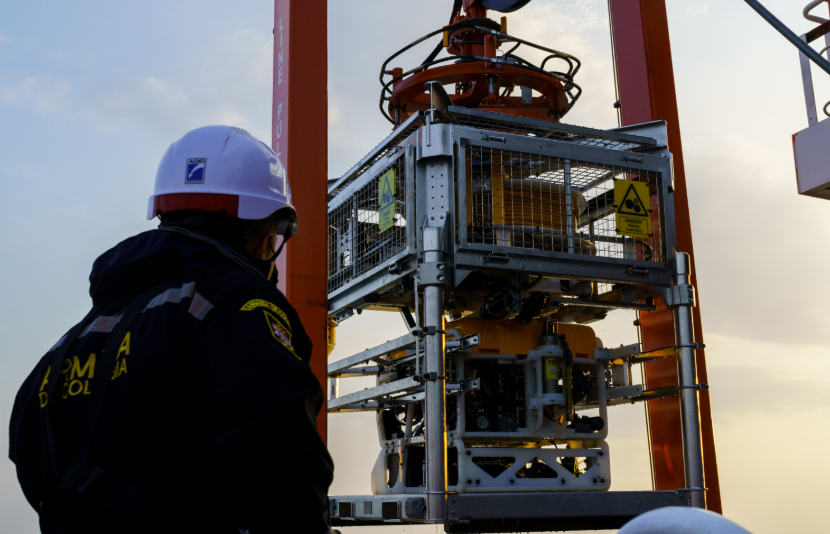
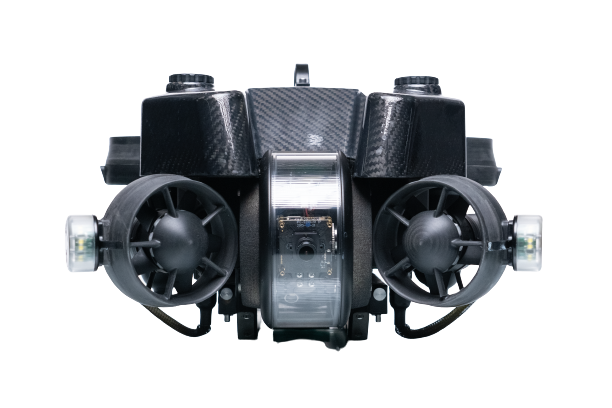
The Saab Seaeye Lynx Remotely Operated Vehicle (ROV) has completed a series of critical survey and documentation missions of the 18th-century galleon San José off the coast of Colombia.
Sunk in 1708 during the War of the Spanish Succession, the San José is considered a premier Colombian cultural heritage asset, representing a significant portion of the maritime and commercial history of the Spanish Indies trade. The wreck is situated at a depth of approximately 600 meters.
Operated by the Colombian Navy, the Lynx vehicle was deployed to capture high-resolution imagery and three-dimensional photogrammetry of the site. Beyond visual documentation, the missions involved the physical recovery of historical items, including a cannon, gold coins, and Chinese porcelain cups. Sediment samples were also collected to facilitate laboratory studies focused on the long-term research and protection of the site.
Jon Robertson, Managing Director at Saab Seaeye, said, “Lynx has a long history of delivering reliable subsea inspection capabilities, and its use on the San José project demonstrates how proven technology can support complex deep-sea archaeological work.”
The Seaeye Lynx is utilized globally for diverse subsea inspection and survey tasks. This specific deployment forms a central part of the broader effort by Colombian authorities to preserve and document underwater cultural heritage. Saab Seaeye, based in the UK, provides the technical infrastructure required for these deep-sea operations, allowing for precise interaction with sensitive archaeological environments.