

Unmanned Surface Vehicles (USVs)
Discover cutting-edge solutions from 4 leading global suppliers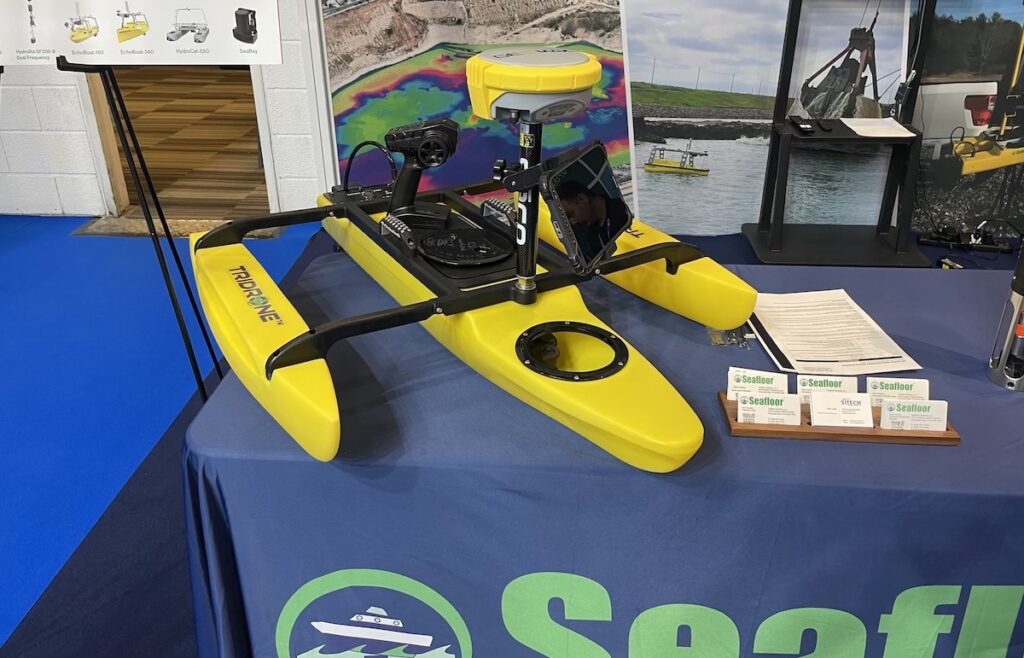
Seafloor Systems showcased developments across its Unmanned Surface Vessel (USV) lineup at Oceanology International 2026, highlighting compact platforms and new navigation and mapping capabilities.
Ocean Science Technology spoke with Cody Carlson, Business Development Manager at Seafloor Systems, about the company’s platform upgrades, the introduction of the HyDrone™ 4.5 USV, and how SLAM LiDAR integration expands survey capabilities for autonomous vessels.
Smaller USVs & Modular Platform Development
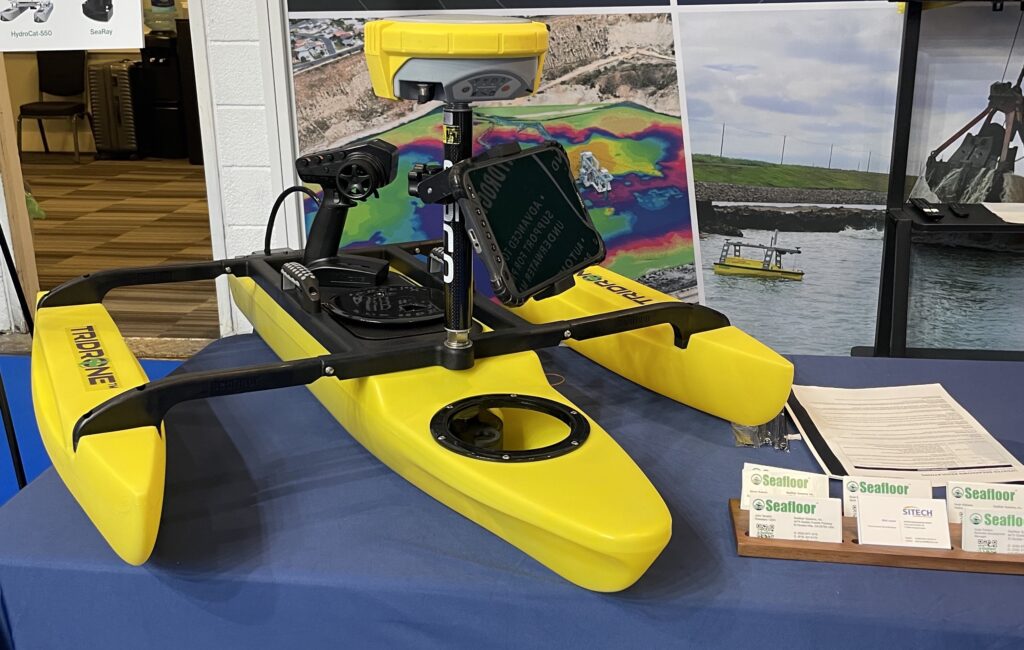
Carlson said the company was focusing on its smaller USV platforms at this year’s event rather than the larger systems typically displayed.
“So this year we’re showcasing some of our smaller USVs. Normally we show off the larger systems, but we figured we’d keep it kind of small and show the new developments on those, mainly integration of SLAM LIDAR.”
He explained that one of the main advantages of Seafloor Systems’ vessels is their modular design, which allows customers to expand capabilities as their operational requirements evolve. Sensors and additional technologies can be integrated as users develop new capabilities, enabling the platform to grow alongside mission requirements.
“I would say the biggest advantage of our systems is their modularity, and the ability for platform growth as customers develop their capabilities and need more advanced systems.”
HyDrone™ 4.5 USV Platform Advances
Seafloor Systems also showcased the HyDrone™ 4.5, the latest iteration of the company’s original USV platform.
Carlson explained that the HyDrone platform has been under continuous development for roughly a decade, with incremental improvements focused on durability and performance in more demanding environments.
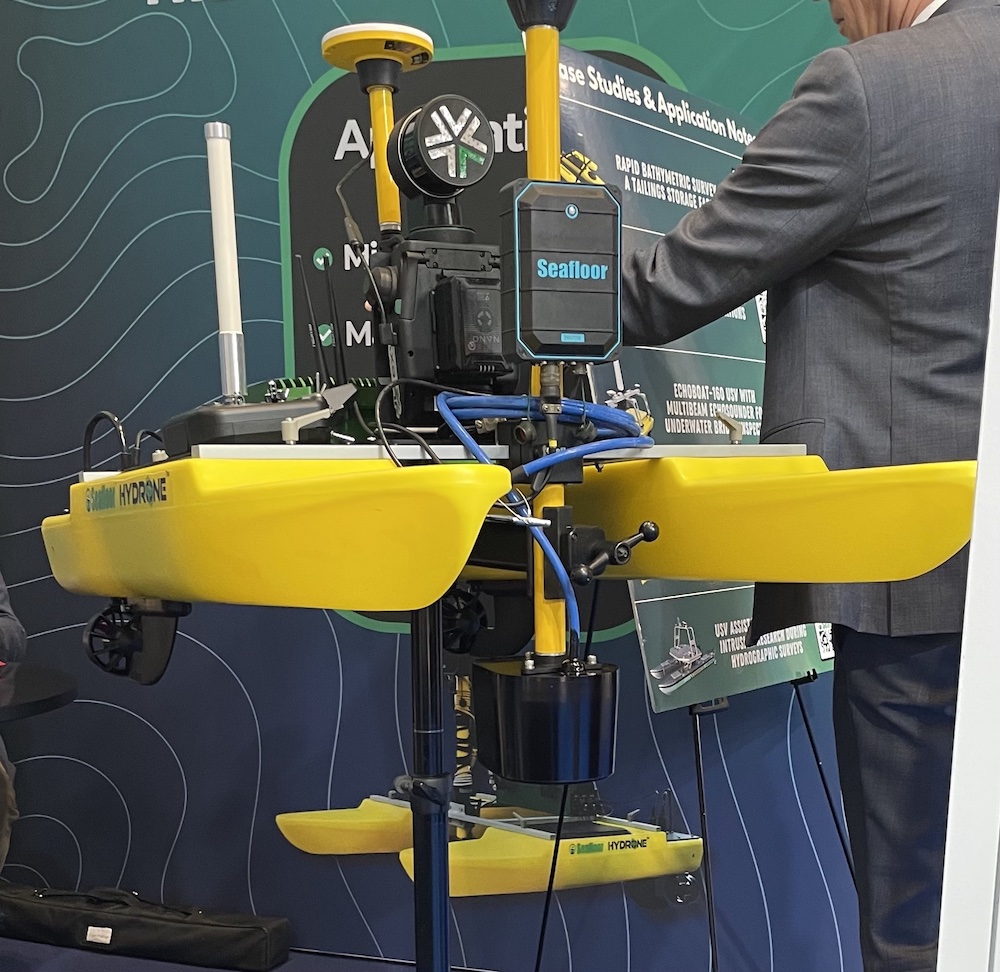
“That’s the one we started off with manufacturing, I think 10 years ago now. So over the years we’ve just been continually making improvements, making it more robust, better suited for more dynamic and hazardous environments.”
The HyDrone™ 4.5 incorporates dedicated electronics bays designed for field replacement, allowing operators to quickly swap components if necessary. The vessel also uses servo thrusters, enabling it to maintain steering capability even if one thruster fails.
“So if one of the thrusters is damaged or stops functioning, you’re still able to maintain steerage and get the vessel safely back to shore without having to send someone out on the water to rescue it.”
SLAM LiDAR for Integrated Surface & Subsurface Mapping
Seafloor Systems also demonstrated SLAM LiDAR integration for navigation and mapping applications.
Carlson explained that combining SLAM LiDAR with sonar allows the system to collect above-water and underwater data simultaneously, creating a continuous dataset across the full survey environment.
“So the main benefit is you’re able to simultaneously collect sonar data underwater and the SLAM LiDAR data above water. So you’re getting a seamless, full 360-degree point cloud of your survey area.”
This capability is particularly valuable for infrastructure inspection tasks, such as surveys beneath docks or piers, where compact USVs can safely operate in confined areas without placing personnel in hazardous positions.
“With the smaller USV platforms, if you’re working under a dock or a pier, you can drive the USV right under and you don’t have to worry about having humans in a spot that could be potentially hazardous to them.”
Flexible Platform Design & Customization
Carlson also emphasized the flexibility of Seafloor Systems’ platforms, noting that the company manages both design and manufacturing internally. This allows the team to quickly adapt systems to meet specific customer requirements.
“Since we are the manufacturer and we are in control of the design and the manufacturing process, we’re able to quickly make changes to suit any unique needs, and we can scale our systems up or down depending on the requirements.”
These developments were discussed during an on-site interview with William Mackenzie from Ocean Science Technology at Oceanology International 2026.