Remotely Operated Vehicles (ROV)
Discover cutting-edge solutions from 10 leading global suppliers
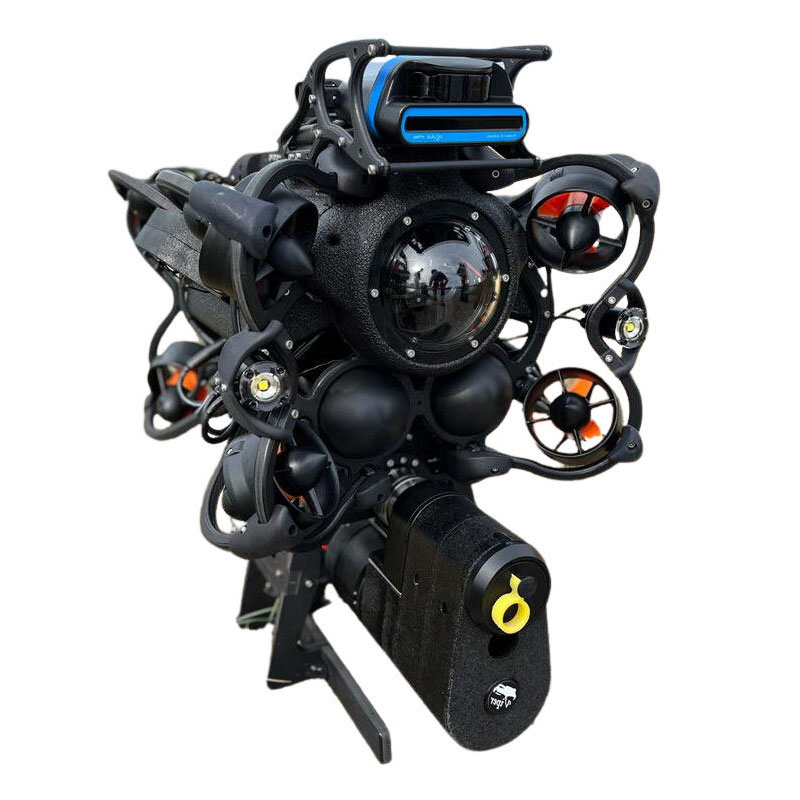
Speaking with Ocean Science Technology at Oceanology International 2026 in London, QYSEA Marketing Manager Curtis Lee discussed the company’s compact Remotely Operated Vehicle (ROV) systems and integrated sensor and AI-driven software capabilities designed to support more advanced underwater inspections.
At Stand J400, QYSEA is showcasing its range of compact ROVs alongside a suite of self-developed sensors and software functions.
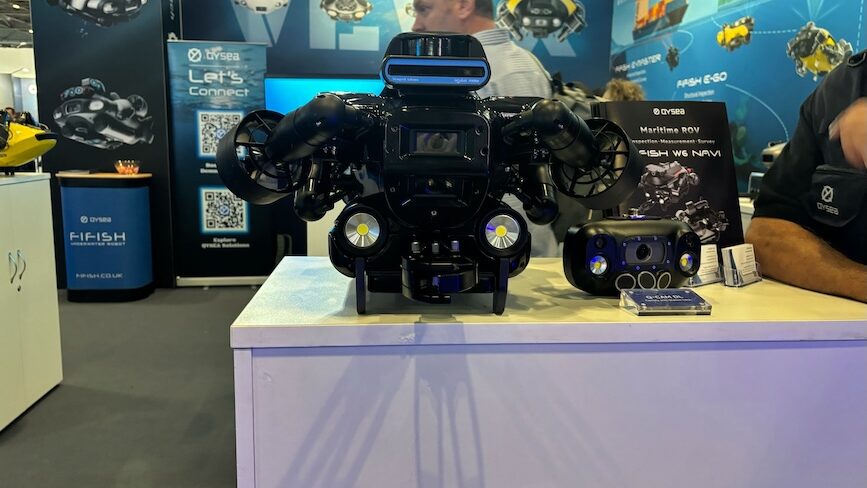
These technologies are designed to support more complex inspection tasks by collecting operational data in addition to visual imagery, helping operators gather information that can inform inspection and maintenance decisions.
According to Lee, one of the industry challenges QYSEA is focused on addressing is the perception that smaller ROV platforms are limited to basic visual inspection tasks, despite significant advances in sensor integration and data collection capabilities.
Lee explained that compact ROV systems can now integrate a wide range of sensors and advanced imaging technologies, enabling more detailed subsea analysis even in challenging conditions such as low-visibility environments.
“These small ROVs can do much more than just visual inspection. With integrated sensors they can see through murky water, produce 3D imaging, and operate in stronger currents, helping users collect much more useful data during inspections.”
– Curtis Lee, Marketing Manager at QYSEA
The company is also continuing to develop semi-autonomous software functions designed to simplify underwater navigation and inspection workflows. These include features such as pre-planned mission routes and cruise control-style navigation modes that help reduce operator workload during extended inspections.
Lee noted that broader technological challenges remain across the subsea robotics sector, particularly around wireless underwater communication and achieving higher levels of autonomous operation.
“These are some of the industry bottlenecks everyone is facing,” Lee said. “How to achieve wireless capability underwater, how to achieve fully autonomous capability — these are areas where the industry is continuing to develop.”
QYSEA ROV systems have been used across a range of offshore inspection scenarios. Lee highlighted operational use in projects involving major energy companies including Chevron, BP, and Aramco, where compact ROV platforms have supported tasks such as non-destructive testing inspections, cleaning operations, and software-based measurement and data collection.
These developments were discussed during an on-site interview with Summer James from Ocean Science Technology at Oceanology International 2026.