Autonomous Control Systems
Discover cutting-edge solutions from 4 leading global suppliersFairbanks Morse Defense (FMD) has introduced AutoHook™, a first-of-its-kind fully autonomous vessel recovery interface developed by FMD’s Norway-based business, Vestdavit.
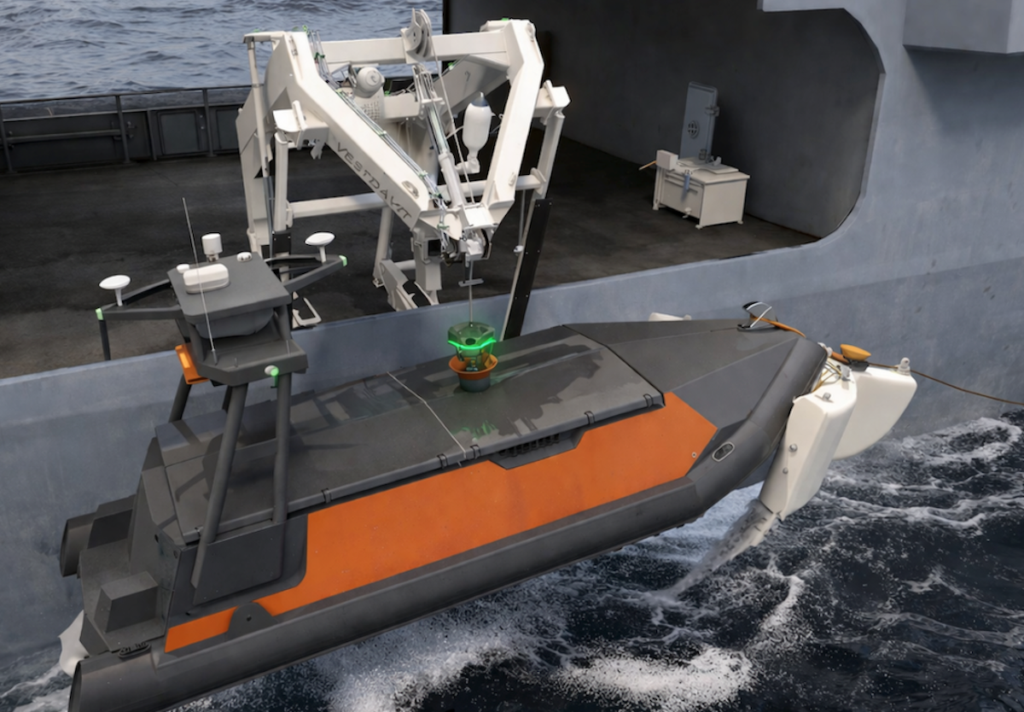
AutoHook is a cornerstone capability in establishing a new standard for fully autonomous Launch and Recovery System (LARS) supporting Unmanned Surface Vehicles (USVs) and other assets requiring zero human intervention. The compact, lightweight form factor is designed for interoperability across allied fleets in demanding maritime conditions, removing the need for an additional cradle during loading and unloading.
The system was developed by Vestdavit, a trusted provider of advanced life-saving maritime equipment, for use in autonomous launch and recovery operations. It has been tested for operation in conditions up to Sea State 4, compared to existing autonomous solutions that are typically limited to Sea State 2. AutoHook enables automated connection during recovery, reducing the need for manual handling during launch and retrieval processes.
Rolf Andreas Wigand, Vestdavit CEO, commented, “The global shift toward distributed maritime operations depends on unmanned systems that perform in real-world conditions and integrate seamlessly across allied fleets. AutoHook not only supports fleet modernization, it breaks the Sea State 2 ceiling that has long constrained manual launch and recovery. By delivering advanced launch and recovery solutions purpose-built for the operational demands of the U.S. fleet, we are helping ensure American forces, and those of our allies, have the reliable, scalable capability they need to operate effectively today and for decades to come.”
AutoHook is designed for fleet-wide interoperability, aligns with NATO operational standards, and supports evolving mission profiles, delivering ready-to-deploy capabilities for allied maritime forces. Unlike solutions that require winches or davit modifications, the AutoHook clamp-on-davit wire unit mounts easily. Its integrated thrusters, onboard control, vision and power are contained in a single, minimal-footprint unit for seamless integration with existing vessels, without costly modifications.
Using its onboard vision system and integrated thrusters, AutoHook achieves stable tracking of dynamic targets, eliminating crew exposure while increasing speed, reliability and operational efficiency. Vestdavit’s autonomous, state-of-the-art vision system uses AI to determine and track the precise location of the rescue boat in real time, compared to other solutions that rely on operator control units. The autonomous operation of the system is ideally suited for the growing unmanned fleets being developed by navies worldwide.
Wigand continued, “With AutoHook, we are solving one of the most critical challenges in maritime operations: achieving a safe, reliable, fully automated connection between ship and craft in high-energy sea states. We are extremely proud to introduce AutoHook. As a company known for our commitment to practical innovation and maritime safety, this system helps us ensure maritime professionals can execute their missions with unparalleled safety, reliability and interoperability in challenging operational environments.”
Demonstrations of the AutoHook will take place at the 2026 Sea Air Space Expo, April 19-22 in National Harbor, Maryland. Visitors are invited to Booth #1337 to see AutoHook and learn about FMD’s innovative capabilities.