

The Global Sourcing Hub for Marine, Subsea & Offshore Technology
Discover cutting-edge solutions from leading global suppliers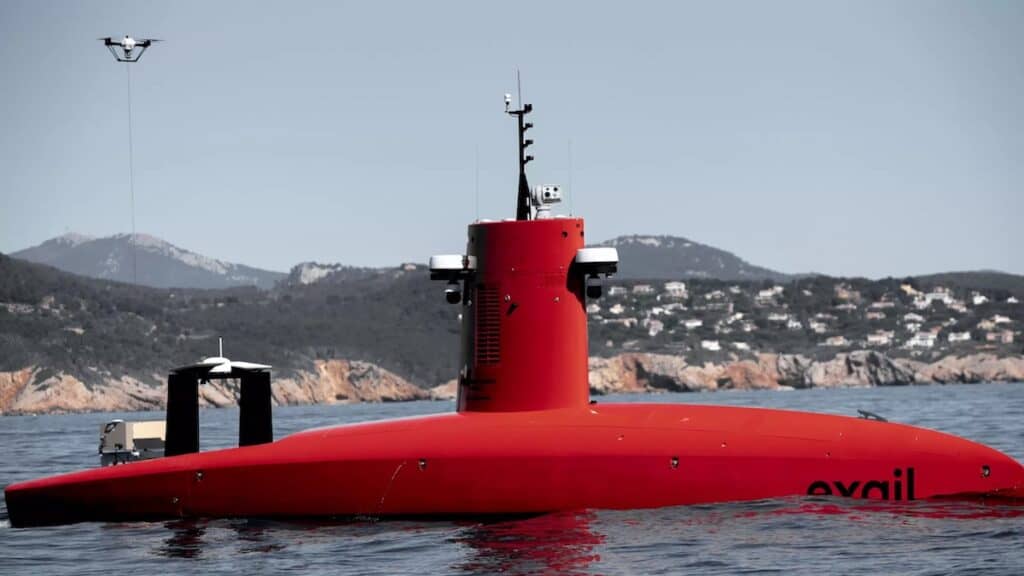
Exail has completed sea trials validating the integration of new third-party payloads onto its DriX O-16 unmanned surface vessel, demonstrating the platform’s open, modular architecture.
The trials, conducted in real-world maritime conditions, featured the deployment of an Elistair Khronos tethered drone system and a Safran VIGY 4 EO/IR observation camera. This multi-sensor approach combines complementary technologies to provide an expanded understanding of the maritime environment for security, surveillance, and intelligence missions.
The addition of the tethered drone provides continuous aerial surveillance directly from the moving vessel, utilizing a secure tether for uninterrupted power and data transmission. Equipped with an EO/IR stabilized camera featuring long-range detection, recognition, and identification capabilities, the drone allows operators to spot and track targets from extended distances.
Complementing the aerial asset, the VIGY 4 system provides high-resolution day and night all-weather imaging by combining visible, medium-wave infrared, and short-wave infrared stabilized visions. This sensor suite enables the precise tracking and identification of objects even in complex or choppy marine environments.
During the testing, both the surface vessel and its payloads were managed remotely from Exail’s Remote Operations Center in La Ciotat, France. The setup demonstrated the capability to execute over-the-horizon surveillance missions from shore, keeping personnel safely on land while expanding operational capabilities at sea.
The vessel’s design includes the onboard power, software architecture, and deck space required to quickly swap payload systems. This plug-and-play capability allows operators to customize the vessel for specific missions, such as border protection and critical infrastructure monitoring, while maintaining access to core autonomous navigation and mission management software.