The Global Sourcing Hub for Marine, Subsea & Offshore Technology
Discover cutting-edge solutions from leading global suppliers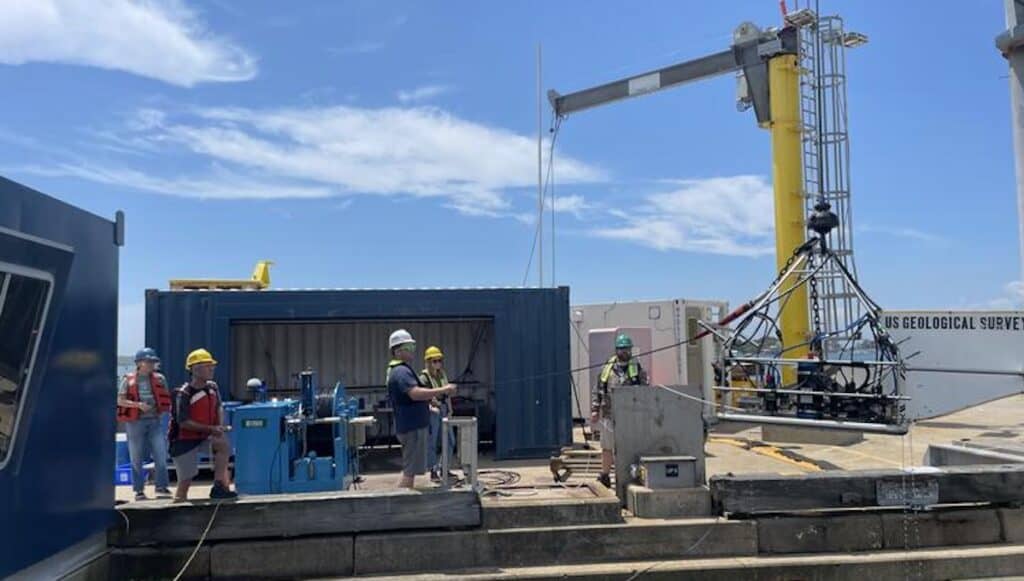
The United States Geological Survey (USGS) has achieved a major development milestone with successful initial testing of its next-generation Seabed Observation and Sampling System, SEABOSS 3.0.
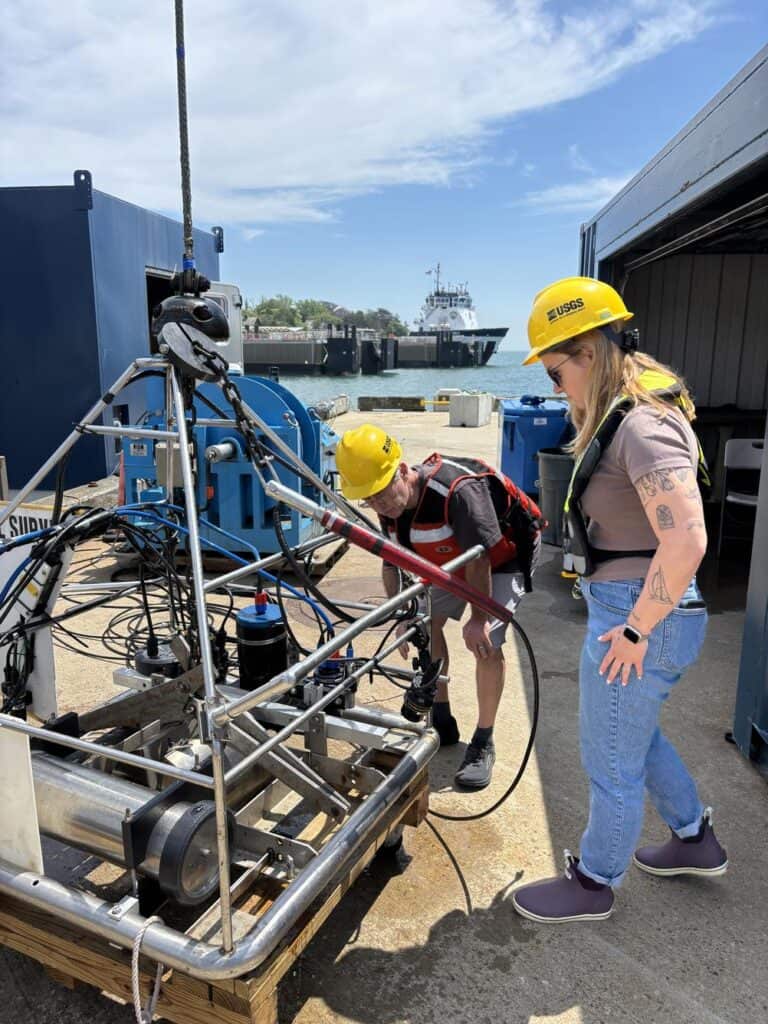
The updated system builds on long-used USGS technology for collecting seafloor images, video, and sediment samples in support of research into natural hazards and offshore resources. SEABOSS 3.0 integrates fiber-optic technology and upgraded camera systems to extend these capabilities into deeper water, up to 500 meters, while improving speed, resolution, and reliability.
Development began last year through collaboration between the Woods Hole Coastal and Marine Science Center and the Pacific Coastal and Marine Science Center. Scientists from Woods Hole traveled to Santa Cruz, California, to learn from PCMSC’s seafloor imaging equipment, including the Benthic Observation camera Sled, and to draw on the expertise of USGS ocean engineer Gerry Hatcher.
Following a year of development and refinement, Hatcher joined colleagues in Woods Hole, Massachusetts, in early June 2026 for the first round of instrument testing. The team ran SEABOSS 3.0 in a test well at the Woods Hole Oceanographic Institution, evaluating the system’s camera performance and assessing how the frame handled during deployment.
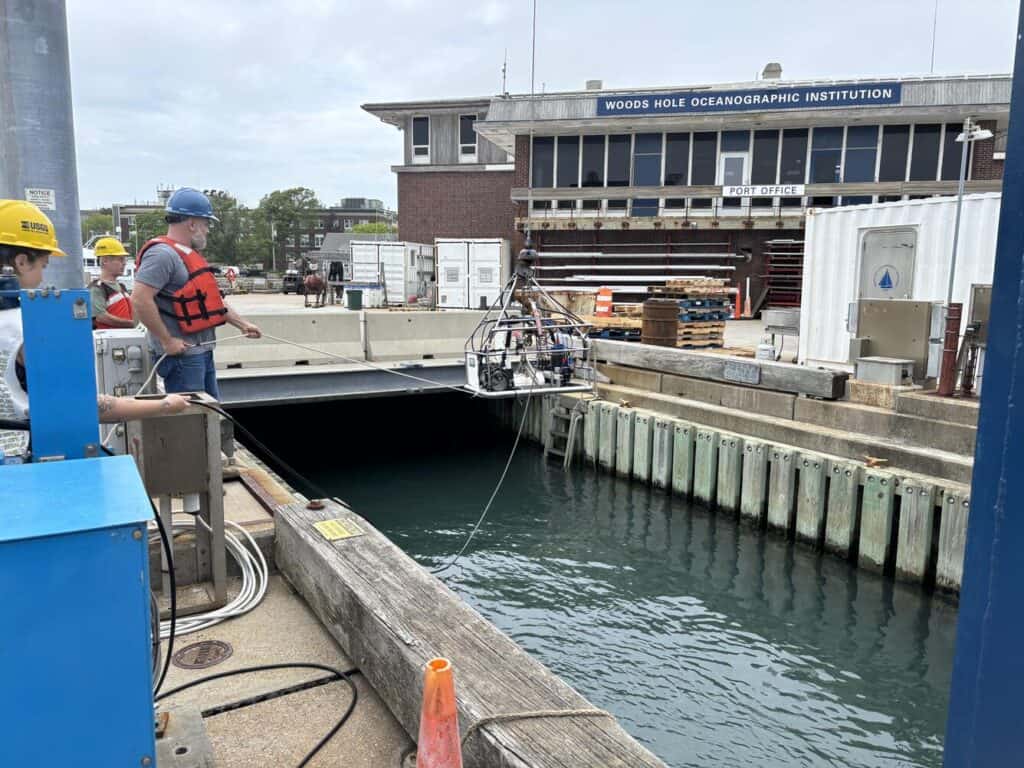
The development team will continue fine-tuning the instrument ahead of planned sea trials on the R/V Tioga in late summer 2026. Once complete, SEABOSS 3.0 will support a wide range of marine research focused on mapping and characterizing the seafloor, including upcoming work with the Office of Naval Research in the Gulf of Maine.
The project reflects collaboration across the USGS Coastal and Marine Hazards and Resources Program, combining engineering expertise, field experience, and cross-center knowledge sharing to expand the reach of USGS seafloor research.