

The Global Sourcing Hub for Marine, Subsea & Offshore Technology
Discover cutting-edge solutions from leading global suppliers
WSense showcased its fully wireless acoustic networking technology at Oceanology International 2026, highlighting how its Internet of Underwater Things (IoUT) platform enables real-time data transfer across large subsea environments without the need for cables.
Ocean Science Technology spoke with Fabio Greco, Head of UK Market and Head of Investor Relations at WSense, about the company’s multi-hop acoustic network, cloud-based data platform, and applications across environmental monitoring and infrastructure protection.
Wireless Acoustic Networking for the Ocean
Greco explained that the company’s approach addresses fundamental limitations in underwater communication, where radio waves are absorbed within centimeters and wired systems are impractical and difficult to scale.
“70% of the planet is covered by the ocean. It’s digitalized outside the ocean, but not inside.”
Traditional approaches such as cables and Autonomous Underwater Vehicles (AUVs) either limit coverage or do not support real-time data transfer. In response, WSense has adapted communication concepts from Wi-Fi and 5G for use with underwater acoustic signals, enabling digital communication of sensor data across wide distributed subsea networks, achieving real-time coverage of large areas.
“So we have transformed the acoustic protocol of Wi-Fi and 5G, adapting to manage an underwater network of modems.”
Multi-Hop Network Architecture & Real-Time Coverage
At the core of the platform is a multi-hop acoustic network, where data is transmitted between nodes across overlapping coverage areas.
Each node typically covers an area of approximately 600-800 meters of radius, and by deploying multiple nodes, the system creates a scalable mesh network capable of covering large sections of the ocean. Data is transmitted across the network by moving from node to node, enabling long-distance communication without cables.
“We can cover in real time a very large area with sensors, which is something that was not possible before.”
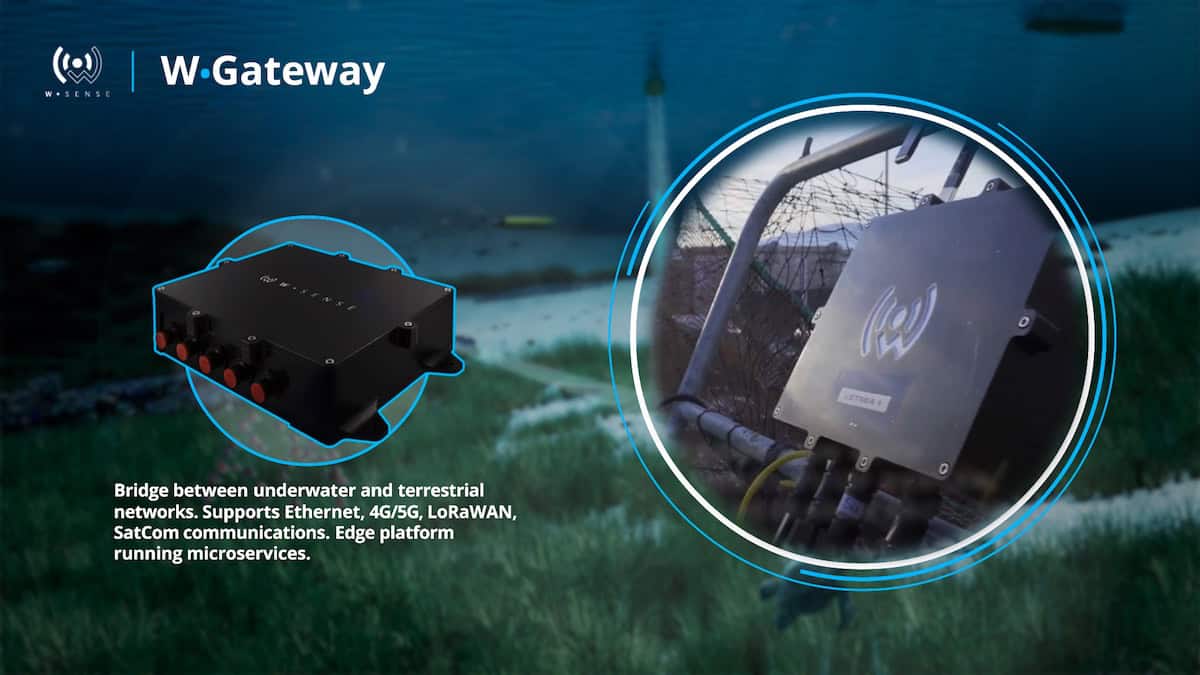
The underwater network is supported at the surface by a gateway system, typically integrated into a solar-powered buoy, which connects underwater infrastructure to satellite communications and cloud-based systems.
Edge Processing & Energy-Efficient Data Transmission
WSense also emphasized the role of edge computing, where data is processed locally within each underwater node rather than transmitted in raw form to optimize bandwidth allocation.
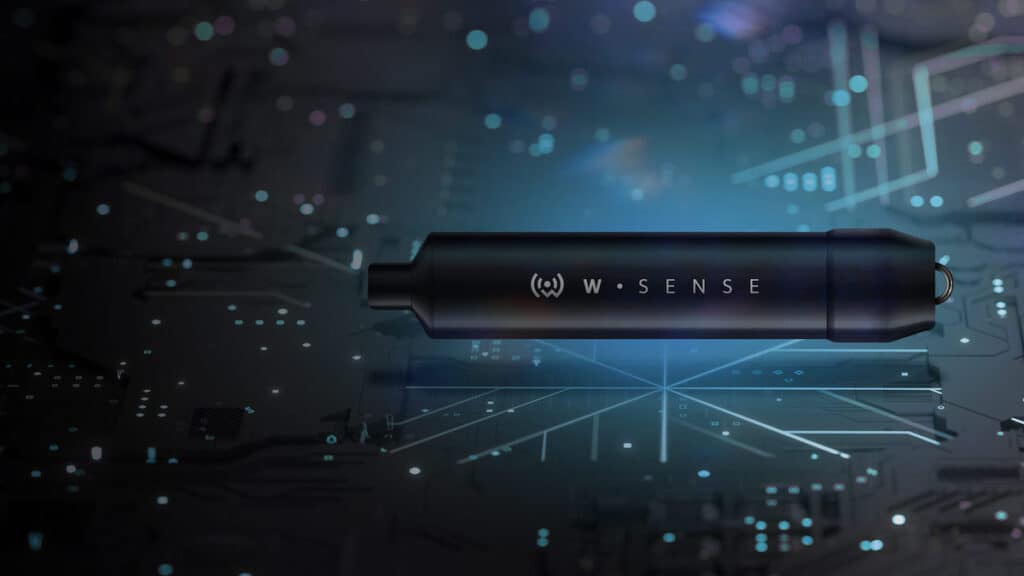
Enhanced nodes, including deepwater variants rated to 6,000 meters and constructed with titanium coatings, incorporate onboard AI/ML processing capabilities that analyze incoming sensor data directly underwater to transmit only relevant and actionable data.
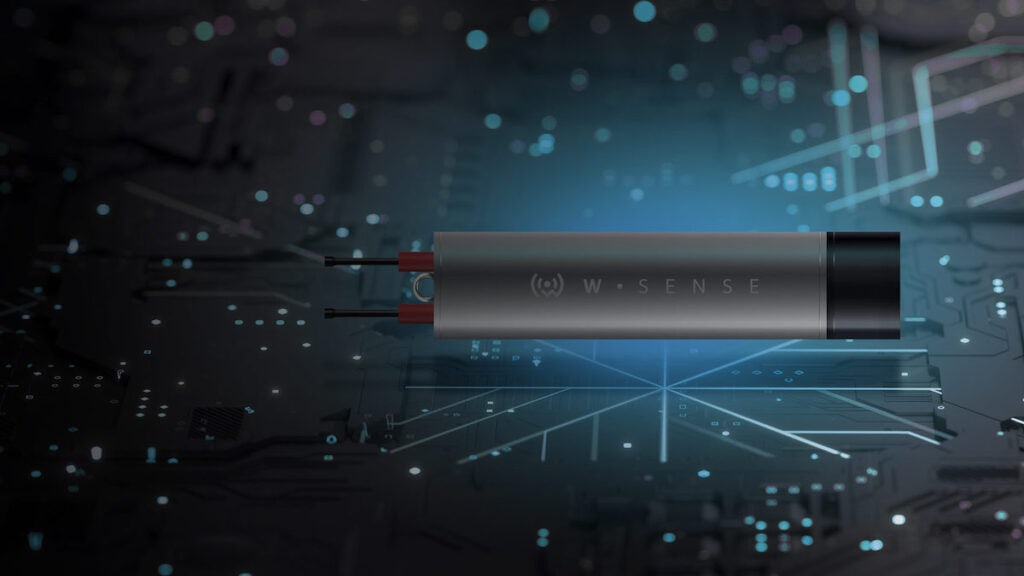
Once an event is detected, only relevant information such as alerts is transmitted through the network, reducing bandwidth and energy consumption.
“We only transmit alarms. We don’t transmit the raw signal, which otherwise would take too much bandwidth.”
This approach allows the network to operate more efficiently while maintaining real-time responsiveness, optimizing energy use, latency, and data quality depending on mission requirements.
WCloud for Real-Time Data Integration
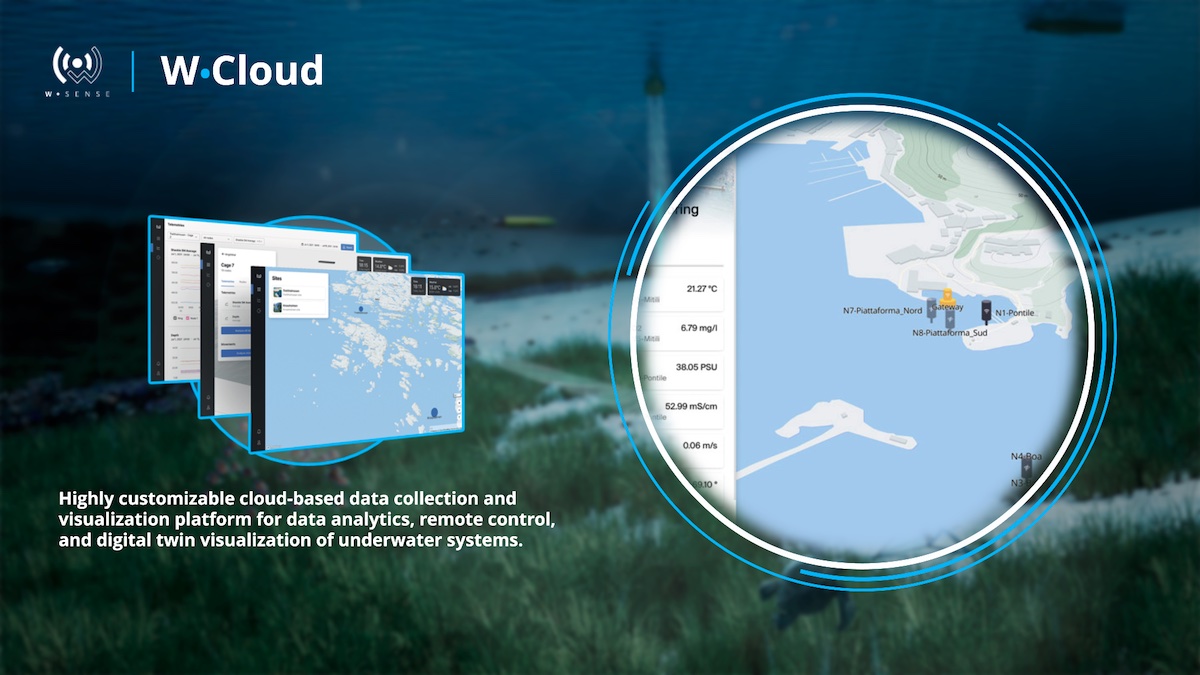
Greco also discussed the role of WCloud, the company’s cloud-based platform for aggregating and visualizing data from distributed underwater sensors and investigating data correlation using a proprietary generative AI capability.
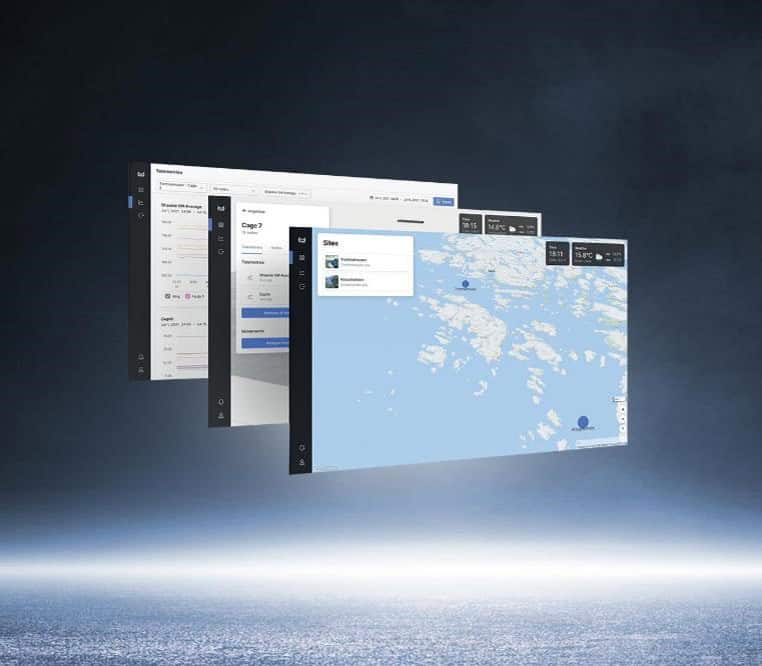
WCloud
The platform enables continuous, synchronized data collection and analytics and allows bi-directional communication to switch sensors on and off and modify data acquisition frequency.
“The novelty of WCloud is the ability to collect the data from a large area in real time and to remotely control the whole IoT network.”
By combining data from multiple sensors across the same timeframe, WCloud provides a more complete operational picture for both scientific analysis and event detection.
Applications in Environmental Monitoring & Infrastructure Protection
Greco outlined a wide range of applications for the IoUT platform, including environmental monitoring, offshore energy operations, and critical infrastructure protection.
The system supports continuous monitoring of marine ecosystems, enabling assessment of biological, chemical, and physical conditions over time. It can also detect anomalies such as pollution events or environmental changes.
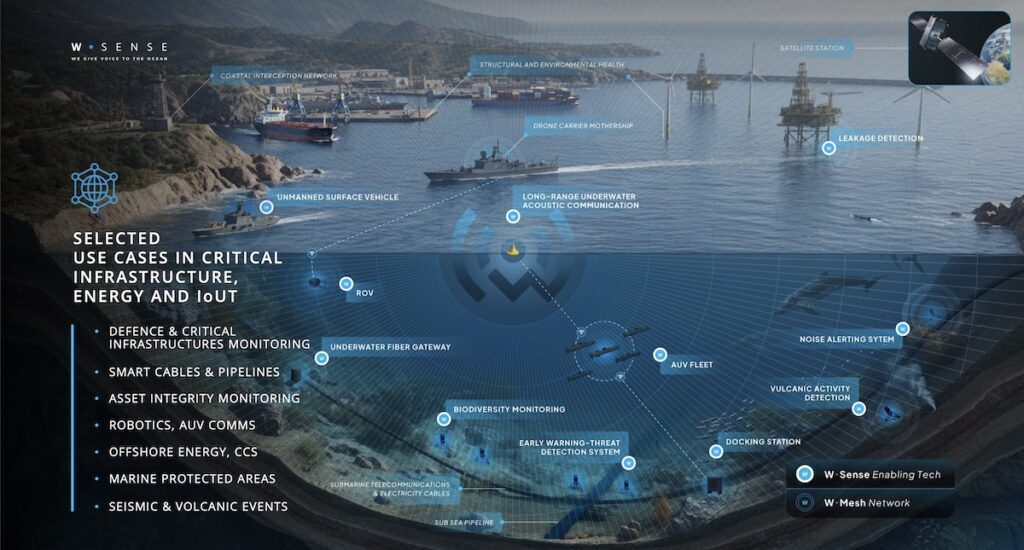
In industrial and defense contexts, the network enables monitoring of critical infrastructure, including pipelines, telecommunications cables, ports, and offshore energy assets. The system can detect unauthorized activity or potential threats and transmit alerts in real time.
“For the first time we have the ability to put ears and eyes to the ocean and gather real-time data.”
Greco also described use cases in marine protected areas, where the system can detect unauthorized vessel activity and trigger alerts that can be relayed via satellite for enforcement.
Scalable IoUT Platform & Product Ecosystem
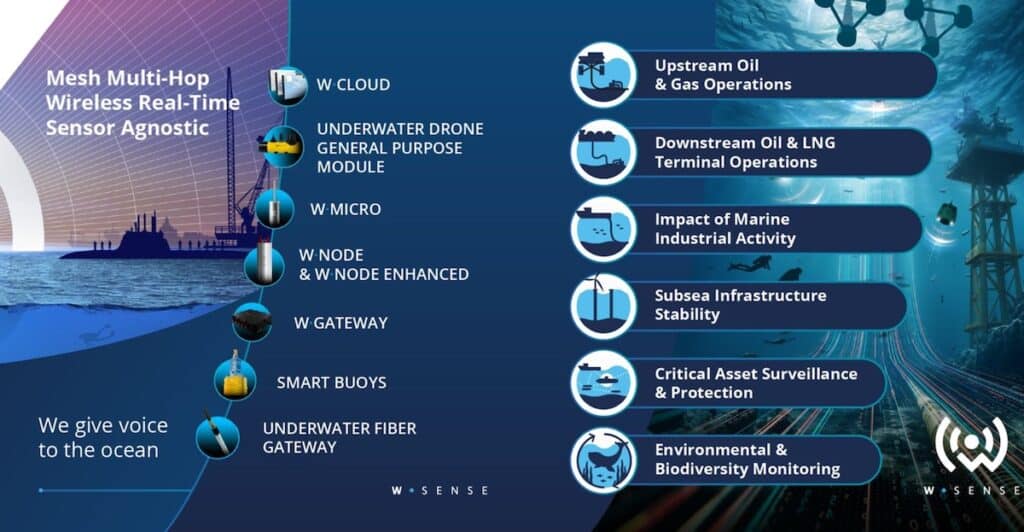
WSense is a platform that turns any sensor that normally works with a cable into a wireless system, and has already integrated more than 50 different parameters from over 20 sensor manufacturers.
The WSense platform consists of a suite of integrated hardware and software components designed to enable secure, scalable underwater communication. These include:
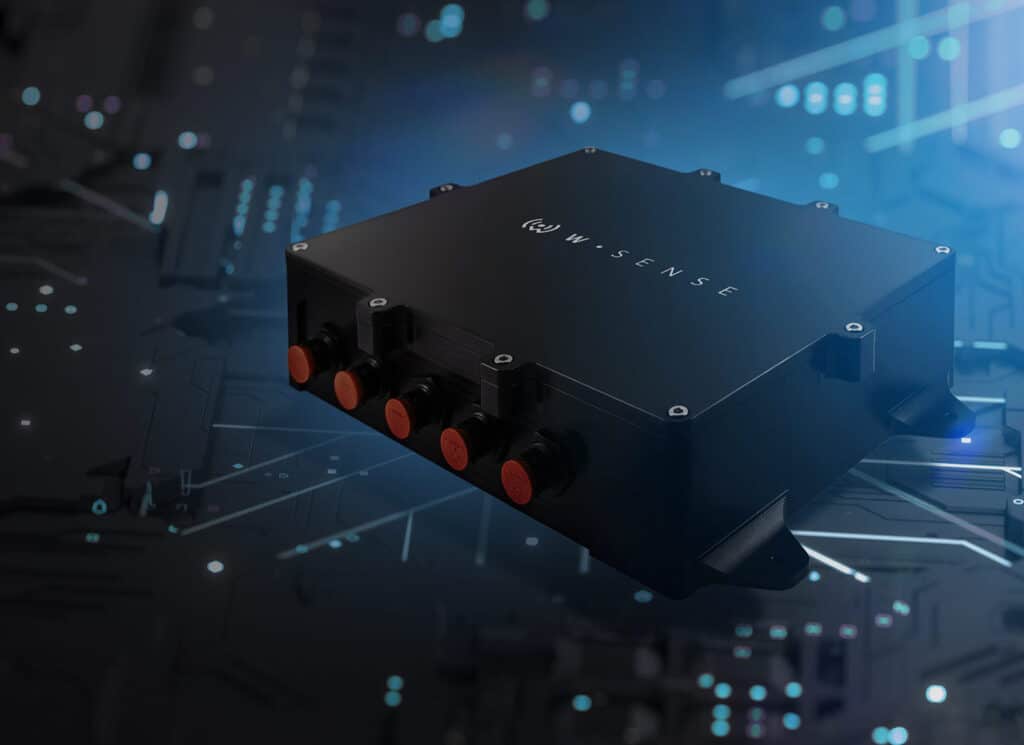
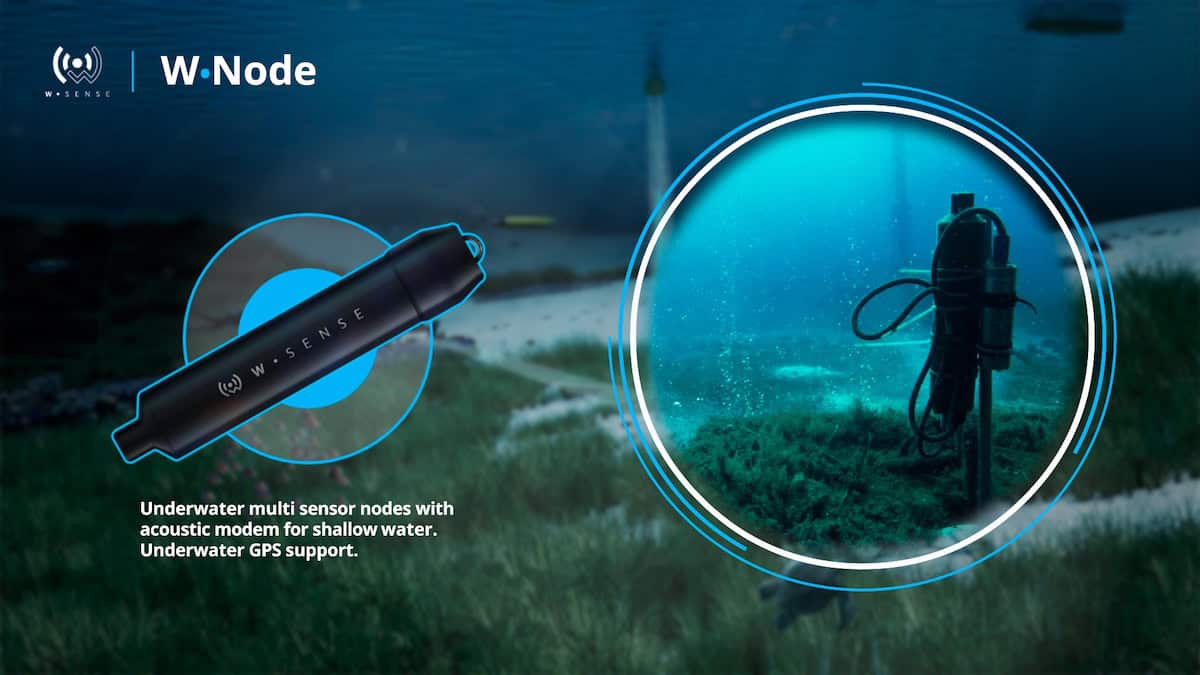
- WNode: Underwater multi-sensor nodes with acoustic modems for shallow water
- WNode Enhanced: Deepwater nodes with onboard AI processing
- WMesh: Multi-protocol networking system for reliable and secure data transmission
- WGateway: Surface gateway linking underwater networks to satellite and cloud systems
- WEdge: Localized software for edge processing
- WCloud: Cloud-based data aggregation and visualization platform
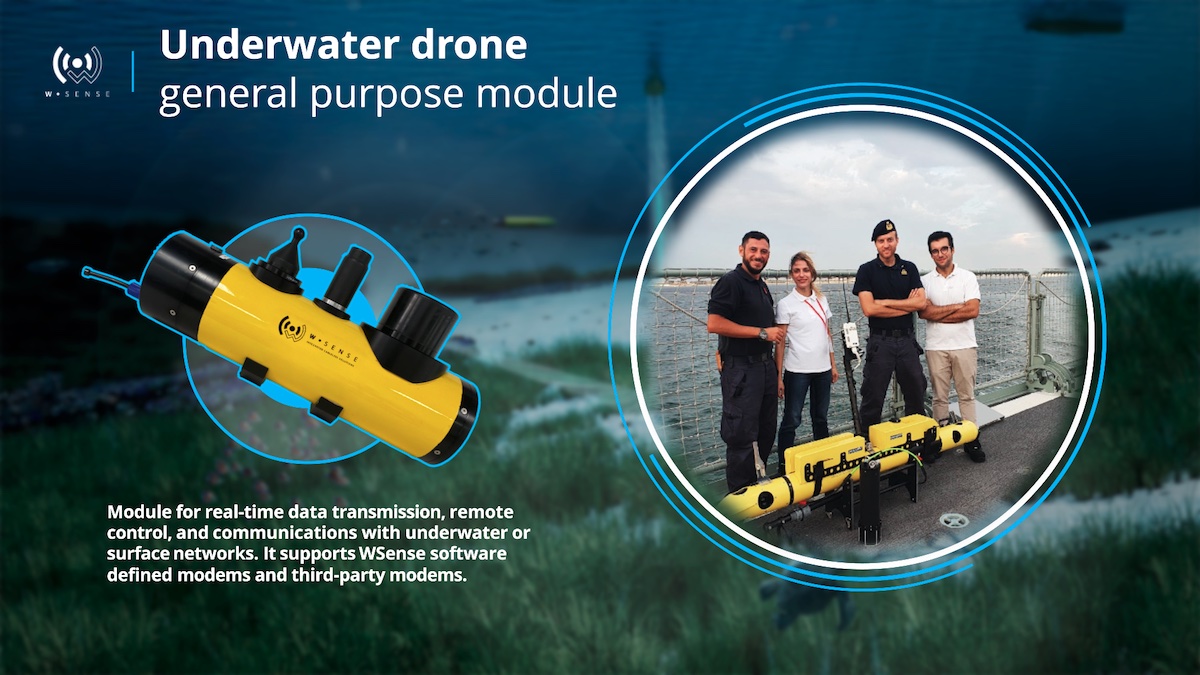
- WMicro: Miniaturized modem to connect and localize small drones and divers
Together, these components form a modular IoUT architecture that enables real-time monitoring and communication across large subsea environments.