

Water Quality Monitoring
Discover cutting-edge solutions from 5 leading global suppliers
In-Situ highlighted a range of water quality monitoring technologies at Oceanology International 2026, including multiparameter sondes, telemetry systems, and newly introduced compact sensing solutions.
Ocean Science Technology spoke with Adam Hobson, Principal Technical Consultant and Chief Hydrologist at In-Situ, about the company’s monitoring platforms, the launch of the RDO Trio sensor, and how integrated measurement systems improve real-time environmental monitoring.
Water Quality Monitoring Platforms
Hobson said the company’s presence at Oceanology International focused on its broader water quality monitoring platform, which includes a range of multiparameter sondes designed to measure water quality parameters across marine and coastal environments. Hobson noted that these sensors are typically deployed alongside supporting infrastructure such as telemetry systems and buoy platforms to enable long-term monitoring,
“We have an entire line of multiparameter sondes that are designed for measuring water quality in those environments.”
RDO Trio Compact Water Quality Sensor
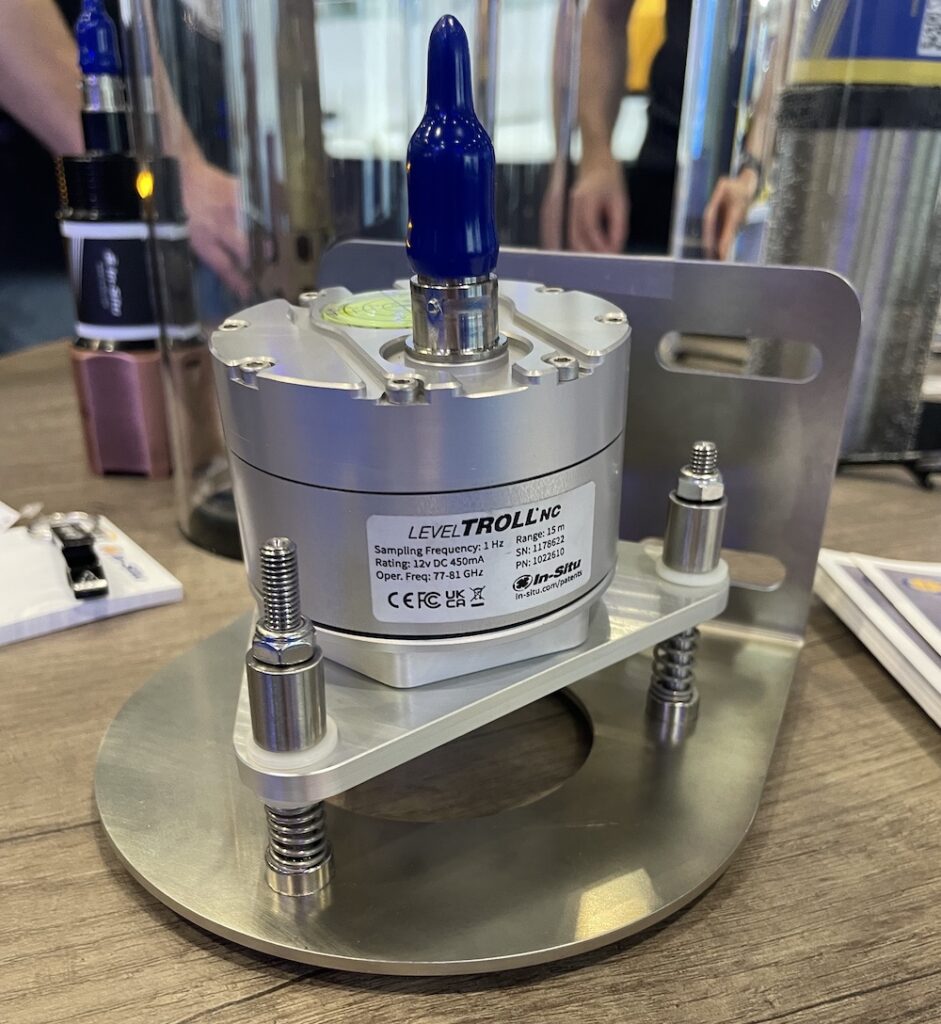
One of the key products highlighted at the show was the newly introduced RDO Trio, a compact sensor designed to simplify water quality monitoring deployments.
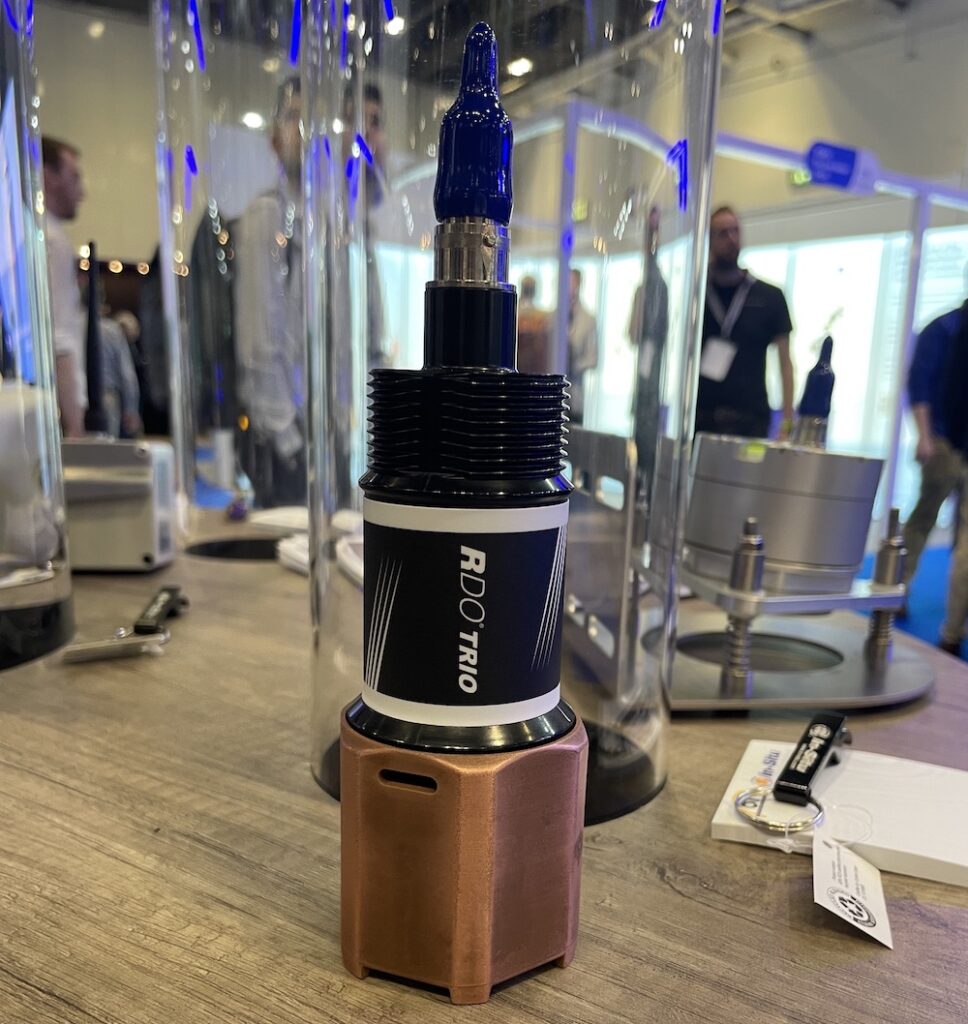
“The main product that we actually are really excited about is one we just launched here, which is our RDO Trio.”
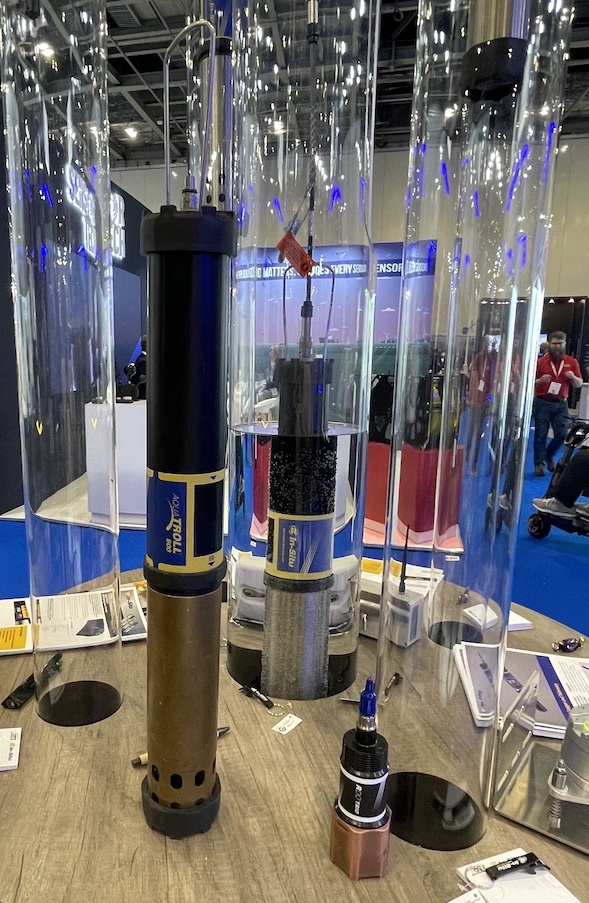
The sensor measures dissolved oxygen, electrical conductivity, and temperature, combining these parameters in a smaller and lower-cost instrument designed for easier deployment.
The device also incorporates a small integrated wiper that helps keep the sensing surface clean by reducing biofouling during long-term deployments.
“It’s a dissolved oxygen, electrical conductivity, and temperature sensor that is actually equipped with a wiper as well.”
To further reduce fouling, the instrument also incorporates an anti-fouling copper-infused polymer, which helps maintain measurement reliability while keeping the system compact and easy to maintain.
The RDO Trio can connect directly with In-Situ telemetry systems, enabling real-time data transmission when deployed in monitoring networks.
Multiparameter Monitoring for Environmental Insights
Hobson explained that combining multiple measurement parameters within a single compact sensor provides significant advantages for environmental monitoring.
“Actually combining all those parameters is critical, because usually you’re looking at them as independent sensors.”
By integrating these measurements into a smaller package, operators can deploy multiple instruments across different depths rather than relying on a single larger instrument.
Hobson added that this allows monitoring teams to build vertical profiles of changing water conditions, helping them observe how parameters such as dissolved oxygen, temperature, and conductivity vary through the water column.
Sensor Reliability & Anti-Fouling Design
Hobson also emphasized reliability features across the company’s water quality sensors, particularly those designed to reduce fouling in coastal environments.
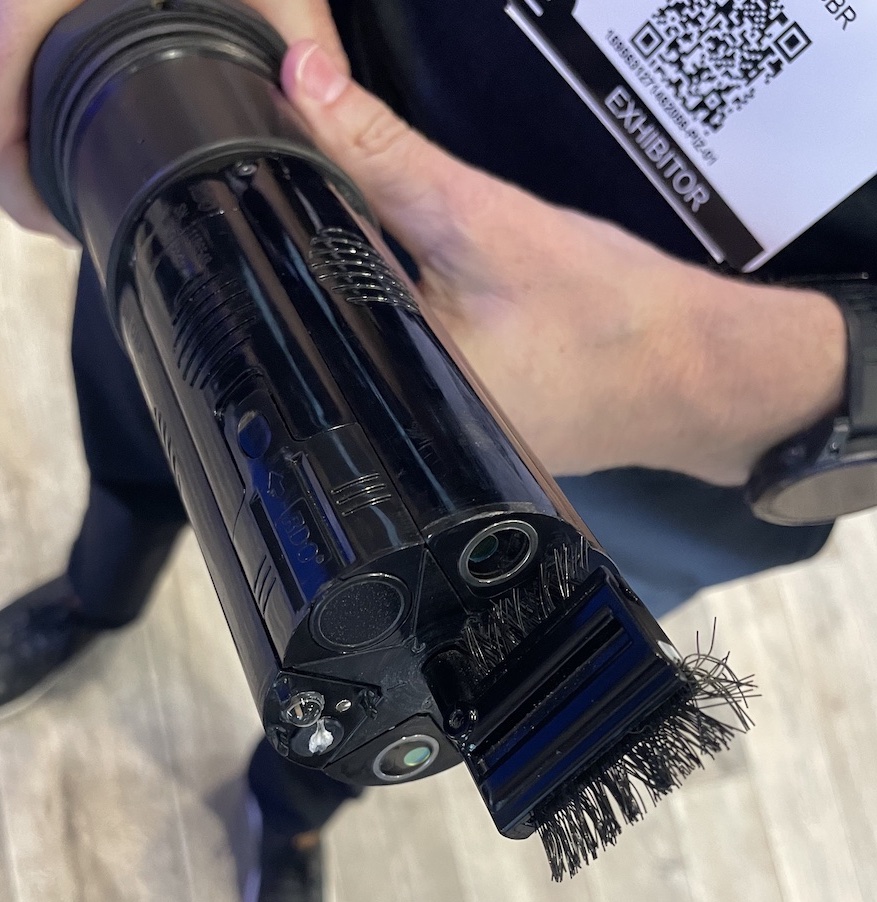
In-Situ sensors use a flat-faced design, allowing them to be efficiently cleaned by built-in wipers.
“Our sensors are all flat-faced, which is really important because that allows them to be cleaned with a wiper brush very efficiently.”
The sensors are also arranged in tightly integrated assemblies that reduce spaces where fouling organisms could accumulate, helping extend deployment duration in marine environments where biofouling can be a significant challenge.
Simplified Calibration & Mobile App Integration
Ease of use was another focus of the platform. Hobson explained that the company’s sensors are designed to be operated through a mobile app available on Android and iOS, simplifying configuration and calibration procedures.
“All of our stuff works with a mobile app, either on Android or iOS.”
The app provides step-by-step calibration guidance, allowing operators to perform maintenance directly in the field without needing to remember complex procedures.
“You don’t have to remember some complicated procedure. You want to have it right at your fingertips and run through that process.”
This approach also aims to reduce the amount of calibration solution required, helping lower operational costs while making instrument maintenance easier for field teams.
Integrated Monitoring & Telemetry
Beyond the RDO Trio, Hobson also highlighted the company’s broader range of water quality instruments, including the Aqua TROLL series of multiparameter sondes.
These include the Aqua TROLL 500, 600, 700, and 800, which use interchangeable sensors that can be shared across different instrument platforms.
In-Situ also offers data loggers such as the Aqua TROLL 200, a Conductivity, Temperature, and Depth (CTD) sensor which Hobson said is widely used for salinity monitoring in coastal environments.
He noted that conductivity measurements are also important for operational applications, including port activities, because salinity influences how acoustic signals propagate underwater.
All of these devices, including the RDO Trio, can connect to the company’s VuLink® telemetry system, a cellular communication device designed for remote monitoring deployments.
“All of those devices, including our RDO Trio, can actually connect up to our telemetry unit, VuLink.”
The system uses the same mobile application interface as the sensors themselves, allowing operators to manage deployments and retrieve data through a unified monitoring platform.
These developments were discussed during an on-site interview with William Mackenzie from Ocean Science Technology at Oceanology International 2026.