The Global Sourcing Hub for Marine, Subsea & Offshore Technology
Discover cutting-edge solutions from leading global suppliers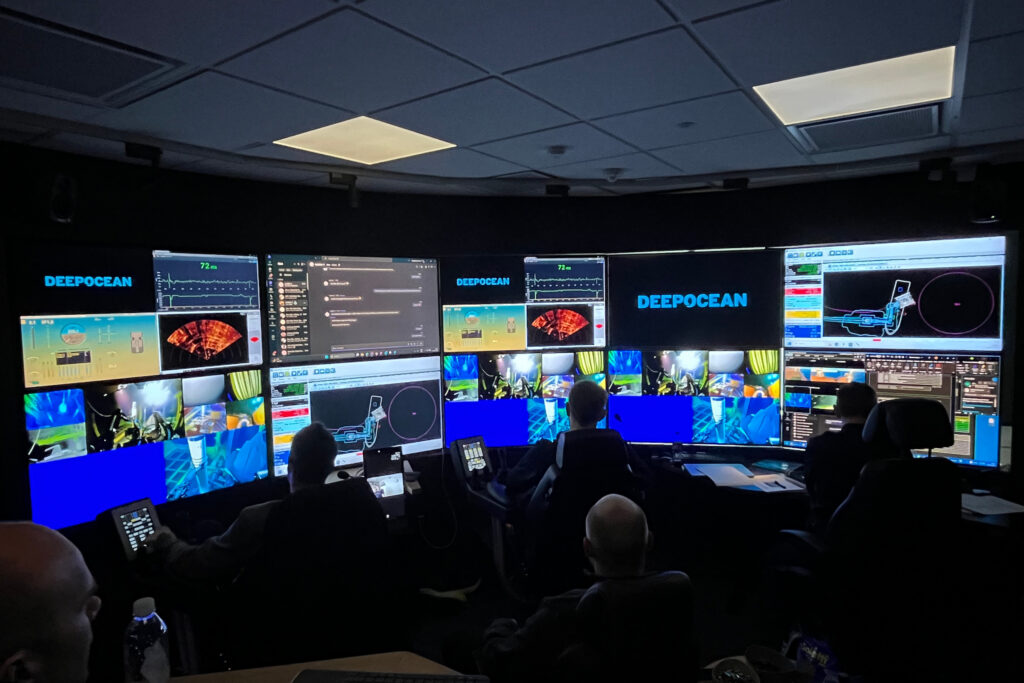
DeepOcean has successfully concluded its first subsea intervention project managed by an offshore operational leadership team based entirely onshore.
The operation was conducted for Aker BP at the Idun Nord field in the Norwegian Sea. While a second Remotely Operated Vehicle (ROV) was managed from the project vessel in the field, a work-class ROV and the primary offshore leadership were controlled from an onshore Remote Operating Centre (ROC). This approach allowed for the completion of complex tasks, including subsea crane operations and close-proximity vessel positioning, without requiring the physical presence of a shift supervisor and an engineer on board the vessel.
The project demonstrated a significant shift in logistics, as these roles typically necessitate a full 14-day offshore rotation. Instead, the specific intervention was completed during a 12-hour shift, after which the key personnel were able to return home. By transitioning these roles to land, the company aims to reduce the costs and emissions associated with offshore deployments while maintaining high standards of safety and execution.
Olaf A. Hansen, Executive Vice President for DeepOcean’s Northern Europe region, “This project represents an important step forward in how we deliver subsea operations. By moving key operational roles onshore, we can reduce offshore personnel requirements, with its inherent cost savings and emissions reductions, while maintaining safe and efficient execution. It also allows us to utilise specialist competence more flexibly across campaigns.”
This milestone is part of a long-term strategy for DeepOcean, which began executing remote subsea operations in 2018. The complexity of these tasks has evolved over time; in 2025, the company successfully executed remote subsea dredging operations. The current model provides operators with greater flexibility, allowing different skillsets and preparations for multiple scopes to be integrated into a single offshore campaign.
The intervention was facilitated from a remote operating centre in Haugesund, Norway, using digital solutions and communication systems provided by Remota to ensure real-time execution.
Jarle Marius Solland, Operations Manager Subsea Execution & Survey at Aker BP, stated, “We appreciate the collaboration with DeepOcean in advancing remote operations. This is a great example of our ambition to increase efficiency by optimizing vessel and personnel utilization while maintaining a strong focus on safety and operational control.”
DeepOcean continues to scale these digitally enabled services to provide safer and more efficient offshore support. This evolution in subsea intervention highlights a growing industry trend toward optimizing vessel and personnel utilization through remote technology.