

The Global Sourcing Hub for Marine, Subsea & Offshore Technology
Discover cutting-edge solutions from leading global suppliers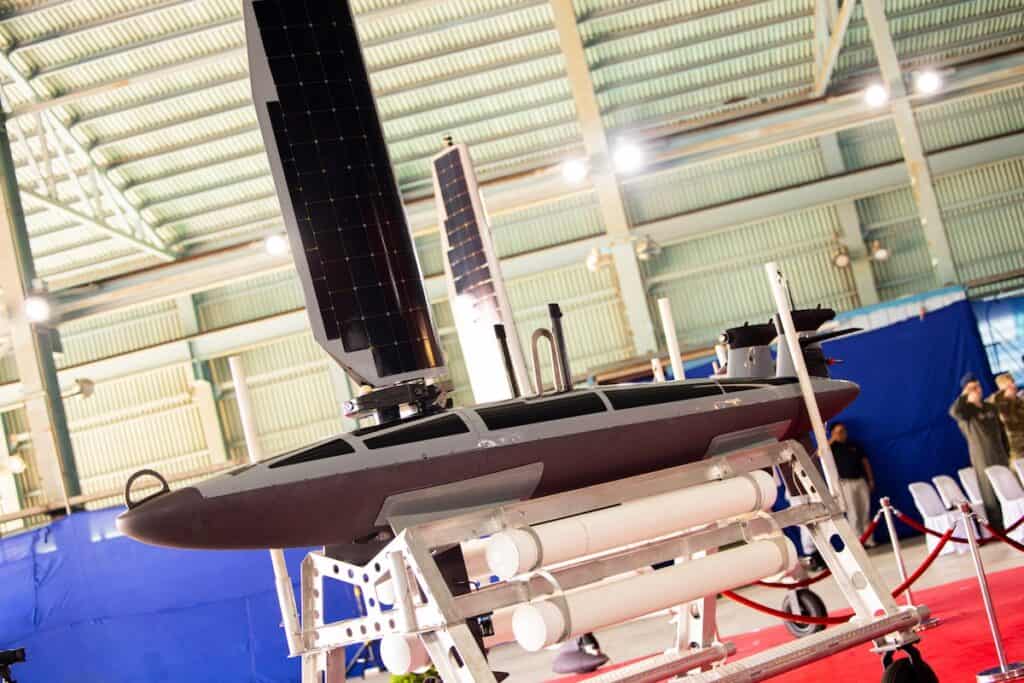
The United States government has transferred four Ocean Aero Triton autonomous underwater and surface vehicles, valued at approximately Php754 million ($13 million), to the Armed Forces of the Philippines.
The Triton autonomous underwater and surface vehicles are designed to collect data both above and below the ocean’s surface through a resilient mesh network. Because the units are solar-powered, each vehicle can operate for up to 30 days, providing the long-endurance awareness necessary to improve decision-making at tactical and operational levels.
“The four Ocean Aero Triton AUSVs we are transferring today represent something important: the future of maritime security is not just about platforms—it is about capability, speed, and reach,” Chargé d’Affaires Walker said in her remarks. “The Indo-Pacific’s maritime domain is vast, contested, and critical, and the Philippines sits at the heart of it. The ability to monitor and respond to maritime challenges—illegal fishing, gray zone activities, and threats to freedom of navigation—requires persistent, long-endurance awareness that no single ship or aircraft can provide alone. The Triton fills that gap by expanding the capabilities of the Philippine Navy into critical waterways,” she added.
The handover ceremony for the unmanned systems took place at the Philippine Navy’s Naval Operating Base Subic, led by U.S. Embassy Chargé d’Affaires Bridgette Walker, U.S. Embassy Senior Defense Official and Chief of the Joint U.S. Military Assistance Group-Philippines Colonel Daniel Oh, Philippine Fleet Commander Rear Admiral Joe Anthony Cabahug-Orbe, and Philippine Navy Unmanned Surface Vessel Unit Acting Commander Lt. Cmdr. Aldwin Pasicolan. This delivery demonstrates the commitment to the U.S.-Philippines Alliance and aims to enhance the country’s capability to detect and respond to illegal maritime activities and regional challenges.
The delivery highlights aligned investments and training designed to translate into ready capabilities that deter aggression. The systems support the Armed Forces of the Philippines’ transition to territorial defense while modernizing alliance capabilities.
“Today’s delivery highlights our enduring commitment to stand with the Philippines and invest in Alliance modernization in a manner that supports the bilateral Philippines-U.S. Security Sector Assistance Roadmap objectives,” said Colonel Oh. “These unmanned capabilities support the AFP’s transition to territorial defense and improve awareness in critical waterways. The next step is to assist the Philippines integrate these new capabilities in their employment and sustainment concepts.”