The Global Sourcing Hub for Marine, Subsea & Offshore Technology
Discover cutting-edge solutions from leading global suppliersAutonomous maritime technology has achieved a significant regulatory milestone with ZeroUSV securing the UK Maritime and Coastguard Agency’s Workboat Code Edition 3 certification for its flagship Oceanus12 uncrewed surface vessels.
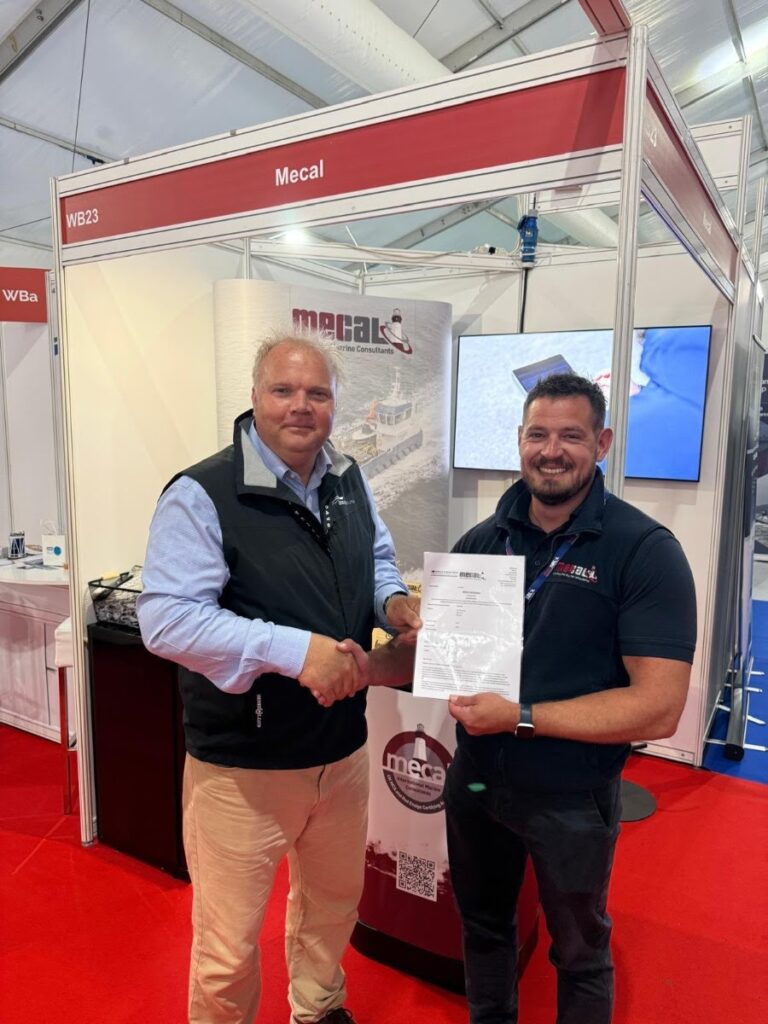
The certification, led by maritime authority MECAL alongside the coding department at the Maritime and Coastguard Agency (MCA), confirms that the 12-metre vessel meets stringent safety, operational, and technical standards designed specifically for remotely operated and unmanned systems. As the UK’s most comprehensive regulatory framework for commercial workboats, Workboat Code Edition 3 (WB3) serves as an essential benchmark for integrating autonomous platforms into global waters. The achievement provides commercial and defence operators with independent assurance that the long-endurance platform is prepared for real-world deployment across offshore energy, hydrographic surveying, environmental monitoring, and scientific applications. The UK-designed vessel features hybrid-electric propulsion, modular payload integration, and advanced autonomous navigation capable of sustaining multi-week missions in challenging offshore environments.
Matthew Ratsey, Managing Director of ZeroUSV, highlighted the industry impact of the achievement, saying, “It is hard to articulate how significant this is not just for ZeroUSV, but for the Oceanus class of USVs. Achieving WB3 certification for the Oceanus12 class, gives us the green light to operate commercially and will open up significant opportunities not only in the UK water space but in the global maritime sector.”
Ratsey noted that while the market recognizes the readiness of uncrewed surface vessel technology, the current focus revolves around payload integration for practical or tactical advantages. He added, “The industry has reached a point where customers accept the USV technology as being ready and available but what they are looking for is how different payloads can be integrated into the USV’s to provide commercial capability or tactical advantage in the battle space. As such proven, certifiable platforms are needed that can be deployed safely and reliably in real-world operations. This certification demonstrates that autonomous vessels can operate within an established regulatory framework while delivering the performance, endurance and operational flexibility our customers require.”
MECAL, a prominent UK maritime certification and surveying organization, has been actively involved in shaping the WB3 framework, where Annex 2 establishes clear safety equivalencies between uncrewed systems and conventional workboats.
Owen Preece, Managing Director at MECAL, explained the broader implications for the sector, “Achieving WB3 certification for Oceanus12 is a significant milestone for both ZeroUSV and the wider autonomous maritime sector. It demonstrates that advanced uncrewed vessel technologies can be successfully assessed against established maritime safety and operational standards, providing customers with confidence that autonomous systems can be deployed within a recognised regulatory framework.”
Preece continued, emphasizing the necessity of evolving assurance structures alongside rapid technological advancements, “MECAL is committed to supporting innovation across the maritime industry and ensuring that emerging technologies can progress within pragmatic and practical assurance frameworks. As remotely operated vessels continue to evolve, it is essential that certification and regulatory processes develop alongside them.”
Through this collaborative framework, certifying authorities aim to provide a reliable pathway for developers navigating the shifting landscape of marine engineering. Preece added, “Through our role as a certifying authority, we are actively positioning ourselves to support the future of the maritime sector, helping designers and operators navigate the challenges and opportunities presented by new technologies. We are pleased to have worked with ZeroUSV on this certification and look forward to supporting the continued growth of autonomous operations and the wider adoption of advanced maritime technologies across the industry.”
This regulatory breakthrough arrives amid a surge in global demand for autonomous systems. As government and commercial organizations seek safer, lower-carbon, and more cost-effective methods of conducting offshore operations, formal regulatory certification has become a critical component for widespread industry adoption.