

The Global Sourcing Hub for Marine, Subsea & Offshore Technology
Discover cutting-edge solutions from leading global suppliersOCEANTEK Technology has launched the River-ADCP-600-FA5, a 600 kHz Acoustic Doppler Current Profiler (ADCP) developed for velocity profiling and discharge measurement in inland rivers, irrigation canals and reservoir discharge channels.
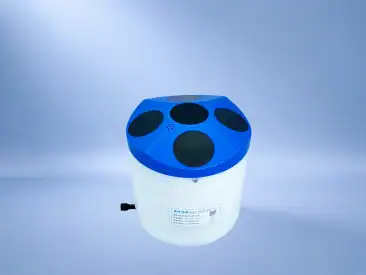
Designed for environments with high suspended-sediment loads, changing water levels and limited access to grid power, the River-ADCP-600-FA5 combines a four-piston Janus transducer array with one vertical piston transducer, a 50 m depth rating and average power consumption of ≤5 W.
The instrument provides a velocity profiling range of 0.5–65 m in long-range mode and 0.5–50 m in high-precision mode, with typical velocity accuracy of ±0.25% ±2 mm/s and resolution of 1 mm/s. It supports profiling velocities of up to ±20 m/s and output rates of up to 4 Hz.
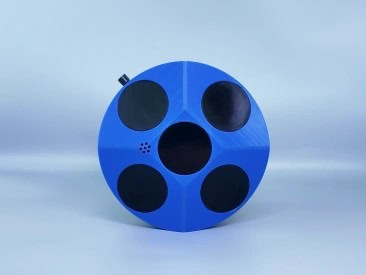
Its bottom-tracking system operates over depths from 0.5–110 m and velocities up to ±10 m/s. OCEANTEK states that the system combines the Janus-array transducer architecture with a bottom-tracking algorithm tuned using data from turbid-water environments.
“Reliable discharge data during flood events is non-negotiable — it directly informs evacuation orders, reservoir release decisions, and water allocation across entire watersheds. The River-ADCP-600-FA5 was engineered to maintain measurement integrity through the full hydrograph, from base flow to peak discharge, even in sediment concentrations that cause conventional profilers to lose reference. That was the design brief, and the field validation results confirm we delivered on it.”
Designed for Remote Monitoring
The River-ADCP-600-FA5 operates from a 10–26 VDC power supply and consumes an average of ≤5 W, supporting deployment at remote and solar-powered monitoring stations.
The profiler also incorporates 64 GB of internal storage and integrated temperature, pressure, roll, pitch and heading sensors. The system measures flow direction through 0–360° with ±2° accuracy, while its attitude sensors provide roll and pitch accuracy of ±1° and heading accuracy of 0.8° RMS.
It supports between one and 255 profiling cells, with user-configurable cell thickness from 0.1–6 m.
Core Specifications
- Operating frequency: 600 kHz
- Velocity profiling range: 0.5–65 m long-range; 0.5–50 m high-precision
- Velocity accuracy: ±0.25% ±2 mm/s typical
- Velocity resolution: 1 mm/s
- Maximum profiling velocity: ±20 m/s
- Flow direction: 0–360° with ±2° accuracy
- Bottom-tracking depth range: 0.5–110 m
- Maximum output rate: 4 Hz
- Transducer configuration: Four-piston Janus array plus one vertical piston
- Internal storage: 64 GB
- Average power consumption: ≤5 W
- Depth rating: 50 m
- Weight: ≤3.5 kg in air
- Communications: RS-232 / RS-422
Applications and Availability
OCEANTEK has developed the River-ADCP-600-FA5 for applications including river and flood monitoring, irrigation and canal metering, urban waterway management, dam and reservoir discharge measurement, and hydrodynamic research.
The River-ADCP-600-FA5 is available to order now. OCEANTEK provides pre-deployment site assessment, configuration guidance, calibration and maintenance support, and online technical support.